Evolutionary theories of aging -Aqeel Al Jothery
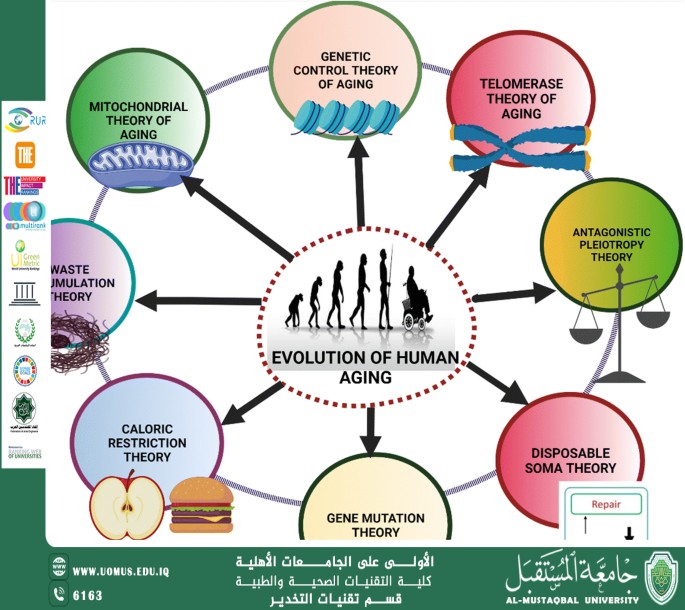
There are several evolutionary theories of aging that attempt to explain why aging occurs from a biological and evolutionary perspective. These theories generally suggest that aging is not directly selected for, but results from the way natural selection operates over time. The major theories include:<br /><br />1. Mutation Accumulation Theory (Medawar, 1952)<br /> • Core idea: Harmful mutations that affect individuals later in life accumulate in the gene pool because natural selection is weaker at older ages.<br /> • Reasoning: Since most organisms die from external causes (e.g. predation, disease) before reaching old age in the wild, natural selection does not strongly act against genes that cause late-onset diseases.<br /> • Result: Aging is due to the buildup of deleterious late-acting mutations.<br /><br />2. Antagonistic Pleiotropy Theory (Williams, 1957)<br /> • Core idea: Some genes have pleiotropic effects, meaning they influence multiple traits—beneficial early in life but harmful later.<br /> • Example: A gene that boosts fertility or physical strength early in life might cause tissue damage or cancer later on.<br /> • Result: These genes are favored by natural selection despite their negative effects in old age because they increase reproductive success.<br /><br />3. Disposable Soma Theory (Kirkwood, 1977)<br /> • Core idea: Organisms have limited resources, which must be allocated between reproduction and body maintenance (soma).<br /> • Trade-off: Investing heavily in reproduction may come at the cost of maintenance and repair of the body, leading to aging.<br /> • Result: Aging is the price paid for maximizing reproductive success with finite resources.<br /><br />4. Programmed Aging Theories (less widely accepted)<br /> • Core idea: Aging is a genetically programmed process, controlled by biological clocks and regulated pathways.<br /> • Examples: Some believe aging may have evolved to remove older individuals to free up resources for the younger generation.<br /> • Criticism: Many evolutionary biologists argue that evolution does not favor traits that limit individual survival unless there is a group-level benefit, which is controversial.<br /><br />5. Evolutionary Senescence Theory<br /> • This is a broader concept that encompasses the above ideas. It suggests aging is a byproduct of natural selection’s focus on reproductive fitness, not longevity.<br /><br />Summary Table<br />Theory<br />Key Mechanism<br />Implication<br />Mutation Accumulation<br />Weak selection on late-acting genes<br />Aging = accumulated damage<br />Antagonistic Pleiotropy<br />Genes beneficial early, harmful late<br />Aging = genetic trade-off<br />Disposable Soma<br />Trade-off: reproduction vs. maintenance<br />Aging = underinvestment in repair<br />Programmed Aging<br />Aging is genetically regulated<br />Aging = evolved lifespan control (controversial)<br /><br /><br />Written by Professor Dr. Aqeel Al Jothery (PhD UK).<br />Anesthesia Techniques Department, College of Health and Medical Technologies, Al-Mustaqbal University<br /><br />Al-Mustaqbal University is the first university in Iraq<br />