Understanding Radiation: Its Power and Purpose
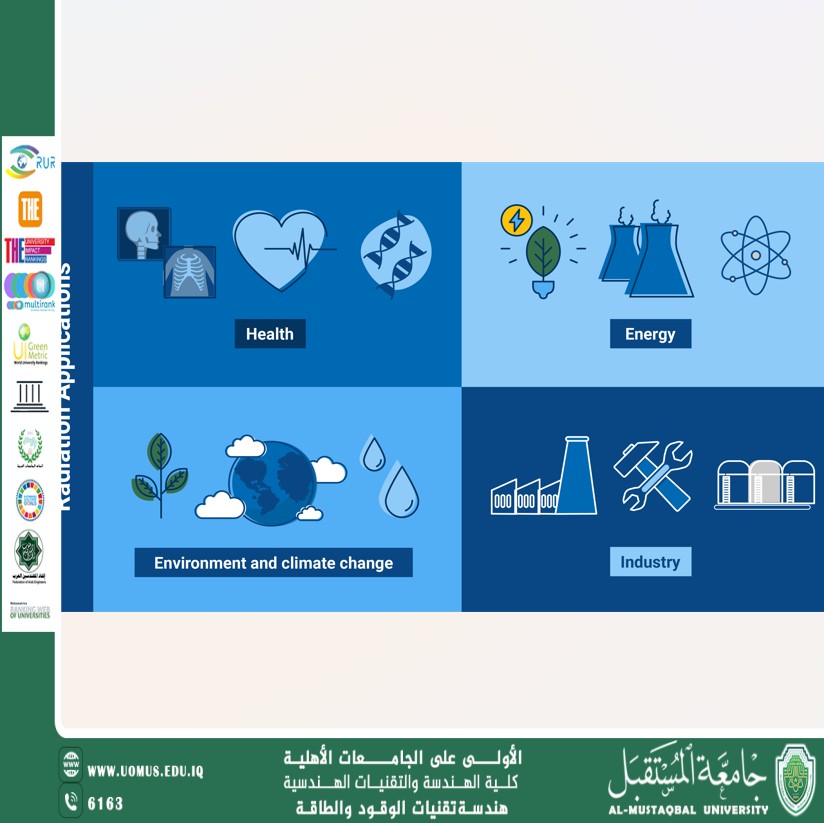
Understanding Radiation: Its Power and Purpose<br />Eng. Nourhan Thamer Assi<br />SDG 3: Good Health and Well-being<br />SDG 7: Affordable and Clean Energy<br />SDG 9: Industry, Innovation, and Infrastructure<br />SDG 12: Responsible Consumption and Production<br />SDG 13: Climate Action<br /><br />Radiation is energy that travels in waves or particles through space or a medium. It surrounds us daily — from the sunlight that warms our planet to the X-rays used in medical diagnostics. While radiation often sounds dangerous, it plays a vital role in many aspects of life and technology.<br /><br />There are two main types: ionizing radiation, which carries enough energy to remove tightly bound electrons from atoms, potentially causing damage to living tissues; and non-ionizing radiation, which includes visible light and radio waves, generally considered safer.<br /><br />The beneficial uses of radiation are vast. In medicine, radiation therapies target cancer cells, saving lives. In energy, nuclear power provides a significant portion of the world’s electricity without carbon emissions. Radiation also helps in food preservation, sterilization, and scientific research.<br /><br />However, understanding and respecting radiation's power is crucial. Proper safety measures protect people from harmful exposure, emphasizing the balance between its risks and rewards.<br /><br />In essence, radiation is a double-edged sword: a natural force that, when harnessed responsibly, fuels innovation and improves human wellbeing.<br />Al-Mustaqbal University The First University in Iraq<br /><br />