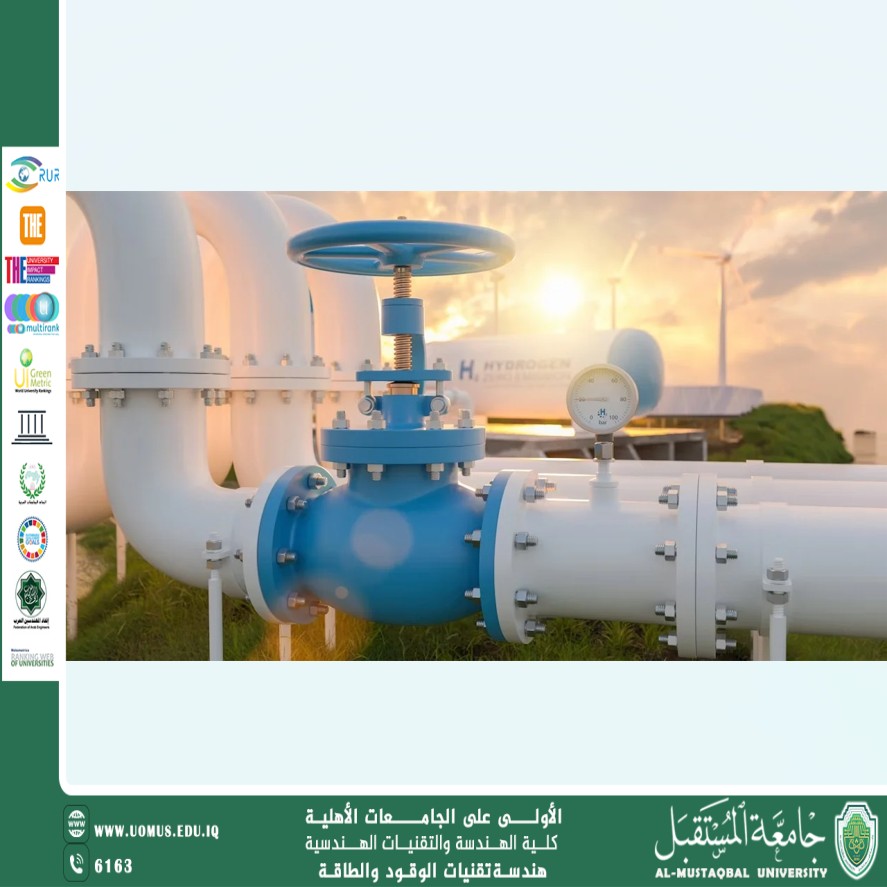
Emissions from Steam Methane Reforming Hydrogen Production and Its Environmental Impact
Emissions from Steam Methane Reforming Hydrogen Production and Its Environmental Impact<br />Eng. Nourhan Thamer Assi.<br /><br />Related Sustainable Development Goals:<br />✅ SDG 7: Affordable and Clean Energy<br />✅ SDG 9: Industry, Innovation, and Infrastructure<br />✅ SDG 13: Climate Action<br />Steam Methane Reforming (SMR) is one of the most widely used industrial methods to produce hydrogen. This process converts natural gas (methane) and steam into hydrogen and carbon monoxide, which is then further converted to carbon dioxide and additional hydrogen. Despite the efficiency of this method in hydrogen production, it poses an environmental challenge due to the significant emissions of carbon dioxide, a greenhouse gas contributing to climate change.<br />SMR units emit approximately 9 to 12 kilograms of CO₂ per kilogram of hydrogen produced, making it an environmental concern that requires technological solutions such as Carbon Capture and Storage (CCS) to reduce emissions. Alternatively, green hydrogen production through electrolysis powered by renewable energy offers a cleaner and more sustainable option.<br />Ongoing research aims to improve SMR efficiency and reduce its emissions, aligning with sustainable development goals focusing on climate action and environmental health.<br /><br />Al-Mustaqbal University The First University in Iraq<br /><br />