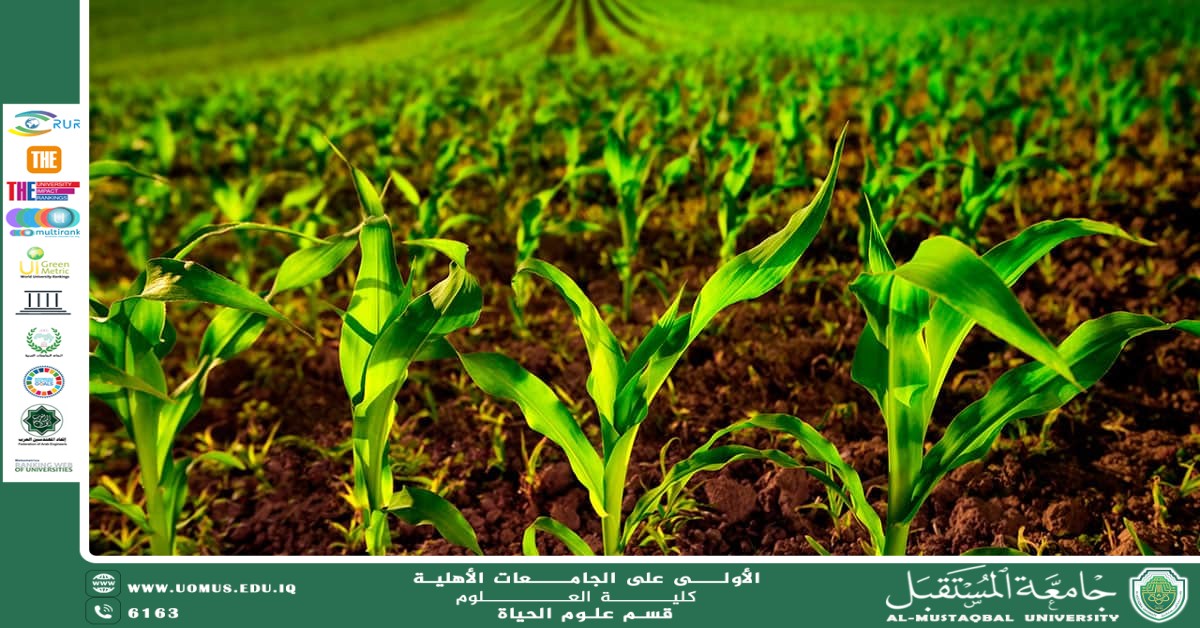
A scientific article by Ms. Nour El-Huda Azmi Hassan entitled "The Role of Agricultural Microbiology in Enhancing Soil Fertility"
1. Atmospheric Nitrogen Fixation<br />Some bacteria, such as Rhizobium, live in the root nodules of legumes and convert atmospheric nitrogen (N₂) into usable forms for plants, such as ammonium (NH₄⁺). This contributes to increasing the nitrogen content of soil, an essential element for plant growth.<br /><br />2. Organic Matter Decomposition<br />Microbes such as bacteria and fungi decompose plant and animal remains, releasing nutrients (such as phosphorus, nitrogen, sulfur, and potassium) in a form that is absorbable by plants, thereby improving the organic matter content of the soil.<br /><br />3. Converting Insoluble Phosphorus into Available Forms<br />Some bacteria, such as Bacillus and Pseudomonas, are capable of solubilizing insoluble phosphate and converting it into an absorbable form, enhancing the availability of phosphorus to plants.<br /><br />4. Production of Plant Growth Hormones<br />Some microorganisms, such as Azospirillum and Bacillus subtilis, produce plant hormones such as auxins and cytokinins, which stimulate root growth and improve the plant's ability to absorb nutrients.<br /><br />5. Disease Resistance and Improved Plant Health<br />Some beneficial microorganisms act as natural antidotes to pathogens by:<br /><br />Producing antibiotics.<br /><br />Competing with pathogens for food and space.<br /><br />Enhancing plant immunity.<br /><br />6. Improving Soil Structure<br />Microbes produce substances such as glutamine and mucilaginous compounds that contribute to the cohesion of soil particles, improving soil aeration and water-holding capacity.<br /><br />7. Contributing to Biogeochemical Cycles<br />Microbes play an important role in element cycles such as carbon, nitrogen, and sulfur, contributing to ecological balance and plant nutrient availability.<br /><br /><br />Al-Mustaqbal University is the first university in Iraq.