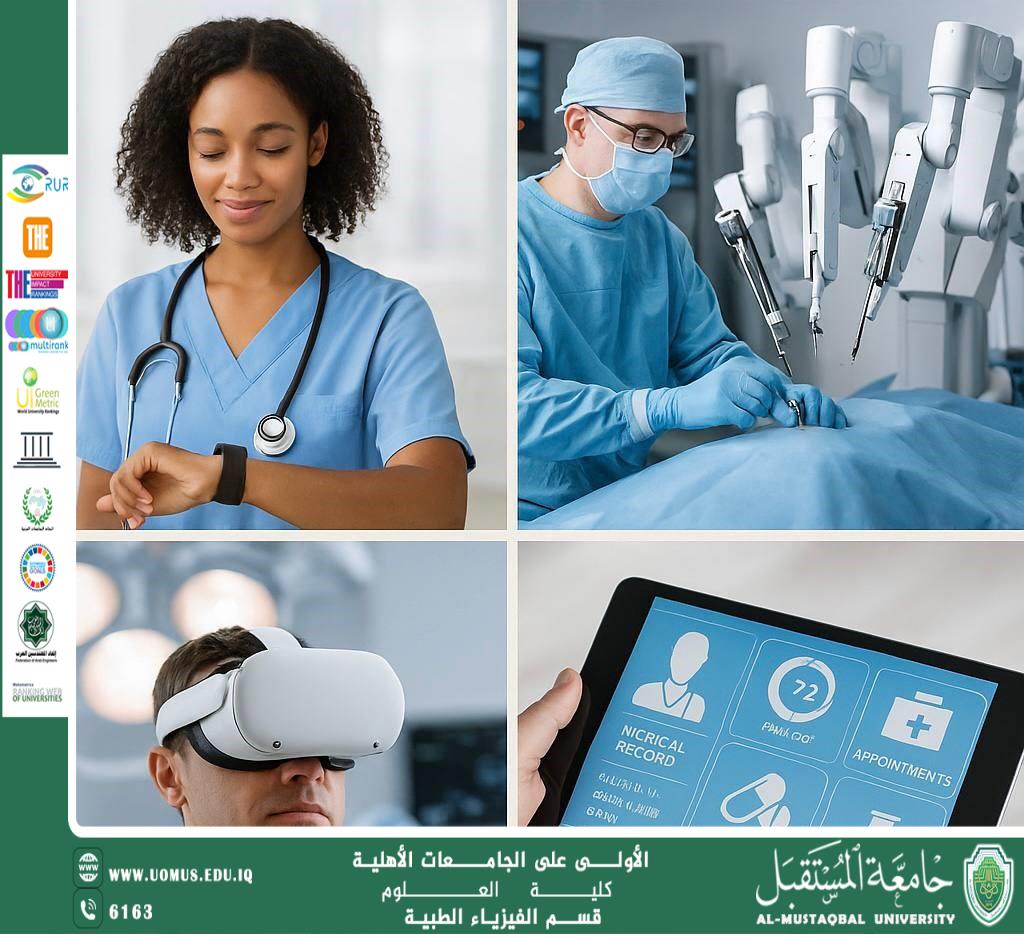
A scientific article by the teaching assistant (Maryam Reda Al-Sharaa) entitled “Digital Medicine and Robotic Surgery: The Technology Revolution in Operating Rooms”
In recent decades, the medical field has undergone a dramatic transformation thanks to rapid technological advancement. Digital medicine and robotic surgery are among the most groundbreaking innovations reshaping modern healthcare. The operating room is no longer what it used to be; it has become a hub of advanced technology that enhances surgical precision and minimizes patient risks.<br /><br />Digital Medicine: Smart and Personalized Healthcare<br /><br />Digital medicine refers to the use of digital technologies—such as health apps, artificial intelligence, and electronic health records—to improve the quality of care. Wearable devices, for instance, can monitor patients’ vital signs remotely, allowing for early detection of health issues. Mobile applications help track medications, manage appointments, and facilitate direct communication with doctors.<br /><br />Additionally, big data and medical analytics play a crucial role in customizing treatments based on an individual’s health history, making healthcare more accurate and efficient.<br /><br />Robotic Surgery: Precision Beyond the Human Hand<br /><br />Robotic surgery represents a revolutionary advancement in surgical procedures. Surgeons use robotic systems to perform operations through very small incisions, reducing bleeding, pain, and recovery time.<br /><br />One of the most well-known examples is the da Vinci Surgical System, which allows doctors to control robotic arms via a console. These arms are equipped with high-definition cameras and ultra-precise surgical instruments that can move in ways the human hand cannot.<br /><br />Benefits of Technology in the Operating Room<br /><br />Some of the key benefits of using advanced technology in surgery include:<br /> • Greater precision and reduced errors.<br /> • Shorter operation times and faster recovery periods.<br /> • Minimally invasive procedures that are safer for patients.<br /> • Virtual training opportunities for surgeons using VR simulation.<br /><br />Future Challenges<br /><br />Despite its many advantages, this technological shift comes with challenges:<br /> • High costs associated with new technologies.<br /> • Specialized training required for medical staff.<br /> • Concerns over over-reliance on machines.<br /><br />Conclusion<br /><br />Digital medicine and robotic surgery are no longer futuristic concepts—they are now part of everyday medical practice in many hospitals worldwide. Despite the challenges, this technological revolution is set to transform healthcare delivery, making it more accurate, safer, and more efficient than ever before.<br /><br /><br /><br /><br />"AL_mustaqbal University is the first university in Iraq"<br/><br/><a href=https://uomus.edu.iq/Default.aspx target=_blank>al-mustaqbal University Website</a>