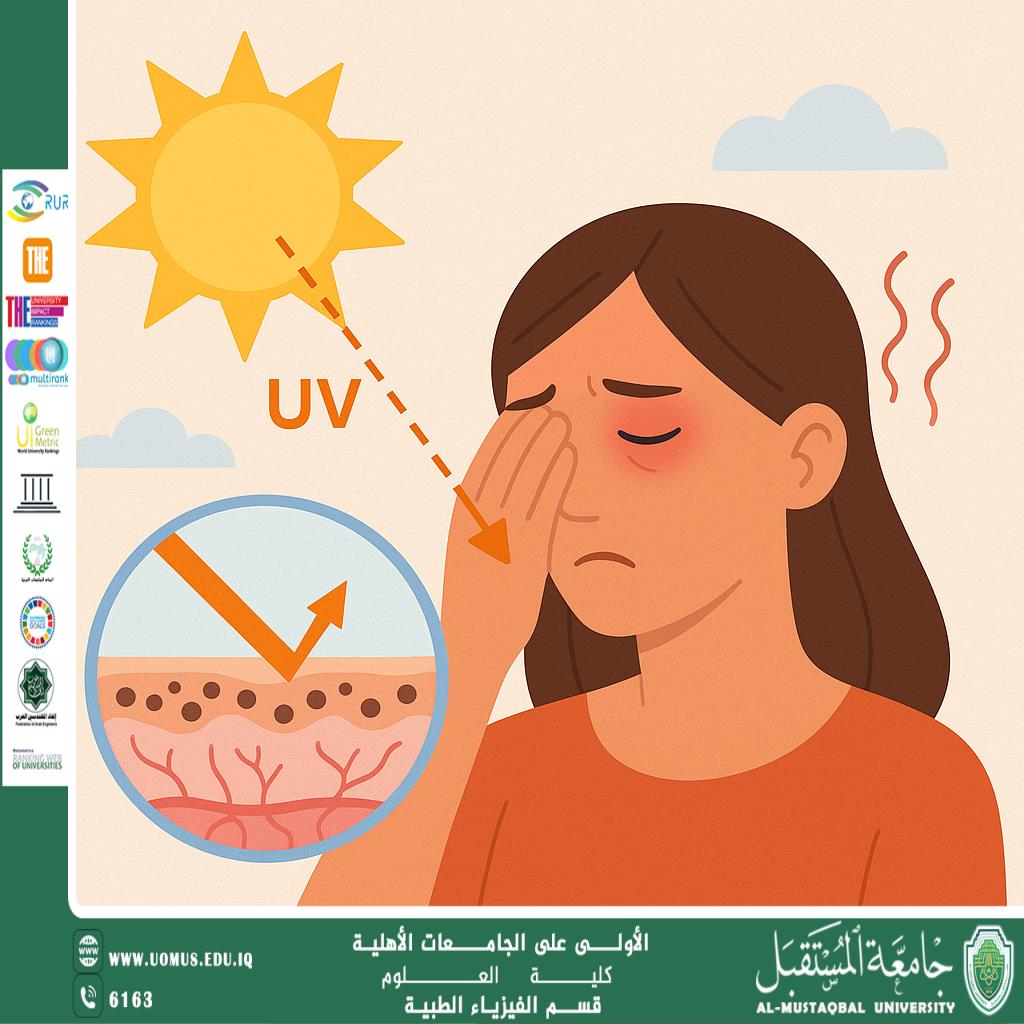
A scientific article by the lecturer (Assistant Lecturer Samaher Saad) entitled “The effect of ultraviolet rays on skin and eye health”
Introduction<br />Ultraviolet (UV) radiation is part of the electromagnetic spectrum emitted by the sun, with a wavelength shorter than visible light. UV radiation is divided into three main types: UVA, UVB, and UVC. While most UVC is absorbed by the Earth's atmosphere, UVA and UVB reach the surface and can have harmful effects on human health, particularly on the skin and eyes.<br /><br />Types of Ultraviolet Radiation<br />UVA (320–400 nm):<br />Penetrates deeply into the skin and is associated with premature aging and some types of skin cancer.<br /><br />UVB (280–320 nm):<br />Affects the outer layers of the skin and is the primary cause of sunburn and skin cancers.<br /><br />UVC (100–280 nm):<br />Absorbed completely by the ozone layer and does not reach the Earth’s surface; however, it is used industrially for disinfection purposes.<br /><br />Effects on Skin<br />Sunburn:<br />Caused mainly by UVB exposure, characterized by redness, pain, and peeling of the skin.<br /><br />Premature Skin Aging:<br />Chronic UVA exposure breaks down collagen and elastin, leading to wrinkles and sagging skin.<br /><br />Skin Cancer:<br />Long-term UV exposure is a major risk factor for developing various types of skin cancer, such as:<br /><br />Malignant melanoma<br /><br />Basal cell carcinoma<br /><br />Squamous cell carcinoma<br /><br />Effects on Eyes<br />Photokeratitis (UV-induced corneal inflammation):<br />Similar to a sunburn of the eye, causing pain, tearing, and light sensitivity.<br /><br />Cataracts:<br />Prolonged exposure to UVA and UVB can cloud the lens of the eye, leading to blurred vision over time.<br /><br />Macular Degeneration:<br />Studies suggest a possible link between UV exposure and age-related macular degeneration (AMD), which affects central vision.<br /><br />Preventive Measures<br />Use Sunscreen:<br />Apply a broad-spectrum sunscreen with SPF 30 or higher regularly.<br /><br />Wear Sunglasses:<br />Choose sunglasses that block 100% of UVA and UVB rays.<br /><br />Avoid Peak Sun Hours:<br />UV radiation is strongest between 10 a.m. and 4 p.m.<br /><br />Wear Protective Clothing:<br />Use wide-brimmed hats and tightly woven clothing for better protection.<br /><br />Conclusion<br />While UV radiation plays a role in the natural production of vitamin D, excessive and unprotected exposure can lead to serious health risks to the skin and eyes. Adopting effective sun protection habits is essential to minimize these risks and maintain overall health, especially amid increasing environmental challenges.<br /><br /><br /><br /><br />"AL_mustaqbal University is the first university in Iraq"<br/><br/><a href=https://uomus.edu.iq/Default.aspx target=_blank>al-mustaqbal University Website</a>