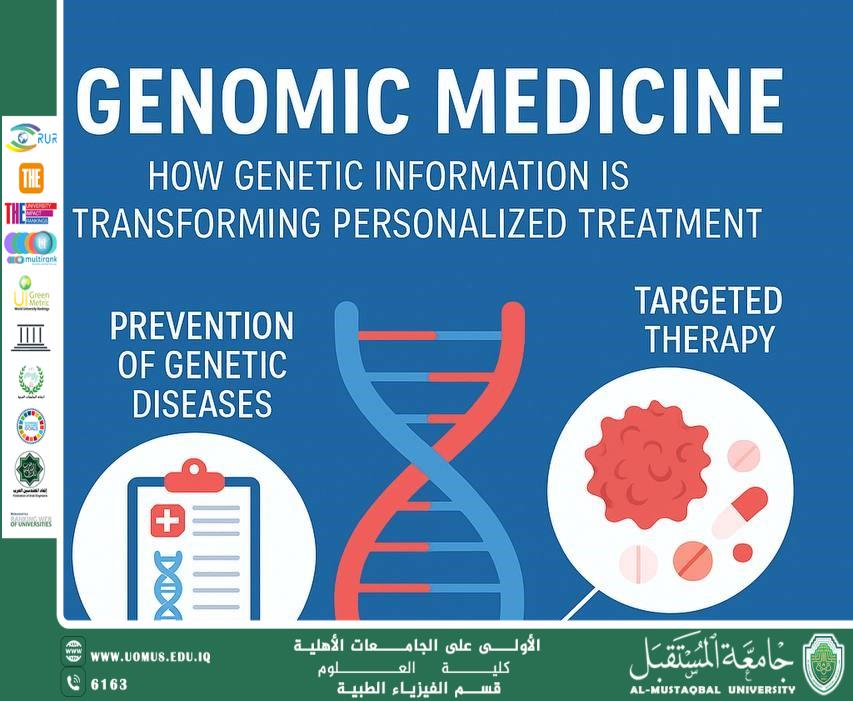
A scientific article by the teaching assistant (Zahraa Bassem) entitled “Genomic Medicine: How does genetic information change the future of personalized medicine?”
In recent years, genomic medicine has emerged as one of the most promising fields in modern healthcare, ushering in a revolution in personalized treatment based on each individual’s unique genetic code. Medicine is no longer “one size fits all”—it is becoming increasingly tailored to the genetic profile of each patient.<br /><br />⸻<br /><br />What Is Genomic Medicine?<br /><br />Genomic medicine is a branch of medicine that uses DNA analysis to understand the genetic causes of diseases and to develop the most effective treatments for each individual. Unlike traditional medicine, which often focuses on symptoms and external factors, genomic medicine delves into precise genetic data for diagnosis, prevention, and treatment.<br /><br />⸻<br /><br />Applications of Genomic Medicine<br /> 1. Targeted Therapy:<br />Commonly used in cancer treatment, targeted therapy involves identifying genetic mutations that drive tumor growth and selecting drugs that specifically target those cancerous cells—minimizing harm to healthy tissue.<br /> 2. Prevention of Genetic Diseases:<br />By analyzing a person’s genetic makeup, doctors can assess the risk of developing chronic conditions like cancer, diabetes, or Alzheimer’s and take proactive steps to prevent or delay their onset.<br /> 3. Pharmacogenomics (Drug-Gene Interactions):<br />This helps determine how an individual’s body is likely to respond to certain medications, allowing for personalized dosages and reducing adverse effects.<br /> 4. Prenatal Genetic Screening:<br />Genomic testing can identify potential genetic disorders in embryos or fetuses during early pregnancy, helping families make informed decisions.<br /><br />⸻<br /><br />Benefits of Genomic Medicine<br /> • More accurate and effective treatments<br /> • Reduction in trial-and-error drug prescribing<br /> • Early diagnosis of complex diseases<br /> • Improved quality of life through preventive care<br /><br />⸻<br /><br />Challenges Facing Genomic Medicine<br /> • High cost of genetic testing and sequencing<br /> • Privacy and ethical concerns related to storing and using genetic data<br /> • Need for trained specialists to interpret complex genomic information<br /> • Limited infrastructure in some developing regions<br /><br />⸻<br /><br />Conclusion<br /><br />Genomic medicine is not just a technological leap—it’s a transformative shift in how we understand and treat disease. As genetic testing becomes more affordable and our scientific knowledge continues to grow, we move closer to an era where treatments are custom-built for each individual, based on their unique genetic fingerprint.<br /><br /><br /><br />"AL_mustaqbal University is the first university in Iraq"<br/><br/><a href=https://uomus.edu.iq/Default.aspx target=_blank>al-mustaqbal University Website</a>