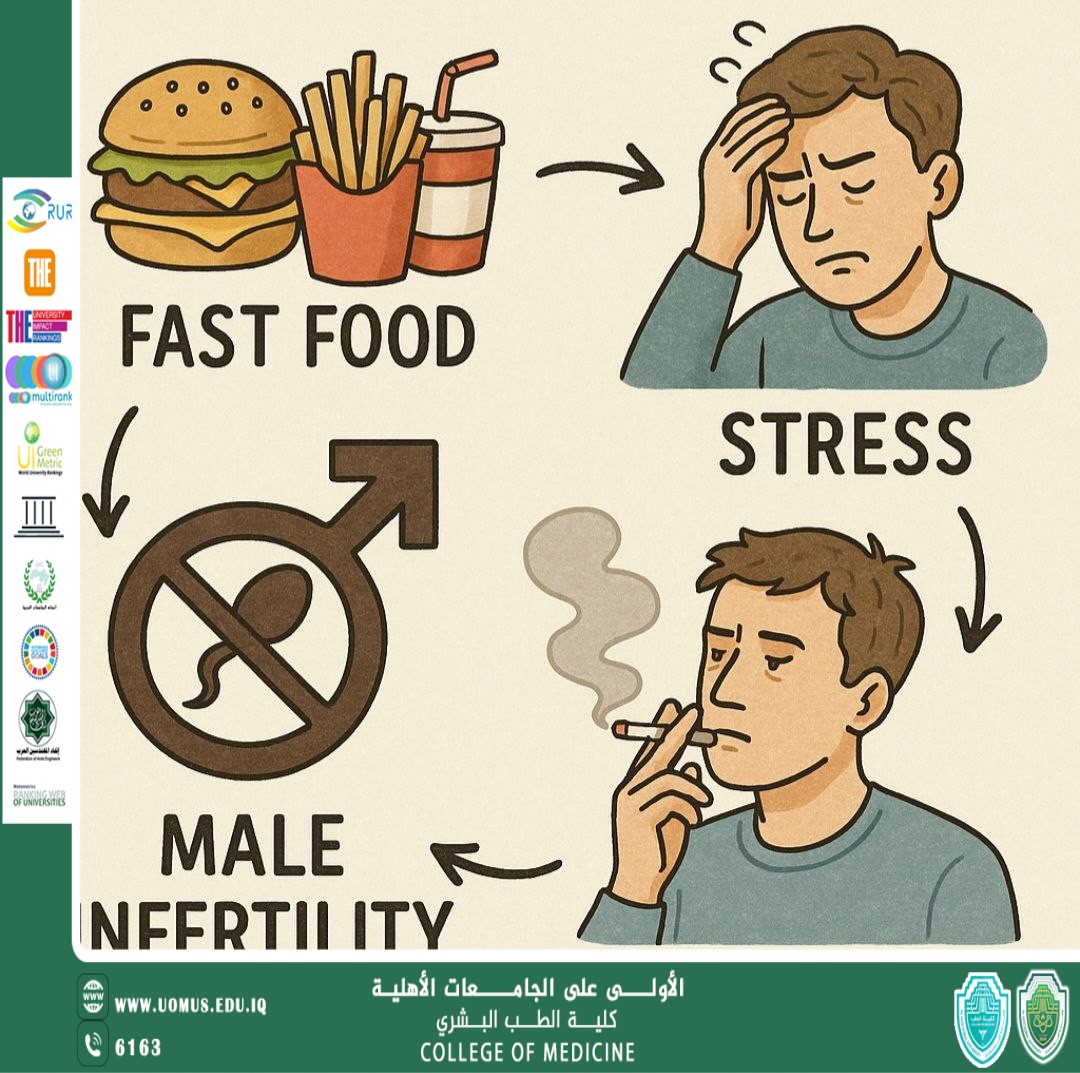
The Impact of Harmful Lifestyle Habits on Male Fertility
Abstract<br />Male infertility is a growing global health concern, with environmental and lifestyle factors playing an increasingly recognized role. This report summarizes the current scientific evidence regarding the negative impact of psychological stress, frequent fast food intake, electronic cigarette use (vaping), and waterpipe (shisha) smoking on male reproductive health. These behaviors are linked to hormonal disruptions, oxidative stress, and direct damage to sperm parameters and DNA integrity. Understanding these relationships is essential for prevention strategies and fertility optimization in men.<br /><br />1. Psychological Stress<br />Mechanism of Action<br />Psychological stress activates the hypothalamic-pituitary-adrenal (HPA) axis, leading to elevated cortisol levels. Chronic stress suppresses the hypothalamic-pituitary-gonadal (HPG) axis, resulting in reduced luteinizing hormone (LH) and testosterone production, both crucial for spermatogenesis.<br />Impact on Fertility<br />• Decreased sperm concentration and motility<br />• Increased sperm DNA fragmentation<br />• Hormonal imbalances<br />Recent Evidence<br />• A 2024 cross-sectional study (Reproductive Biology and Endocrinology) found a 25–30% reduction in total sperm count in men exposed to high levels of stress.<br />• Chronic anxiety was associated with significantly lower testosterone and increased oxidative stress markers.<br /><br />2. Frequent Consumption of Fast Food<br />Nutritional Profile and Risk<br />Fast food diets are typically high in saturated fats, trans fats, sodium, and added sugars. These nutrients are linked to systemic inflammation, metabolic dysfunction, and oxidative damage.<br />Effects on Male Reproductive Health<br />• Reduced sperm count and motility<br />• Increased sperm morphological abnormalities<br />• Higher oxidative stress and lipid peroxidation in seminal plasma<br />Recent Findings<br />• A 2024 study in Reproductive Toxicology reported a 27% decline in sperm count among men who consumed fast food more than three times weekly.<br />• High-fat diets were associated with lower testosterone and impaired Leydig cell function.<br /><br />3. Vaping (Electronic Cigarettes)<br />Chemical Exposure<br />Vape aerosols contain nicotine, heavy metals (e.g., nickel, lead), aldehydes, and flavoring agents, which can induce cellular stress and DNA damage in reproductive tissues.<br />Reproductive Consequences<br />• Lower progressive sperm motility<br />• Altered sperm morphology<br />• Oxidative damage to testicular tissue<br />• Disruption of hormonal regulation<br />Scientific Evidence<br />• A 2024 prospective study (Andrology) found a 20–35% reduction in motile sperm in daily vape users.<br />• Animal models confirmed histopathological damage to seminiferous tubules and Leydig cell degeneration after prolonged vape exposure.<br /><br />4. Shisha (Waterpipe) Smoking<br />Toxic Components<br />Each session of shisha smoking exposes the user to large amounts of carbon monoxide, polycyclic aromatic hydrocarbons, and heavy metals. Unlike cigarettes, shisha sessions often last 45 minutes to an hour, increasing exposure dramatically.<br />Impacts on Male Fertility<br />• Significant reduction in sperm count and motility<br />• Increased sperm DNA fragmentation<br />• Elevated oxidative stress markers in seminal fluid<br />Latest Data<br />• A systematic review in Middle East Fertility Society Journal (2023) concluded that regular shisha smokers had a 30–40% reduction in sperm concentration and an increase in abnormal sperm morphology.<br />• Another 2024 study showed higher levels of seminal reactive oxygen species (ROS) in waterpipe users.<br /><br />Conclusion<br />There is strong and consistent evidence that lifestyle factors such as psychological stress, fast food consumption, vaping, and shisha smoking have detrimental effects on male fertility. These behaviors promote oxidative stress, hormone disruption, and sperm DNA damage, all of which can impair reproductive capacity. Healthcare professionals should emphasize lifestyle modifications as part of fertility counseling and public health initiatives.<br /><br /><br />Key References<br />1. Al-Daghistani HI et al. (2024). Psychological stress and male infertility: A cross-sectional study. Reprod Biol Endocrinol.<br />2. Attia S et al. (2024). High-fat diets and semen quality: Experimental and clinical insights. Reproductive Toxicology.<br />3. Mokhtar R et al. (2024). Impact of vaping on testicular function: Oxidative stress and hormonal disruption. Andrology.<br />4. Akl EA et al. (2023). Waterpipe smoking and male fertility: A systematic review. Middle East Fertility Society Journal.<br />5. WHO Bulletin (2023). Lifestyle and reproductive health: Male infertility trends and global patterns.<br /><br />Dr.Ban Dhahir thabbah