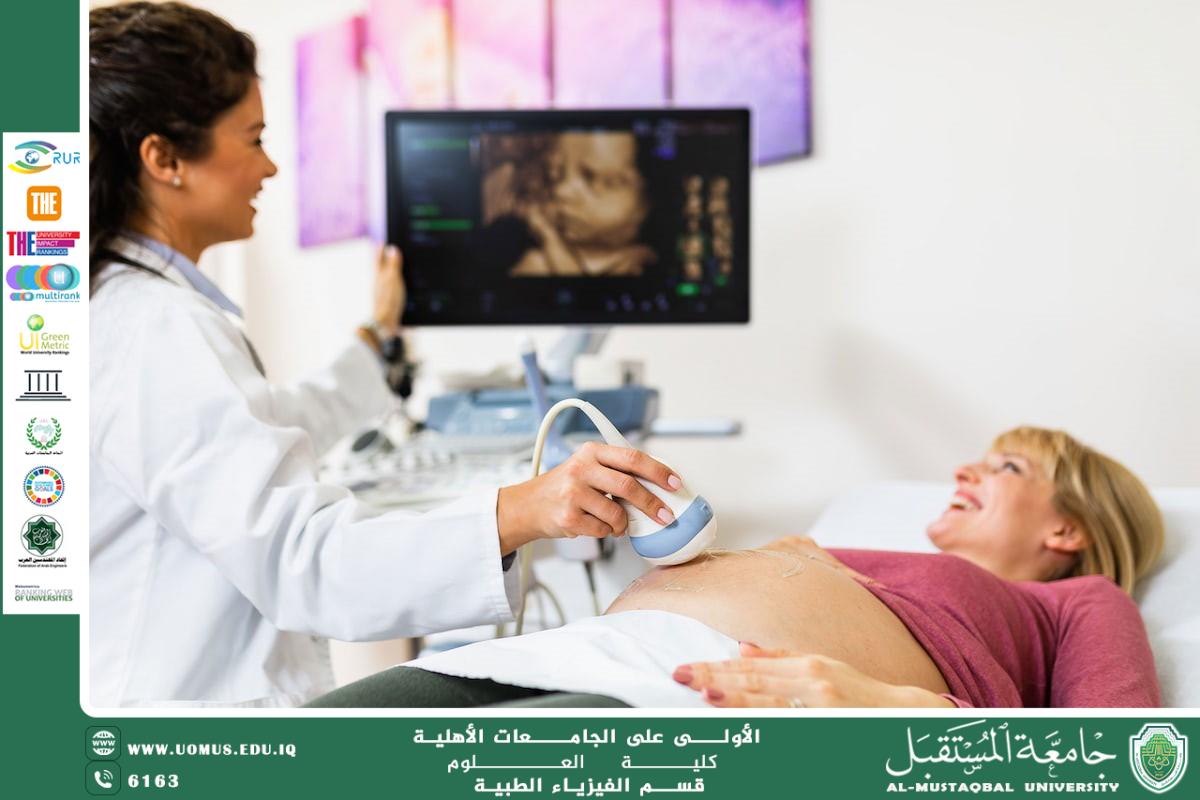
A scientific article by the lecturer (Dr. Mukhallad Ali) entitled “The role of 3D and 4D ultrasound imaging in diagnosing and treating infertility in women.”
Ultrasound imaging is a non-invasive and safe diagnostic tool that has revolutionized the field of obstetrics and gynecology. With advancements in technology, 3D and 4D ultrasound have emerged, offering new dimensions of precision and clarity—especially in diagnosing female infertility.<br />________________________________________<br />What Are 3D and 4D Ultrasound?<br />• 3D Ultrasound: This technique produces high-resolution static images of tissues and organs by compiling a series of 2D slices. It allows for three-dimensional visualization of internal structures such as the uterus and ovaries.<br />• 4D Ultrasound: An advancement of 3D ultrasound, it incorporates the time dimension, enabling real-time visualization of movement—such as fetal motion or the dynamic behavior of the uterine wall during examination.<br />________________________________________<br />Benefits of 3D and 4D Ultrasound in Infertility Diagnosis<br />1. Diagnosing Uterine Abnormalities<br />3D ultrasound can accurately detect congenital or acquired uterine anomalies such as:<br />o Septate uterus<br />o Bicornuate uterus<br />o Submucosal fibroids<br />These conditions may lead to delayed conception or recurrent miscarriage, making their accurate diagnosis a critical step in treatment planning.<br />2. Evaluating the Endometrium<br />4D ultrasound helps assess the endometrial blood flow and structural consistency, which are crucial factors in determining the likelihood of embryo implantation.<br />3. Assessing the Fallopian Tubes<br />Although Hysterosalpingography (HSG) is the traditional method for evaluating the fallopian tubes, recent advancements—such as 3D ultrasound combined with saline infusion (Sonohysterography)—offer a more comfortable and less invasive alternative.<br />4. Monitoring Ovulation and Ovarian Cysts<br />3D and 4D ultrasound allow for detailed monitoring of the ovaries, aiding in:<br />o Tracking follicular growth during treatment cycles<br />o Detecting polycystic ovary syndrome (PCOS)<br />o Evaluating response to hormonal therapy<br />________________________________________<br />Ultrasound-Guided Therapeutic Applications<br />The role of ultrasound extends beyond diagnosis; it also serves as a guide during:<br />• Oocyte retrieval procedures in IVF<br />• Precise embryo transfer into the uterus<br />• Evaluation of treatment outcomes and early pregnancy monitoring<br />________________________________________<br />Conclusion<br />3D and 4D ultrasound imaging have proven to be effective and safe tools in diagnosing the causes of female infertility. They play a significant role in guiding reproductive treatments and improving clinical outcomes. Their strength lies in providing accurate and real-time visualization of internal female reproductive structures, thereby reducing the need for invasive procedures and offering safer and more effective treatment options.<br /><br /><br /><br /><br />"AL_mustaqbal University is the first university in Iraq"<br /><br /><a href=https://uomus.edu.iq/Default.aspx target=_blank>al-mustaqbal University Website</a>