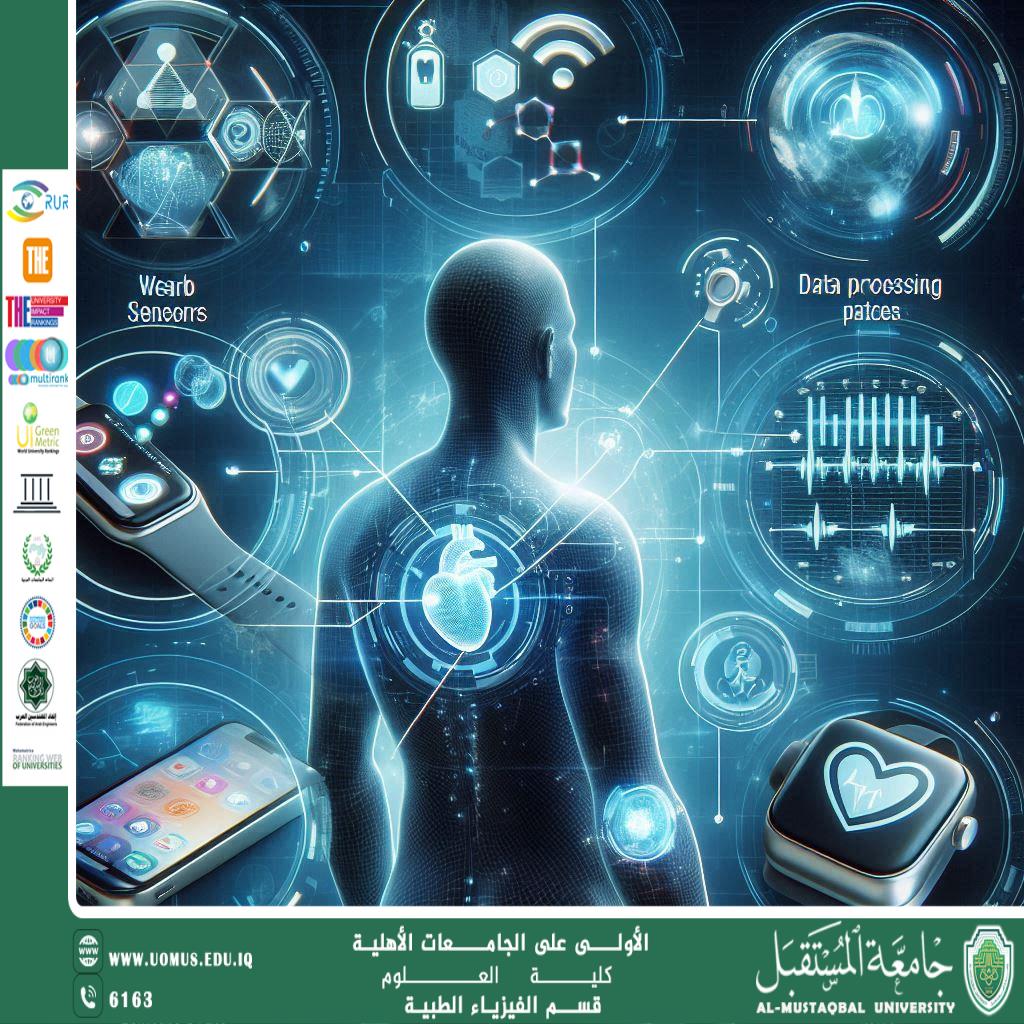
A scientific article by the teaching assistant (Mohamed Abdel Zahra) entitled “Developing electronic systems for remote monitoring of heart patients: Towards smarter and more responsive healthcare”
Introduction<br />With the global rise in cardiovascular diseases, there is an increasing need for technological solutions that allow continuous health monitoring without requiring constant hospital presence. This is where smart electronic systems for remote cardiac monitoring come into play, becoming an essential part of the digital transformation in the healthcare sector.<br /><br />1. What is Remote Monitoring?<br />Remote cardiac monitoring refers to the use of electronic devices and advanced sensors to measure a patient’s vital signs—such as heart rate, blood pressure, and oxygen saturation—and transmit this data in real-time to physicians via the internet.<br /><br />2. Components of a Cardiac Remote Monitoring System<br /><br />Wearable Sensors<br /><br />Devices like smartwatches or adhesive electrodes are used to measure ECG signals and other vital indicators.<br /><br />Data Processing Unit<br /><br />Includes microprocessors or embedded systems that perform preliminary analysis of the collected data.<br /><br />Wireless Communication<br /><br />Data is transmitted via Bluetooth, Wi-Fi, or 4G/5G networks to a central database or application used by healthcare providers.<br /><br />Central Monitoring and Analysis Platform<br /><br />Uses artificial intelligence to analyze the data and alert medical staff to any danger signs or sudden changes in the patient’s condition.<br /><br />3. Benefits of These Systems<br /><br />💓 Continuous, 24/7 monitoring without hospitalization.<br /><br />📉 Early detection of heart condition deterioration and prevention of cardiac events.<br /><br />🏠 Patients can stay at home while receiving consistent medical supervision.<br /><br />⏱️ Reduced emergency visits and long-term healthcare costs.<br /><br />📊 Long-term data collection and analysis for improved treatment plans.<br /><br />4. Technical and Practical Challenges<br /><br />Accuracy and Reliability: Ensuring that sensor devices provide clean and precise data.<br /><br />Data Security: Protecting patient data from breaches and ensuring confidentiality.<br /><br />Internet Accessibility: Especially in rural or low-infrastructure areas.<br /><br />Healthcare Integration: Training medical personnel to effectively use these systems.<br /><br />5. Examples of Currently Available Systems<br /><br />Zio Patch: A small adhesive device that records heart activity for up to two weeks.<br /><br />Apple Watch and Withings ScanWatch: Offer ECG features, heart rate tracking, and instant alerts.<br /><br />Digital platforms like Qardio and AliveCor: Connect patients to physicians via smartphone apps.<br /><br />Conclusion<br />Electronic systems for remotely monitoring cardiac patients are no longer supplementary tools—they have become core components of future healthcare. With the advancement of artificial intelligence and the Internet of Things (IoT), these systems are expected to become smarter, more affordable, and even more capable of saving lives.<br /><br /><br /><br />"AL_mustaqbal University is the first university in Iraq"<br/><br/><a href=https://uomus.edu.iq/Default.aspx target=_blank>al-mustaqbal University Website</a>