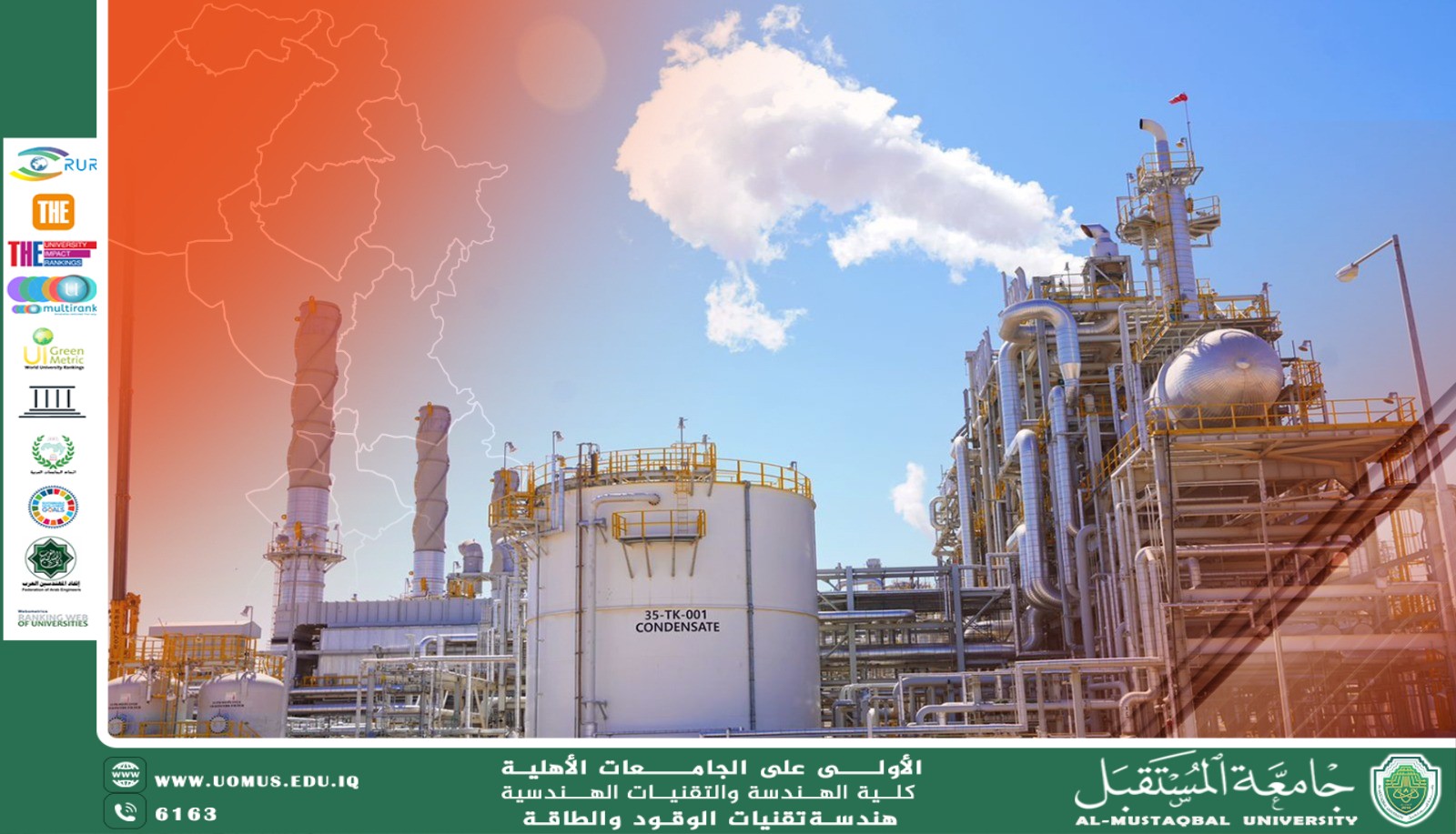
Daura Refinery products
Daura Refinery products<br />Assist. Prof. Malik Mustafa Mohammed<br />SDG 7 – Affordable and Clean Energy<br />SDG 9 – Industry, Innovation, and Infrastructure<br />SDG 12 – Responsible Consumption and Production<br />SDG 13 – Climate Action<br />1. Overview- <br />- Location-: Southern Baghdad, on the banks of the Tigris River. <br />- Operator-: Iraqi Ministry of Oil (through the Southern Refineries Company). <br />- Status-: Iraq’s -largest oil refinery-, operational since 1935. <br />- Significance-: Supplies critical refined products (gasoline, diesel, LPG) to central and southern Iraq. <br />-2. Key Details- <br />- Capacity-: <br /> - Designed to process -140,000 barrels per day (bpd)- of crude oil. <br /> - Actual output in 2024: ~-90,000–100,000 bpd- (operating at ~70% capacity due to aging infrastructure and maintenance delays). <br />- Feedstock-: <br /> - Crude oil sourced from -Kirkuk fields- (via the Kirkuk-Baiji pipeline) and southern Basra fields. <br />- Products-: <br /> - Gasoline-: ~35% of output (~35,000 bpd). <br /> - Diesel-: ~30% (~30,000 bpd). <br /> - Liquefied Petroleum Gas (LPG)-: ~10% (~10,000 bpd). <br /> - Fuel Oil/Heavy Residuals-: ~25% (used for industrial boilers and power plants). <br />-3. Historical Context- <br />- Established-: 1935 (oldest operational refinery in Iraq). <br />- Upgrades-: <br /> - 2013-: Upgraded to process 140,000 bpd (modernized units with South Korean and Turkish contractors). <br /> - Post-2014-: Targeted by ISIS attacks; partial shutdown until 2017. <br /> - 2020–2023-: Rehabilitation of sulfur recovery units and desalination plants. <br />- Security Challenges-: <br /> - Located in a volatile area; periodic disruptions due to militia attacks or protests. <br />-4. Challenges- <br />- Aging Infrastructure-: <br /> - Over 80 years old; outdated technology limits efficiency and environmental compliance. <br /> - Frequent breakdowns and unplanned shutdowns. <br />- Limited Product Quality-: <br /> - Produces low-grade gasoline (Euro 2 standards vs. Euro 5 required for modern vehicles). <br /> - High sulfur content in diesel (10,000 ppm vs. EU’s 10 ppm limit). <br />- Gas Flaring-: <br /> - Associated gas from refining is partially flared (~5–10% of total output) due to inadequate capture systems. <br />- Import Dependency-: <br /> - Despite Daura’s output, Iraq imports ~40% of its gasoline/diesel due to quality and quantity gaps. <br />5. Recent Developments (2024)- <br />- Maintenance Projects-: <br /> - Upgrading hydro-treating units to reduce sulfur content in diesel (funded by the Iraqi government). <br /> - Installing new catalytic crackers to boost gasoline yield. <br />- Partnerships-: <br /> - Siemens Energy-: Collaborating on digital monitoring systems to optimize refinery operations. <br /> - Kuwait Petroleum Corporation (KPC)-: Exploring joint ventures to modernize Daura’s facilities. <br />- Security Measures-: <br /> - Enhanced protection by Iraqi security forces to prevent sabotage. <br />-6. Environmental Impact- <br />- Air Pollution-: <br /> - Releases significant CO₂, sulfur oxides (SOₓ), and particulate matter. <br /> - Nearby communities report respiratory illnesses linked to refinery emissions. <br />- Water Usage-: <br /> - Consumes ~25,000 cubic meters/day of Tigris River water for cooling. <br /> - Wastewater discharge lacks advanced treatment, polluting local water sources. <br /><br />- Waste Management-: <br /> - Sludge and heavy residues stored in open pits, risking soil contamination. <br />-7. Economic Role- <br />- Revenue Contribution-: <br /> - Estimated annual revenue: ~$3–4 billion (based on refined product exports and domestic sales). <br />- Employment-: <br /> - Directly employs ~2,000 workers; supports thousands more in logistics and downstream industries. <br />- Import Savings-: <br /> - Reducing reliance on refined fuel imports could save ~$3 billion/year if capacity is fully utilized. <br />8. Future Outlook- <br />- Modernization Plans-: <br /> - Karbala Refinery- (planned 140,000 bpd) may reduce pressure on Daura by 2025. <br /> - Potential integration with renewable energy (e.g., solar-powered pumps). <br />- SDG Alignment-: <br /> - Needs investment in -cleaner technologies- (carbon capture, hydrogen-based refining) to align with SDG 12 (Responsible Consumption) and SDG 13 (Climate Action). <br />- Regional Competition-: <br /> - Gulf states (UAE, Saudi Arabia) export refined products to Iraq at lower prices, undermining Daura’s competitiveness. <br />9. Sources for Further Research- <br />1. -Iraqi Ministry of Oil Reports- (annual bulletins). <br />2. -OPEC Statistical Review- (refinery performance data). <br />3. -World Bank Iraq Energy Sector Assessments-. <br />4. -Reuters/Bloomberg- (updates on refinery contracts and disruptions). <br />5. -Environmental Impact Studies- (e.g., UN Environment Programme reports on Iraqi refineries). <br />University The First University in Iraq<br /><br />