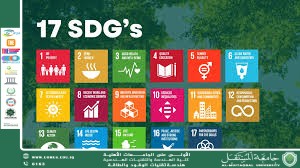
SDG 17 in Iraq
SDG 17 in Iraq<br />Assist. Prof. Malik Mustafa Mohammed<br />SDG 17 – Partnerships for the Goals<br />SDG 3 – Good Health and Well-being<br />SDG 4 – Quality Education<br />SDG 6 – Clean Water and Sanitation<br />-SDG 17 in Iraq: Strengthening Partnerships for Sustainable Development-<br />-Context: <br />Iraq, emerging from decades of conflict, political instability, and economic reliance on oil, faces significant challenges in achieving the Sustainable Development Goals (SDGs). SDG 17, which emphasizes global partnerships for development, is critical for Iraq's recovery and sustainable growth. The country requires multi-stakeholder collaboration to address infrastructure gaps, healthcare, education, climate resilience, and economic diversification.<br />- Key Partnership Areas and Initiatives-<br />1. -Government & International Collaboration- <br /> - International Donors & Organizations: <br /> - The UNDP, UNICEF, World Bank, and EU fund projects in post-conflict reconstruction, healthcare, and education. For example, the -Humanitarian Response Plan (HRP)- coordinates aid for displaced populations. <br /> - The -International Compact with Iraq (ICI)-, launched in 2003, supports economic reform and development through donor coordination. <br /> - Regional Cooperation:- <br /> - Engagement with Gulf Cooperation Council (GCC) states and Turkey on water management and energy projects. <br /> - Participation in the -Arab League- for regional policy alignment. <br />2. -Civil Society & NGOs- <br /> - Local and international NGOs (e.g., Save the Children, Médecins Sans Frontières) implement grassroots projects in education, gender equality, and trauma support. <br /> - Partnerships with UNESCO have restored schools and cultural heritage sites. <br />3. -Private Sector Engagement- <br /> - Public-private partnerships (PPPs) in energy, telecommunications, and agriculture. For example, foreign firms collaborate on rebuilding power grids and digital infrastructure. <br /> - The -Iraq Private Sector Recovery Facility- (World Bank) supports SMEs to boost economic diversification. <br />4. -Technology & Innovation- <br /> - Digital Iraq Strategy: Partnerships with tech firms to expand internet access (aligned with SDG 17.9 on technology capacity). <br /> - Solar energy projects funded by the UN Development Programme (UNDP) to reduce reliance on fossil fuels. <br />5. -Climate & Environmental Initiatives- <br /> - Collaboration with the UN Environment Programme (UNEP) to combat desertification and water scarcity. <br /> - Transboundary water agreements with Turkey and Iran (e.g., the Tigris-Euphrates basin management). <br />- Challenges- <br />- -Security & Political Instability: Ongoing conflict and corruption hinder project implementation. <br />- Bureaucratic Barriers: Complex regulatory frameworks delay aid and investment. <br />- Over-Reliance on Oil: Limited economic diversification despite international pressure. <br />- Data Gaps: Weak institutional capacity to track SDG progress, including SDG 17 indicators. <br />- Success Stories- <br />- Healthcare: WHO partnerships improved polio eradication and maternal health services. <br />- Education: Over 200 schools rebuilt with UNESCO support since 2014. <br />- Infrastructure: The World Bank-funded -Emergency School Rehabilitation Project- restored classrooms for 500,000 students. <br />- Water Access: UNICEF programs increased clean water access in rural areas by 40% (2020). <br /> <br />- Progress Indicators- <br />- ODA Received: Iraq received $1.2 billion in Official Development Assistance in 2021 (UNDP). <br />- Internet Penetration: Rose from 10% (2010) to 65% (2023) due to private-public investments. <br />- FDI Inflows:- $1.5 billion in 2022, driven by energy and telecom sectors. <br />- Recent Developments- <br />- Post-ISIS Recovery: Partnerships focus on Mosul’s reconstruction and Yezidi community support. <br />- IMF Reforms: Economic stabilization programs require international oversight and capacity-building. <br />- Climate Resilience: EU-funded projects to mitigate drought impacts on agriculture. <br />- Conclusion- <br />Iraq’s progress on SDG 17 hinges on sustained, transparent partnerships across sectors. While challenges persist, collaborative efforts have delivered critical gains in infrastructure, health, and education. Strengthening institutional capacity, reducing corruption, and leveraging regional ties will be key to achieving long-term sustainability. <br />-Sources: UNDP Iraq Reports, World Bank Projects, Iraqi Ministry of Planning, SDG Index Dashboards (2023), and recent news analyses.<br />Here are -20 key points summarizing SDG 17 in Iraq-:<br />1. -Post-Conflict Recovery-: Iraq relies on SDG 17 partnerships to rebuild after decades of war, political instability, and oil-dependent economics. <br />2. -International Donors-: UNDP, World Bank, EU, and others fund reconstruction, healthcare, education, and humanitarian aid. <br />3. -Humanitarian Response Plan (HRP)-: Coordinates aid for displaced populations and conflict-affected communities. <br />4. -International Compact with Iraq (ICI)-: A long-term framework (since 2003) supporting economic reform and development through donor collaboration. <br />5. -Regional Cooperation-: Engages GCC states, Turkey, and Iran on water management, energy, and transboundary issues like the Tigris-Euphrates basin. <br />6. -Arab League Participation-: Aligns regional policies to support SDG progress. <br />7. -Civil Society Role-: NGOs (e.g., Save the Children, MSF) drive grassroots efforts in education, gender equality, and mental health. <br />8. -UNESCO Partnerships-: Restore schools and cultural heritage sites, including post-ISIS rebuilding. <br />9. -Private Sector Engagement-: Public-private partnerships (PPPs) advance energy, telecom, and agriculture; World Bank supports SMEs for economic diversification. <br />10. -Digital Transformation-: Tech firms collaborate on expanding internet access (65% penetration in 2023) under Iraq’s Digital Strategy. <br />11. -Renewable Energy-: UNDP funds solar projects to reduce fossil fuel dependence. <br />12. -Climate Action-: Collaborates with UNEP to tackle desertification and water scarcity; EU supports drought resilience in agriculture. <br />13. -Transboundary Water Agreements-: Negotiations with Turkey and Iran aim to manage shared water resources. <br />14. -Key Challenges-: Security risks, corruption, bureaucratic hurdles, and over-reliance on oil hinder progress. <br />15. -Data Gaps-: Weak institutional capacity to monitor SDG 17 indicators effectively. <br />16. -Healthcare Successes-: WHO partnerships improved polio eradication and maternal healthcare access. <br />17. -Education Gains-: Over 200 schools rebuilt since 2014, benefiting 500,000 students via World Bank and UNESCO. <br />18. -Water Access-: UNICEF programs increased clean water access in rural areas by 40% (2020). <br />19. -FDI Growth-: Foreign direct investment reached $1.5 billion in 2022, driven by energy and telecom sectors. <br />20. -Post-ISIS Recovery-: Focus on Mosul’s reconstruction, Yezidi community support, and IMF-backed economic reforms. <br />University The First University in Iraq<br /><br /><br />