The Deadliest Energy Sources for Human Life and Their Environmental Impact
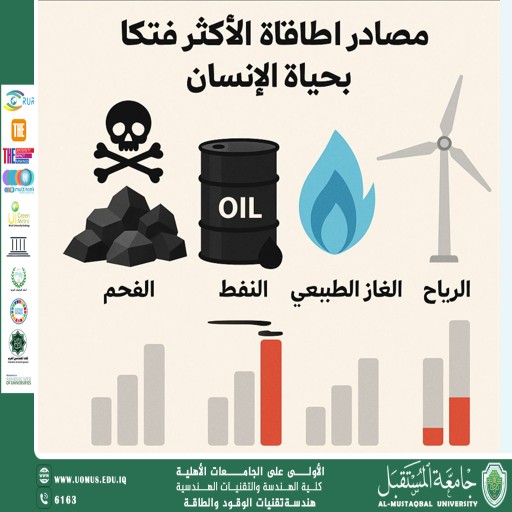
The Deadliest Energy Sources for Human Life and Their Environmental Impact<br />Eng. Nourhan Thamer Assi<br /><br />🎯 Relevant Sustainable Development Goals (SDGs):<br />Goal 3: Good Health and Well-being<br />Goal 7: Affordable and Clean Energy<br />Goal 13: Climate Action<br />As global attention increasingly focuses on energy sources and their impact on human health and the environment, fossil fuels top the list of the deadliest energy sources. According to recent reports, coal and oil cause a high number of deaths per unit of electricity produced, surpassing renewable energy sources and nuclear power.<br />Coal is considered the deadliest, generating about 35% of the world’s electricity and causing approximately 25 deaths per terawatt-hour of electricity, according to data from the “Our World in Data” project at Oxford University. Oil ranks second, responsible for around 18 deaths per terawatt-hour. These deaths are largely due to air pollution and accidents related to fossil fuel extraction and combustion.<br />In contrast, nuclear energy is among the safest sources, even considering catastrophic incidents like Chernobyl and Fukushima. Solar energy is currently the safest among all available power sources. However, hydroelectric power, although renewable, has witnessed tragic disasters such as the Banqiao Dam failure in 1975, which resulted in over 170,000 deaths.<br />These facts highlight the critical need to shift toward safer and cleaner energy sources to reduce human and environmental losses.<br />"Al-Mustaqbal University – The No. 1 Private University in Iraq"<br />