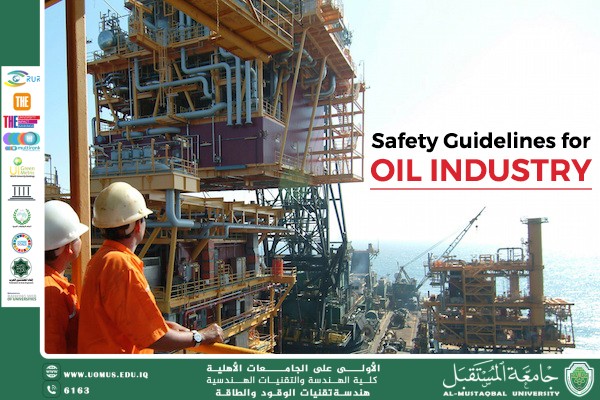
Occupational Safety in Oil Refineries
Occupational Safety in Oil Refineries<br />Assist. Prof. Malik Mustafa Mohammed<br /><br />SDG 3: Good Health and Well-being<br />SDG 9: Industry, Innovation and Infrastructure<br />SDG 3: Good Health and Well-being<br />SDG 12: Responsible Consumption and Production<br />SDG13: Climate Action<br />Goal 16: Peace, Justice and Strong Institutions<br />Oil refineries are inherently high-risk environments, where workers are exposed to flammable substances, toxic chemicals, and heavy industrial equipment. Ensuring occupational safety is essential to protect workers, prevent accidents, and ensure environmental and operational integrity. This document outlines the key safety measures adopted in modern refineries.<br />1. Personal Protective Equipment (PPE)<br />Essential for frontline defense against various hazards:<br />Flame-Resistant Clothing (FRC): Shields against fires and flashovers.<br />Head, Hand, and Foot Protection: Hard hats, gloves, and steel-toe boots safeguard against falling objects and physical injuries.<br />Respiratory Protection: NIOSH-approved respirators protect from gases like benzene and hydrogen sulfide (H₂S).<br />Hearing Protection: Earplugs and earmuffs mitigate prolonged exposure to noise levels above 85 dB.<br />Eye and Face Protection: Chemical goggles or face shields defend against splashes and particles.<br />2. Engineering Controls<br />Designed systems to eliminate or reduce hazard exposure:<br />Explosion-Proof Equipment: Compliant with ATEX and IECEx standards.<br />Pressure Relief Valves (PRVs): Prevent over-pressurization of vessels and piping.<br />Ventilation Systems: Ensure air circulation and remove combustible/toxic vapors.<br />Fire Suppression Systems: Includes deluge systems, CO₂, and foam-based extinguishers.<br />Safety Instrumented Systems (SIS): Automated interlocks and emergency shutdown systems (ESD) based on risk assessments.<br />3. Administrative Controls<br />Policies and procedures to regulate safe human interaction with equipment and processes:<br />Training Programs: Cover safe handling, emergency response, and HAZMAT protocols.<br />Permit-to-Work (PTW) Systems: Authorize high-risk tasks like hot work or confined space entry.<br />Lockout-Tagout (LOTO): Ensures equipment is isolated during maintenance.<br />Fatigue Management: Rotating shifts and rest cycles to combat human error.<br />4. Process Safety Management (PSM)<br />A systematic approach governed by OSHA Standard 29 CFR 1910.119:<br />HAZOP (Hazard and Operability) Studies: Identify potential failures in process design.<br />Operating Procedures: Define normal and emergency operation steps.<br />Incident Investigations: Root Cause Analysis (RCA) to prevent recurrence.<br />Asset Integrity: Inspections (NDT, ultrasonic testing) for corrosion, leaks, and fatigue.<br />5. Emergency Preparedness<br />Preparation for rapid and effective response:<br />Evacuation Plans: Clearly marked exits, muster points, and drills.<br />On-Site Emergency Teams: Trained fire brigades, medics, and HAZMAT units.<br />Gas Detection Systems: Fixed and portable detectors for H₂S, LEL, CO, etc.<br />Communication Systems: PA systems, alarms, and radios ensure timely alerts.<br />6. Health Monitoring<br />Protecting worker health through proactive surveillance:<br />Medical Surveillance Programs: Periodic screening for exposure-related health conditions.<br />Air Quality Monitoring: Real-time sensors track compliance with OSHA PELs and ACGIH TLVs.<br />7. Compliance & Standards<br />Alignment with national and international safety regulations:<br />OSHA (Occupational Safety and Health Administration) – PSM Standard<br />NFPA 70E: Electrical safety in hazardous areas.<br />API Standards: Best practices for refining operations (e.g., API 520, 570, 653).<br />Regular Audits: Third-party and internal audits to ensure regulatory compliance.<br />8. Technology Integration<br />Modern digital solutions for enhanced safety:<br />IoT Sensors & Wearables: Monitor gas levels, temperature, and worker health.<br />SCADA Systems: Real-time monitoring and control of plant operations.<br />VR Training Simulations: Enhance emergency preparedness through immersive learning.<br />9. Safety Culture & Human Factors<br />Promoting a proactive mindset across all levels:<br />Buddy Systems: Team-based work for mutual safety.<br />Open Reporting Culture: Anonymous hazard reporting mechanisms.<br />Signage and Labeling: GHS-compliant chemical labels and hazard zones marked clearly.<br />10. Environmental and Waste Management<br />Minimizing environmental risks from refinery operations:<br />Spill Prevention & Control: Bunds, drip trays, and absorbents.<br />Air Emission Controls: Scrubbers, flare systems, and leak detection & repair (LDAR).<br />Waste Handling: Proper segregation, labeling, and disposal per RCRA and Basel Convention.<br /><br />"Al-Mustaqbal University – The No. 1 Private University in Iraq"<br />