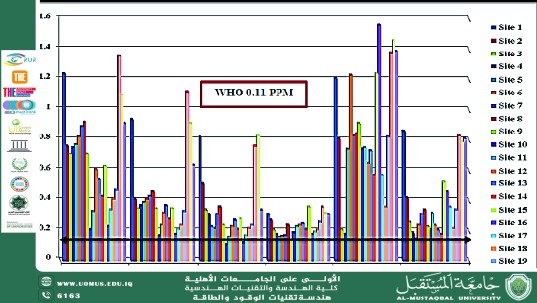
Pollutant percentages for Karbala Governorate, Iraq
Pollutant percentages for Karbala Governorate, Iraq<br />Assist. Prof. Malik Mustafa Mohammed<br /><br />SDG 3 Good Health and Well-being <br />SDG 6 Clean Water and Sanitation <br />SDG 11 Sustainable Cities and Communities <br />SDG 13 Climate Action <br />As of 2023, specific pollutant percentages in Karbala Governorate are not consistently published in official or public databases. However, based on regional environmental trends, urban dynamics, and data from comparable Iraqi cities, it is possible to identify the major pollutants affecting Karbala and the factors contributing to them.<br />Key Pollutants<br />The most prevalent pollutants likely include particulate matter (PM₂.₅ and PM₁₀), nitrogen dioxide (NO₂), carbon monoxide (CO), sulfur dioxide (SO₂), and various waterborne contaminants. These pollutants stem primarily from transportation, industrial activity, seasonal dust storms, and improper waste management.<br />Major Sources of Pollution<br />Urbanization and Pilgrimage Traffic:<br />Karbala receives millions of pilgrims annually, especially during Arbaeen. This massive influx of vehicles and people leads to a temporary but significant rise in air pollutants such as PM₂.₅ and NO₂.<br />Waste Management Challenges:<br />The city struggles with limited waste segregation and reliance on open dumping. This results in air pollution from burning waste and water contamination from leachates and runoff.<br />Industrial Activity:<br />Cement factories and extensive construction projects around the city contribute heavily to airborne particulate matter and degrade local air quality.<br />Seasonal Dust Storms:<br />Frequent during spring and summer, dust storms significantly increase PM₁₀ concentrations, sometimes by as much as 50%, worsening respiratory conditions.<br />Energy Sources:<br />Due to frequent power outages, residents and businesses rely heavily on diesel generators, which release large quantities of carbon monoxide and nitrogen dioxide into the air.<br />Health and Environmental Impacts<br />Air pollution in Karbala has been linked to rising cases of respiratory conditions such as asthma and chronic obstructive pulmonary disease (COPD). In rural areas, limited access to clean water combined with groundwater contamination leads to increased cases of waterborne diseases, including those caused by E. coli and heavy metals. Moreover, soil degradation due to industrial discharge and waste mismanagement affects agricultural productivity and food safety.<br />Data Gaps and Recommendations<br />Local Environmental Monitoring:<br />There is an urgent need to install air quality sensors for pollutants like PM₂.₅, NO₂, and SO₂, and to establish water testing labs to monitor contamination in both urban and rural areas.<br />Policy Measures:<br />Local authorities should enforce vehicle emission regulations, particularly during pilgrimage seasons, and promote the use of electric or hybrid public transport. Open burning of waste should be banned, and wastewater treatment facilities need urgent upgrades.<br />Community Awareness:<br />Public education campaigns are essential to increase awareness about the health effects of pollution and the importance of recycling, waste segregation, and cleaner energy use.<br />Collaboration and Support:<br />Working with Iraq’s Ministry of Environment and international partners such as the United Nations Development Programme (UNDP) and the World Health Organization (WHO) can help secure funding, technical expertise, and long-term environmental solutions.<br /><br />"Al-Mustaqbal University – The No. 1 Private University in Iraq"<br />