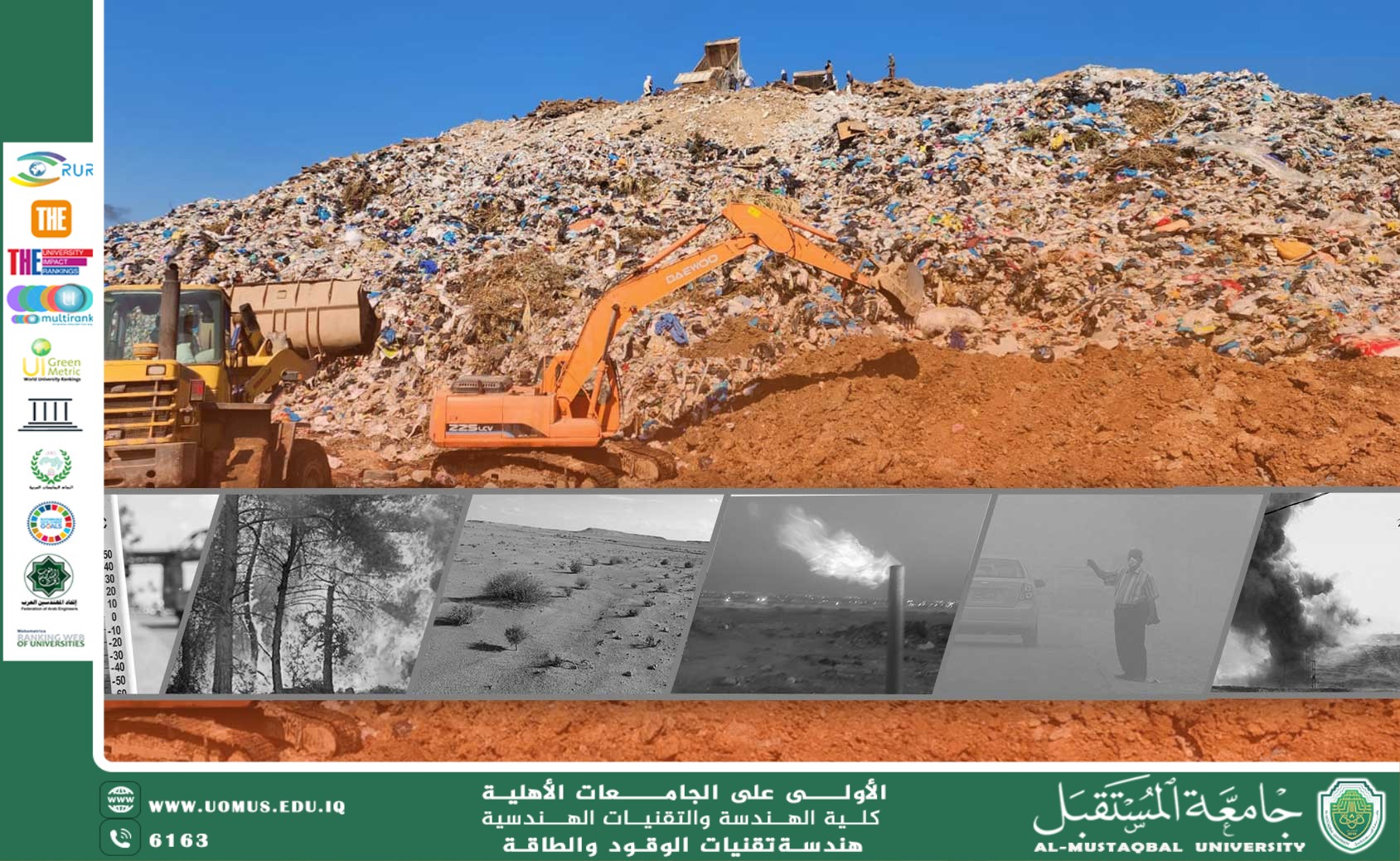
Regional Waste Management Facilities in Iraq
Regional Waste Management Facilities in Iraq<br />Assist. Prof. Malik Mustafa Mohammed<br />SDG 6: Clean Water and Sanitation<br />SDG 11: Sustainable Cities and Communities<br />SDG 12: Responsible Consumption and Production<br />SDG 13: Climate Action<br />SDG 15: Life on Land<br /><br /> 1. Introduction <br />Iraq’s waste management system faces significant challenges due to decades of conflict, political instability, rapid urbanization, and insufficient infrastructure. With a population exceeding 43 million and growing, the country generates approximately 35,000–40,000 tons of municipal solid waste (MSW) daily , according to the World Bank. Effective waste management remains a critical issue, particularly in urban centers like Baghdad, Basra, and Mosul, as well as in the semi-autonomous Kurdistan Region. This report examines the current state of regional waste facilities, key challenges, and ongoing efforts to improve waste management across Iraq.<br /> 2. Current Status of Regional Waste Facilities <br /> 2.1 Baghdad <br />- Al-Doura Landfill : The largest landfill in Baghdad, located south of the city, is overwhelmed by unsorted waste, leading to severe environmental pollution. It lacks modern engineering controls like leachate collection systems. <br />- Mechanical Biological Treatment (MBT) Plants : Recent projects, such as the EU-funded MBT plant in Baghdad (2021), aim to process 500 tons/day of MSW into recyclables and compost. <br /> 2.2 Basra (Southern Iraq) <br />- Al-Maqal Landfill : The primary waste disposal site for Basra, criticized for open burning and groundwater contamination. Plans for a modern waste-to-energy plant have stalled due to funding gaps. <br />- Private Sector Initiatives : Local companies like Green Future Iraq have launched small-scale recycling projects for plastics and metals. <br /> 2.3 Mosul (Northern Iraq) <br />- Post-Conflict Challenges : Mosul’s waste infrastructure was heavily damaged during the ISIS occupation (2014–2017). Temporary dumpsites dominate, with limited sorting or treatment. <br />- UNDP Support : A 2022 project focused on rehabilitating waste collection services in partnership with local authorities. <br /> 2.4 Kurdistan Region (Erbil, Sulaymaniyah, Duhok) <br />- Kurdistan Solid Waste Management Project : Funded by the World Bank, this initiative established engineered landfills and recycling centers in Erbil and Sulaymaniyah. <br />- Erbil Waste-to-Energy Plant : A pilot facility launched in 2023, converting organic waste into biogas. <br /> 3. Key Challenges <br /> 3.1 Infrastructure Deficits <br />- Outdated Systems : Over 80% of waste is disposed of in non-engineered landfills or open dumps. <br />- Lack of Sorting : Less than 5% of waste is segregated at the source, limiting recycling potential. <br /> 3.2 Funding and Governance <br />- Budget Constraints : Municipal budgets allocate less than 1% to waste management, per the Iraqi Ministry of Municipalities. <br />- Corruption and Fragmentation : Inefficient governance and overlapping responsibilities between federal and regional authorities hinder progress. <br /> 3.3 Environmental and Health Risks <br />- Air/Water Pollution : Open burning releases dioxins and particulate matter; leachate from dumps contaminates groundwater. <br />- Public Health : Respiratory illnesses and waterborne diseases are prevalent near dumpsites. <br /> 3.4 Public Awareness <br />- Low community engagement in recycling or waste reduction practices. Informal sector scavenging is common but unregulated. <br /><br /> 4. Regional Efforts and International Collaboration <br /> 4.1 Government Initiatives <br />- National Waste Management Strategy (2020–2030) : Prioritizes landfill modernization, public-private partnerships (PPPs), and recycling incentives. <br /> 4.2 International Support <br />- EU and UNDP Projects : Funded mobile waste processing units and capacity-building programs for municipalities. <br />- World Bank : Allocated $200 million for integrated solid waste management in five governorates. <br /> 4.3 Private Sector and NGOs <br />- Iraqi Recycling Network : A coalition of NGOs promoting community-based recycling. <br />- Startups : Companies like Recycle Iraq use social media to educate citizens on waste separation. <br /> 5. Recommendations <br />1. Modernize Infrastructure : Invest in MBT plants, engineered landfills, and waste-to-energy facilities. <br />2. Enforce Legislation : Implement laws mandating waste segregation and penalizing illegal dumping. <br />3. Boost Public Engagement : Launch awareness campaigns and incentivize household recycling. <br />4. Strengthen PPPs : Attract private investment through tax breaks and long-term contracts. <br />5. Regional Coordination : Establish a federal agency to oversee cross-border waste management. <br />6. Adopt Technology : Use GIS mapping for waste collection optimization and IoT sensors for landfill monitoring. <br /> 6. Conclusion <br />Iraq’s regional waste facilities require urgent transformation to address public health crises and environmental degradation. While the Kurdistan Region demonstrates progress through international collaboration, southern and central Iraq lag due to systemic challenges. A combination of infrastructure investment, policy reform, and community participation is essential to build a sustainable waste management system. <br />Sources: World Bank, Iraqi Ministry of Municipalities, UNDP Iraq, Kurdistan Regional Government Reports. <br />"Al-Mustaqbal University – The No. 1 Private University in Iraq"<br /><br /><br /><br />