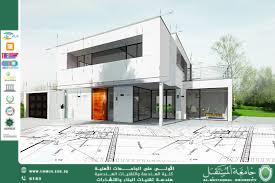
Smart Materials and Their Role in Enhancing Structural Performance
Introduction<br />With the rapid advancements in materials science and engineering, smart materials have emerged as advanced solutions to enhance the performance and efficiency of structural systems. These materials possess the ability to respond to environmental or mechanical changes such as temperature, humidity, loads, or cracks, enabling self-adaptation that improves safety and sustainability. This article reviews the types of smart materials used in civil engineering and how they contribute to increasing structural efficiency while reducing maintenance costs.<br /><br />1. What Are Smart Materials?<br />Smart materials are materials that sense changes in their surrounding environment and alter their properties or behavior autonomously or semi-autonomously without the need for direct external intervention. These properties include shape, stiffness, conductivity, or chemical reactivity.<br /><br />2. Types of Smart Materials Used in Structures<br />1. Self-Healing Concrete<br />Contains additives (such as bacteria or polymer capsules) that automatically seal cracks when exposed to water or air.<br /><br />Extends the service life of structures and reduces maintenance needs.<br /><br />2. Shape Memory Alloys (SMAs)<br />Metallic materials that recover their original shape after deformation upon heating.<br /><br />Used in connecting structural elements or in absorbing seismic shocks.<br /><br />3. Optical Fibers and Smart Sensors<br />Embedded within concrete or metal elements to monitor stress, corrosion, or temperature.<br /><br />Used in Structural Health Monitoring (SHM) systems to continuously track the condition of the structure.<br /><br />4. Active Composite Materials<br />Such as electro-thermal or electromagnetic polymers that change properties under electrical or thermal stimuli.<br /><br />Applied in advanced applications like movable walls or vibration damping.<br /><br />3. Benefits of Using Smart Materials<br />Benefit Explanation<br />Increased Durability Self-repair of cracks and deformations reduces structural degradation.<br />Cost Reduction Reduces the need for manual inspection and routine maintenance.<br />Improved Safety Smart sensor systems detect risks early.<br />Sustainability Extending structural life reduces consumption of resources and materials.<br />Design Flexibility Allows designing lighter, smarter structures that adapt to changing conditions.<br /><br />4. Challenges and Considerations<br />Higher initial cost compared to traditional materials.<br /><br />Requires trained engineering personnel to understand and implement these technologies.<br /><br />Limited availability of materials in some markets.<br /><br />Need for updated design codes and standards to accommodate the unique properties of these materials.<br /><br />Conclusion<br />Smart materials represent a revolution in civil engineering by providing innovative solutions to traditional challenges facing structural systems. Despite technical and economic challenges, the shift towards these materials enhances the quality and sustainability of infrastructure, paving the way for a safer and smarter future in construction.