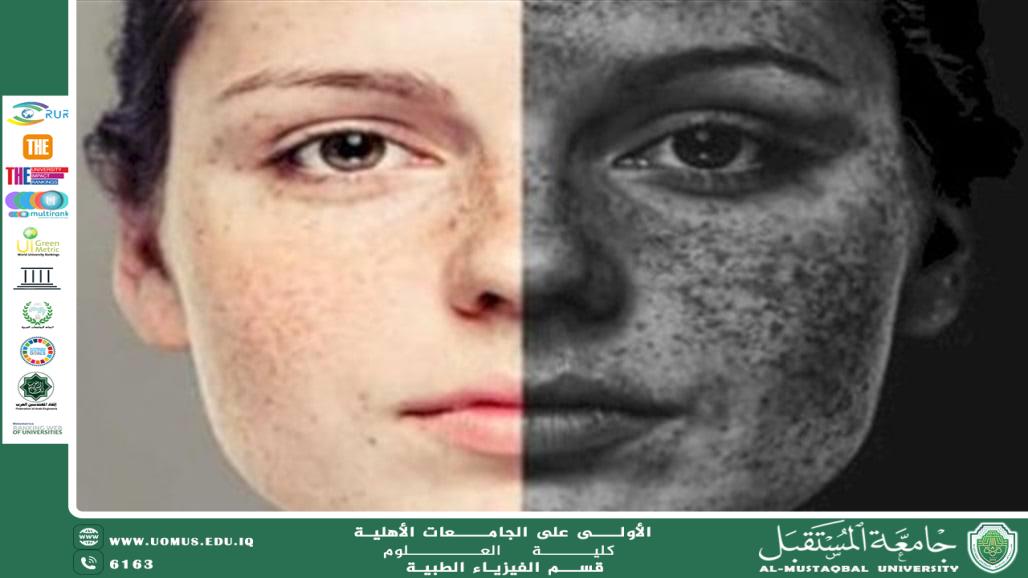
A scientific article by the teaching assistant (Iftikhar Thamer) entitled "The effect of ultraviolet rays on the skin in the summer"
Introduction<br /><br />Ultraviolet (UV) radiation is a component of solar radiation and becomes more intense during the summer months. While sunlight exposure offers benefits like stimulating the production of vitamin D, excessive exposure to UV rays poses significant health risks, especially to the skin. This article explores the biological effects of UV radiation on the skin, contributing factors, and preventive measures.<br /><br />Types of Ultraviolet Radiation<br /><br />UV radiation is divided into three main types:<br /> • UVA: Penetrates deep into the skin and contributes to premature aging.<br /> • UVB: Affects the outer layers of the skin and causes sunburn.<br /> • UVC: Almost completely absorbed by the Earth’s atmosphere and does not reach the surface.<br /><br /><br />Effects of UV Radiation on the Skin<br /><br />1. Immediate Effects<br /> • Redness and Sunburn: Caused primarily by UVB, leading to skin inflammation.<br /> • Skin Dryness: Due to loss of moisture and increased sweating.<br /> • Photosensitivity: Some individuals develop rashes or itching upon sun exposure.<br /><br />2. Long-Term Effects<br /> • Photoaging: UVA rays break down collagen and elastin, leading to wrinkles and loss of skin elasticity.<br /> • Hyperpigmentation and Melasma: Manifested as dark spots and freckles.<br /> • Skin Cancer: Including melanoma and basal cell carcinoma, resulting from DNA damage caused by UVA and UVB.<br /><br />Factors Affecting UV Exposure<br /> • Time of Day: UV intensity peaks between 10 a.m. and 4 p.m.<br /> • Geographical Location: Areas near the equator receive more intense radiation.<br /> • Altitude: Higher altitudes have increased UV exposure.<br /> • Surface Reflection: Surfaces like water, sand, and snow reflect UV rays and intensify exposure.<br /><br />Prevention Methods<br /> • Use sunscreen with a sun protection factor (SPF) of at least 30.<br /> • Wear protective clothing, sunglasses, and wide-brimmed hats.<br /> • Avoid direct sunlight during peak hours.<br /> • Seek shade whenever possible.<br /> • Keep the skin moisturized after sun exposure.<br /><br />Conclusion<br /><br />While sunlight is essential for life and human health, unprotected exposure to ultraviolet rays—especially in summer—can lead to serious skin damage. Awareness and adoption of protective strategies are essential to maintain skin health and prevent long-term consequences such as skin cancer.<br /><br /><br />"AL_mustaqbal University is the first university in Iraq"<br/><br/><a href=https://uomus.edu.iq/Default.aspx target=_blank>al-mustaqbal University Website</a>