

The Evolution of Artificial Neural Networks in Intelligent Systems: From Traditional Models to Deep Intelligence
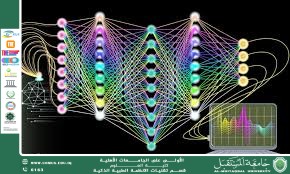
Artificial Neural Networks (ANN) are among the most prominent technologies in artificial intelligence, inspired by the functioning of the human brain. These networks have witnessed remarkable development over the past decades, especially in the field of intelligent systems, becoming a core component in applications such as computer vision, natural language processing, intelligent control, and robotics.<br />• Early Roots of Neural Networks<br />The concept of neural networks began in the 1940s with the “McCulloch and Pitts” model (1943), which simulated the simplest form of a neural cell. This was followed by the development of the “Perceptron” algorithm by Rosenblatt in 1958, marking the first real attempt to teach networks how to distinguish between patterns.<br />However, this stage faced significant challenges, particularly in dealing with non-linear data, which led to a stagnation in neural network research during the 1970s.<br />• The Renaissance with New Algorithms<br />In the 1980s, a major breakthrough occurred with the discovery of the Backpropagation algorithm, which enabled the training of Multilayer Perceptrons (MLP). This was a cornerstone in reviving neural networks and expanding their application in recognition and classification systems.<br />• Neural Networks and Intelligent Systems<br />With the advent of the 21st century, neural networks became a key player in the development of intelligent systems, such as:<br />• Self-Driving Cars: By integrating neural networks with visual and control sensors.<br />• Smart Assistants like Siri and Alexa, using language processing networks.<br />• Medical Diagnostic Systems utilizing CNNs to analyze radiographic images.<br />• Intelligent Cybersecurity for detecting anomalies and intrusions.<br />• The Rise of Deep Learning<br />Deep learning represents a qualitative leap in the evolution of neural networks, as it involves building large-scale models based on multiple layers of processing (Deep Neural Networks). Key models include:<br />• Convolutional Neural Networks (CNNs): For image and video processing.<br />• Recurrent Neural Networks (RNNs) and LSTM: For sequential data such as text and speech.<br />• Transformers: Which revolutionized natural language processing (e.g., GPT and BERT).<br />• Challenges and Future Directions<br />Despite their success, neural networks in intelligent systems still face several challenges:<br />• High computational power requirements.<br />• Difficulty in interpreting model decisions (Black-box nature).<br />• Issues of bias and fairness in training data.<br />Future directions include:<br />• Explainable AI: To enhance transparency and trust in model decisions.<br />• Neuro-Symbolic Systems: Combining neural networks with symbolic reasoning.<br />• Efficient AI: Developing models optimized for data and energy efficiency.<br />Al-Mustaqbal University: The Leading University in Iraq<br />