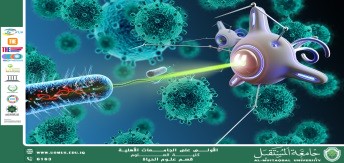
A scientific article by the lecturer, Msc. Ali Kumait Hamad, entitled "Nanotechnology in Combating Bacterial Infections:"
Bacterial infections remain one of the major global health challenges, especially with the rising problem of antibiotic resistance. Traditional antibiotics are becoming less effective, pushing scientists to explore innovative solutions. Nanotechnology has emerged as a powerful tool in the medical field, offering promising strategies to detect, prevent, and treat bacterial infections by exploiting the unique properties of nanomaterials at the molecular level. Nanotechnology offers transformative potential in the fight against bacterial infections, particularly in the context of rising antibiotic resistance. As research advances, nanomaterials are likely to become an integral part of modern medical strategies for infection control. However, their safe and effective use requires ongoing study of long-term effects, biocompatibility, and environmental impact.<br />What is Nanotechnology? Nanotechnology refers to the science and engineering of materials and devices on the nanoscale (1 to 100 nanometers). At this scale, materials exhibit distinct physical, chemical, and biological properties that can be harnessed for various applications, including medicine and microbiology.<br />Mechanisms of Action of Nanomaterials Against Bacteria<br />1. Disruption of the Bacterial Cell Wall<br />Nanoparticles such as silver and copper can penetrate and damage the bacterial membrane, leading to leakage of cellular contents and eventual cell death.<br />2. Generation of Reactive Oxygen Species (ROS)<br />Some nanoparticles (e.g., titanium dioxide) generate ROS that damage bacterial DNA, proteins, and lipids, resulting in oxidative stress and cell death.<br />3. Interference with Metabolic Pathways<br />Nanoparticles can bind to bacterial enzymes or nucleic acids, disrupting vital cellular processes and inhibiting replication.<br />Examples of Antibacterial Nanomaterials :Silver Nanoparticles (AgNPs), <br />Gold Nanoparticles (AuNPs) ,Zinc Oxide and Copper Oxide Nanoparticles.and Carbon Nanotubes (CNTs) and Graphene Oxide<br />Practical Applications in Healthcare:Nano-Enhanced Wound Dressings,.Self-Sterilizing Surfaces, Nanoparticle-Based Drug Delivery Systems and.Nanosensors for Rapid Detection<br />Advantages of Nanotechnology in Bacterial Control<br />• High efficacy even against multi-drug-resistant bacteria<br />• Reduced reliance on traditional antibiotics<br />• Minimized side effects and improved patient outcomes<br /><br /><br /><br />Al-Mustaqbal University is the first university in Iraq.<br /><br /><br /><br /><br />