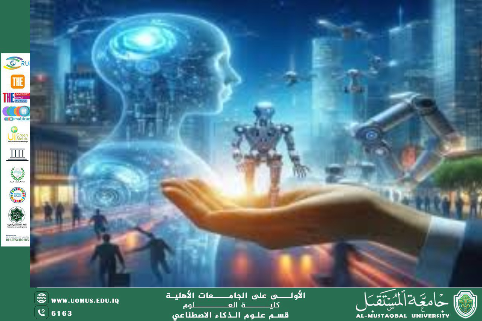
Robots in the Job Market: Do They Threaten Human Jobs or Create New Opportunities?
Robots in the Job Market: Do They Threaten Human Jobs or Create New Opportunities?<br /><br />Introduction<br /><br />In recent years, the world has witnessed rapid advancements in technology and artificial intelligence. Robots are now being used in various sectors such as industry, medicine, agriculture, and even education. With this expansion, an important question arises: Will robots replace humans in the job market, or will they open new doors for employment?<br /><br />⸻<br /><br />First: The Potential Threats to Human Jobs<br /><br />1. Automation of Repetitive Tasks<br /><br />Robots are increasingly capable of performing repetitive and precise tasks, such as:<br /> • Assembly line work in factories.<br /> • Product packaging and inspection.<br /> • Data entry and basic clerical tasks.<br /><br />This puts many traditional jobs at risk, especially in industries reliant on manual or routine labor.<br /><br />2. Rising Unemployment in Some Sectors<br /><br />In certain countries, companies have started replacing workers with robots to save time and reduce costs. This shift has already led to the loss of thousands of jobs, particularly in manufacturing and transportation.<br /><br />3. The Skills Gap<br /><br />As technology evolves, there’s a growing demand for highly skilled workers. Those without the necessary technical skills may struggle to adapt, widening the gap between qualified and unqualified labor.<br /><br />⸻<br /><br />Second: New Opportunities Created by AI and Robotics<br /><br />1. Emergence of New Jobs<br /><br />As some jobs disappear, others emerge, including:<br /> • Robotics engineers.<br /> • AI developers.<br /> • Big data analysts.<br /> • AI trainers and ethics consultants.<br /><br />2. Improved Work Environments<br /><br />Robots can take over dangerous, tedious, or physically demanding tasks, reducing workplace injuries and improving working conditions. This allows human workers to focus on more creative and strategic roles.<br /><br />3. Opportunities for Innovation and Entrepreneurship<br /><br />Technology has enabled individuals and startups to develop smart solutions in areas like:<br /> • Precision agriculture.<br /> • Autonomous delivery services.<br /> • Digital education platforms.<br /><br />⸻<br /><br />Third: Is the Threat Inevitable? Or Can We Adapt?<br /><br />The issue isn’t “robots versus humans,” but rather “humans with robots.” Nations and organizations that invest in reskilling and upskilling their workforce—focusing on programming, critical thinking, and data analysis—will be less at risk and more capable of benefiting from technological advances