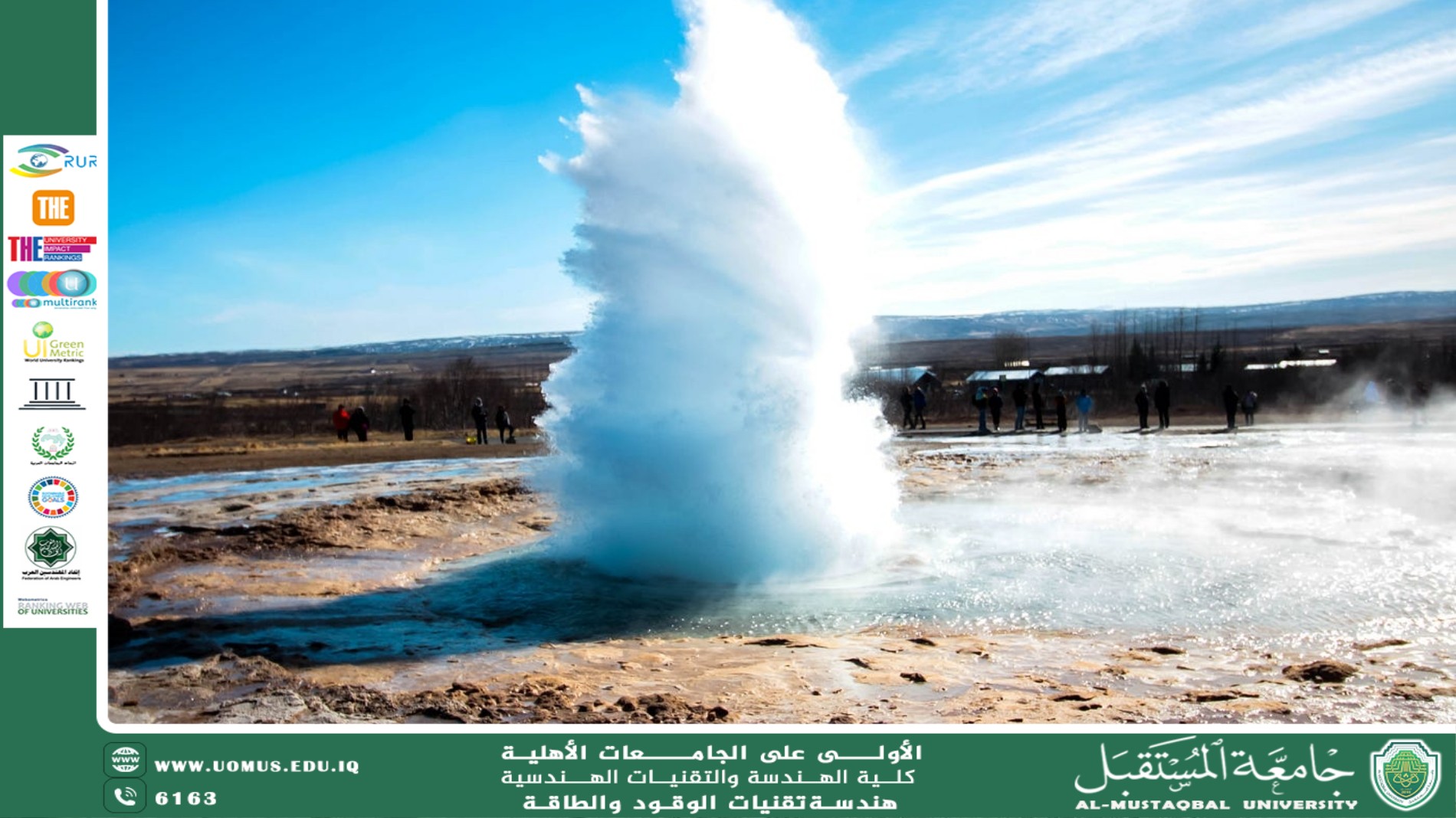
White hydrogen production
White hydrogen production<br />Assist. Prof. Malik Mustafa Mohammed<br /><br />SDG 4: Quality Education<br />SDG 7: Affordable and Clean Energy<br />SDG 9: Industry, Innovation, and Infrastructure<br />"White hydrogen" is not a standard scientific or industrial classification, but the term has emerged in some contexts to refer to naturally occurring molecular hydrogen (H₂) that is found in geological formations underground — essentially native hydrogen that exists in the Earth’s crust without human intervention. This contrasts with other types like gray, blue, or green hydrogen, which are produced from hydrocarbons or water via electrolysis.<br /> What is White Hydrogen?<br />White hydrogen refers to:<br />- Naturally occurring hydrogen gas found trapped in underground reservoirs.<br />- It is considered a potential untapped clean energy source if it can be extracted economically and sustainably.<br />- Unlike other forms of hydrogen production, white hydrogen doesn’t require water splitting or fossil fuel reforming.<br /> How Is White Hydrogen Produced or Extracted?<br />Since white hydrogen occurs naturally, it's not "produced" through chemical processes but rather extracted similarly to how we extract natural gas or oil. Here’s how:<br /> 1. Exploration & Discovery <br />- Geologists identify areas where hydrogen may be present based on:<br /> - Geological surveys<br /> - Surface seepage signs<br /> - Historical drilling data<br /> - Magnetic or seismic imaging<br />Hydrogen can occur in:<br />- Ophiolite belts (serpentinite ultramafic rocks)<br />- Ancient continental crust<br />- Volcanic regions<br />- Areas with active tectonic or hydrothermal activity<br /> 2. Drilling <br />- Once a promising site is identified, exploratory wells are drilled.<br />- If hydrogen gas flows to the surface under pressure, it can be captured directly.<br /> 3. Extraction & Purification <br />- The extracted gas may contain impurities such as nitrogen, methane, or CO₂.<br />- Gas separation technologies (e.g., membrane systems, PSA – Pressure Swing Adsorption) are used to purify the hydrogen.<br /> 4. Storage & Transportation <br />- Once purified, hydrogen can be compressed, liquefied, or transported via pipelines for use in energy, industry, or transport sectors.<br /> Origins of White Hydrogen (How It Forms Naturally)<br />Natural hydrogen forms through several geological processes:<br /> a. Serpentinization <br />- Reaction between water and iron-rich rocks (ultramafic rocks like olivine and pyroxene).<br />- Produces hydrogen gas as a byproduct.<br /> b. Radiolysis of Water <br />- Radioactive decay of elements like uranium and thorium breaks down water molecules into hydrogen.<br /> c. Degassing from the Earth’s Mantle <br />- Deep mantle-derived hydrogen can migrate upward through fractures and faults.<br /> d. Bacterial Activity (Biogenic H₂) <br />- Some microbes produce small amounts of hydrogen during metabolic processes, though this is usually minor compared to geological sources.<br /> Advantages of White Hydrogen<br />- Very low carbon footprint, assuming no combustion during extraction.<br />- No need for electrolysis or steam reforming, so less energy-intensive than green or gray hydrogen.<br />- Could provide a new domestic energy resource in countries with native hydrogen reserves.<br /> Challenges of White Hydrogen<br /><br />- Limited knowledge: We don't yet know how widespread or abundant these natural hydrogen deposits are.<br />- Exploration costs: Finding viable reserves is expensive and technologically complex.<br />- Uncertainty about renewability: Not all natural hydrogen reservoirs may be replenished quickly by geological processes.<br />- Infrastructure limitations: No existing infrastructure for large-scale natural hydrogen production.<br /> Real-World Examples<br />- France: Natural hydrogen has been found in the Lorraine region, where old oil exploration wells revealed high concentrations of H₂.<br />- United States: Studies have detected natural hydrogen in Kansas and elsewhere.<br />- Russia, Ukraine, Japan, Oman: All have reported natural hydrogen occurrences in various geological settings.<br /> Summary<br /> White hydrogen is naturally occurring molecular hydrogen found in underground geological reservoirs. It is extracted through drilling and purification methods similar to those used for natural gas. Its formation is due to geological processes like serpentinization, radiolysis, and mantle degassing. While still an emerging field, white hydrogen could potentially offer a sustainable and low-cost alternative to synthetic hydrogen production if commercial extraction becomes feasible.<br />"Al-Mustaqbal University – The No. 1 Private University in Iraq"<br />