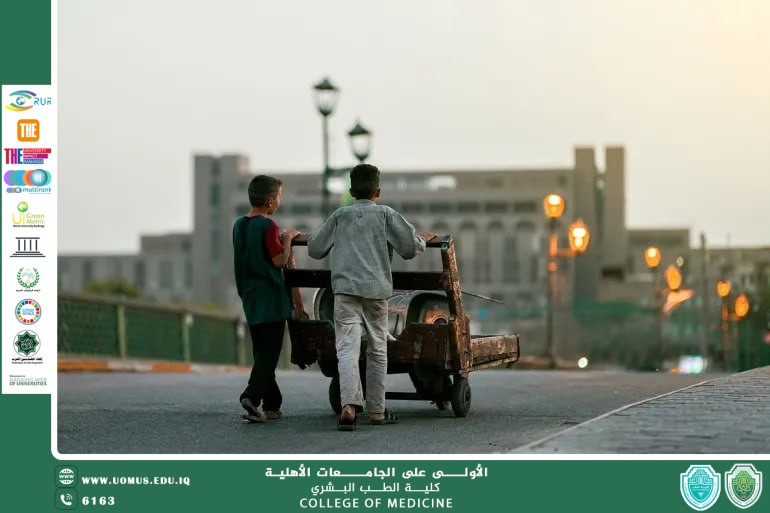
"World Day Against Child Labour"
June 12th marks the annual World Day Against Child Labour, an international observance launched by the International Labour Organization (ILO) in 2002 to raise awareness about child labour and highlight global efforts to eliminate it. Despite the passage of more than two decades since its inception, global statistics for 2025 reveal a persistent—and in some areas, worsening—crisis.<br /><br />According to the latest reports issued by the ILO and UNICEF, the number of child labourers worldwide has reached 160 million, including 97 million boys and 63 million girls. Alarmingly, this is the first increase in two decades, with eight million more children working compared to the 2016 report. More concerning is that around 79 million of these children are engaged in hazardous work that threatens their physical and psychological well-being—such as working in mines, agriculture with pesticide exposure, and informal industrial workshops.<br /><br />Children in Sub-Saharan Africa are the most affected, and nearly one-third of all child labourers are out of school, meaning they are denied one of their most basic rights: access to education.<br /><br />In Iraq, the situation is similarly concerning—if not more complex—due to decades of economic and political instability. Wars, internal displacement, high poverty and unemployment rates have all contributed to the rise in child labour, especially in rural areas and impoverished neighborhoods in major cities such as Baghdad, Basra, and Mosul.<br /><br />Official and local organization reports indicate that thousands of Iraqi children work in the streets as vendors, in car repair shops, brick factories, and farms, often under exploitative and abusive conditions. In many cases, children are forced to drop out of school to support their families, especially when a parent or caregiver has been lost to conflict or poverty.<br /><br />One heartbreaking case reported by local media described a 10-year-old boy from Dhi Qar province who collects plastic bottles from garbage dumps to help support his widowed mother and three siblings—an extreme example of how harsh living conditions can rob children of their futures.<br /><br />The drivers of child labour in Iraq and worldwide are largely similar: poverty, lack of social protection, weak law enforcement, poor education systems, and the effects of conflict and disasters.<br /><br />To combat this issue, most international studies and UN programs agree that the most effective solutions start with ensuring access to free, quality education, alongside direct or indirect financial support to poor families, so they are not forced to send their children to work. Programs like conditional cash transfers have proven successful in reducing child labour by linking financial aid to school attendance.<br /><br />Additionally, it is essential to strengthen the state’s capacity to monitor workplaces, enforce child labour laws, and combat the worst forms of child labour such as sexual exploitation, forced labour, and organized begging.<br /><br />In the Iraqi context, several practical proposals can help reduce child labour:<br /><br />Expanding social protection programs for low-income families, including increasing allocations under the Social Welfare Network and tying benefits to school enrollment—ensuring these reach the poorest regions.<br /><br />Strengthening the mandatory education system, ensuring free access to primary and secondary education, and providing school meals and transportation to increase school appeal for both children and families.<br /><br />Launching wide-scale media and awareness campaigns in cooperation with civil society organizations and the media, to educate families about the risks of child labour on children’s health and education.<br /><br />Activating regulatory bodies and increasing labour inspection visits to workshops, markets, and factories, with legal accountability for violators.<br /><br />Launching partnership programs between the Ministries of Labour, Education, Planning, and UN organizations to design vocational training programs for adolescents above the legal working age—creating a safe path to employment without early child labour.<br />Engaging the private sector in supporting education and training through corporate social responsibility initiatives.<br /><br />These efforts align directly with the Sustainable Development Goals (SDGs)—especially:<br /><br />Goal 1: End poverty in all its forms;<br /><br />Goal 4: Ensure inclusive and quality education for all;<br /><br />Goal 8: Promote decent work and economic growth.<br /><br />Goal 8, in particular, calls for the elimination of all forms of child labour by 2025.<br /><br />In Iraq, child labour is a clear manifestation of social injustice, and combating it is a central step toward building inclusive human and economic development. These efforts must not be temporary or reactive; they require a long-term national strategy grounded in legislation, planning, community participation, and equitable funding—so that childhood in Iraq does not turn from a right into a burden, or from a dream into a lifelong pain.<br /><br />"Al-Mustaqbal University is the first in Iraq."<br /><br />