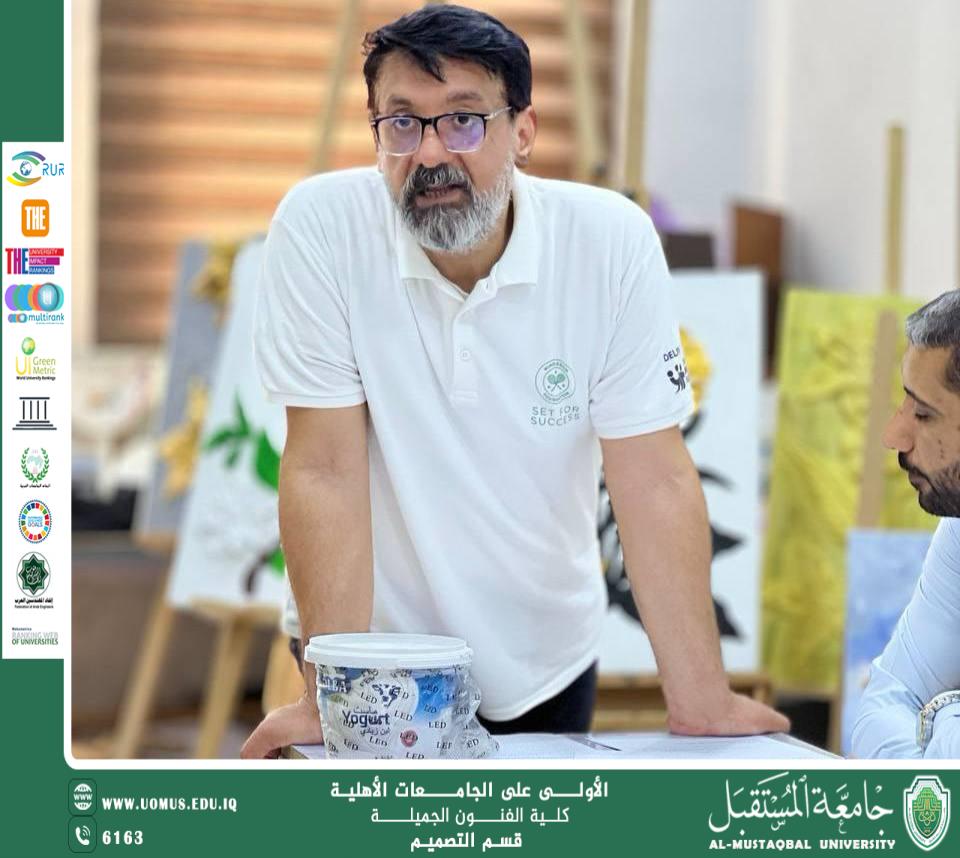
An Article "Specialization vs. General Knowledge in Transmitting Information: Between Exclusive Expertise and Inclusive Culture " By Dr. Asrar Samandar
In our contemporary digital age, the importance of transmitting knowledge from one generation to another has grown significantly—across all fields of life, not just within a single domain—especially as we serve as academic and educational professionals. However, a cognitive and ethical dilemma arises: who possesses the “right” or “legitimacy” to transmit knowledge? Is it solely the specialist, or does the intellectual or general public also have a role to play? This article explores the theoretical framework of specialization, analyzes the relationship between knowledge and power, and highlights several philosophical and social perspectives on the boundaries of knowledge dissemination.<br /><br />Specialization has become a central feature of modern knowledge structures, with disciplines dividing into increasingly narrow subfields requiring years of study and experience. However, the widespread accessibility of information through the internet and social media has broken many traditional barriers, bringing new actors into the knowledge space. So, has information become a public cultural commodity? Or does scientific discourse remain the domain of experts?<br /><br />1. Scientific Specialization and Its Necessity:<br />Specialization involves deep knowledge in a specific field, requiring methodological tools and analytical skills. As Thomas Kuhn noted in The Structure of Scientific Revolutions (1962), scientific progress depends on a paradigm managed by a community of experts sharing a common language and standards.<br />Similarly, Karl Popper argued that scientific knowledge must be falsifiable—something only trained scientific thinkers can handle—thereby determining who is capable of accurately transmitting scientific knowledge (Popper, 1959).<br /><br />2. General Culture and the Right to Participate:<br />Conversely, many thinkers argue that restricting knowledge to specialized elites leads to epistemic monopolies that weaken public awareness, as we see in current societal structures. French philosopher Michel Foucault famously said, "Knowledge is linked to power," implying that concentrating the transmission of information in the hands of a few can become a tool of social control, whether intentional or not (Foucault, 1980).<br />Educational theorists like Paulo Freire advocate for the right of people to “self-educate” and share knowledge in liberating ways, emphasizing that knowledge belongs not just to elites, but to everyone in society (Freire, 1970).<br /><br />3. Knowledge Between Professionalism and Public Circulation:<br />It is crucial to distinguish between producing knowledge and sharing it. While producing knowledge demands specialization and precision, sharing it can involve varying levels of engagement and understanding. For example, journalists, teachers, or artists can communicate scientific information without being researchers, as long as they maintain accuracy and integrity.<br />The concept of “Citizen Science,” where non-experts participate in collecting and analyzing data, has emerged from this dialogue, reflecting a shift in how we view expertise (Bonney et al., 2009).<br /><br />4. The Risk of Oversimplification and Misinformation:<br />While it is important for non-specialists to participate in knowledge sharing, significant risks arise when information is transmitted without sufficient understanding or verification—leading to misinformation or pseudoscience. Here lies the essential role of the “scientifically literate educator,” who ensures that scientific literacy becomes a general skill for all individuals, without undermining the role of the expert.<br /><br />In conclusion, there is no fundamental contradiction between specialization and cultural participation. Knowledge should not be monopolized by specialists, but its transmission must respect methodology, accuracy, and intellectual courage. The greatest challenge lies in creating an inclusive, participatory knowledge environment—across all age groups—where the specialist guides, the intellectual transmits faithfully, and the public contributes to building critical collective awareness.<br />We are here today, and who knows what tomorrow holds—knowledge rests with God alone.<br /><br />Almustaqbal University, The First University in Iraq.