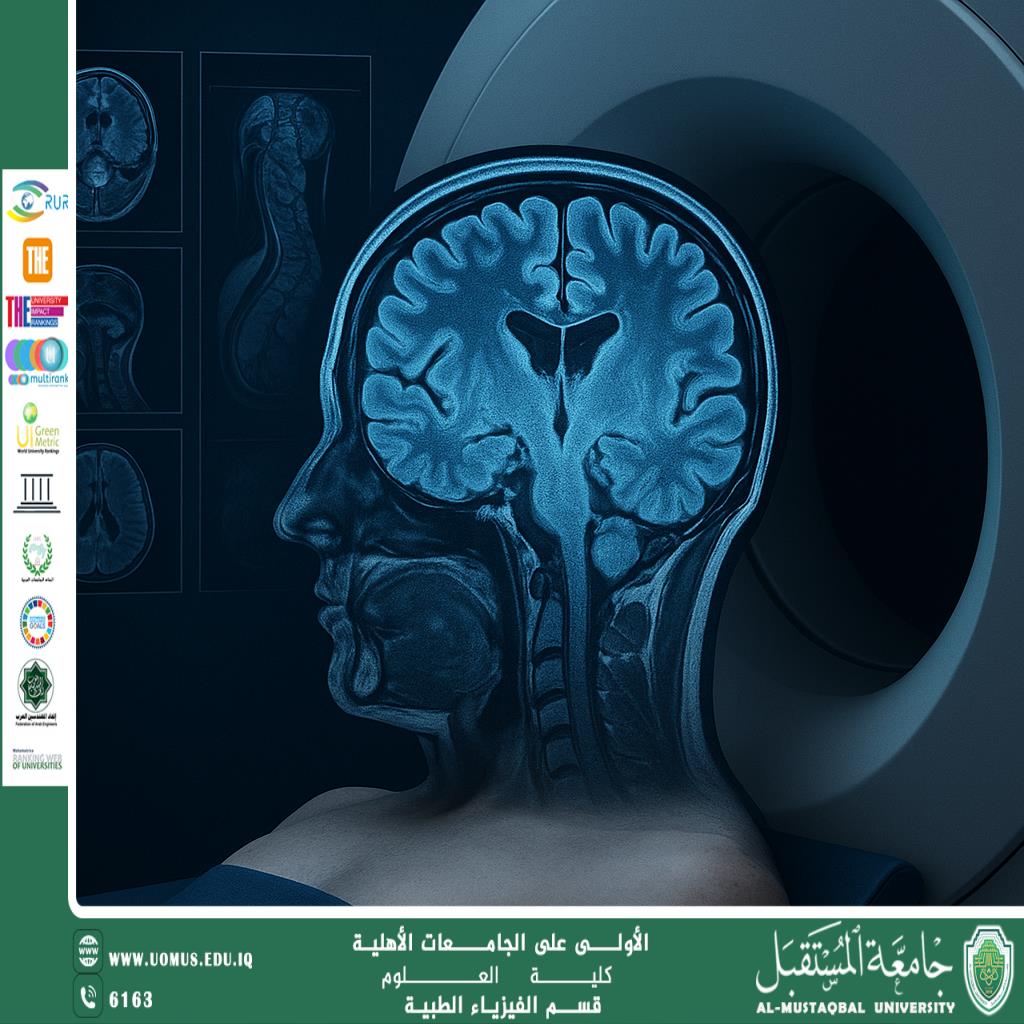
A scientific article by the lecturer (Assistant Lecturer Samaher Saad) entitled “Magnetic Resonance Imaging (MRI)”
Magnetic Resonance Imaging (MRI) is a non-invasive imaging technique that uses a magnetic field and radio waves to produce detailed images of organs and tissues inside the body. MRI is used to diagnose a wide range of medical conditions, including:<br /><br />• Brain and Spinal Cord Disorders:<br />Brain aneurysms<br /><br />Eye and inner ear diseases<br /><br />Multiple sclerosis<br /><br />Spinal cord disorders<br /><br />Stroke<br /><br />Tumors<br /><br />Traumatic brain injury<br /><br />• Cardiovascular Diseases:<br />Size and function of the heart chambers<br /><br />Thickness and motion of heart walls<br /><br />Damage caused by heart attacks or heart disease<br /><br />Structural problems in the aorta<br /><br />• Internal Organ Conditions:<br />Liver and bile ducts<br /><br />Kidneys<br /><br />Spleen<br /><br />Pancreas<br /><br />Uterus, ovaries, and prostate<br /><br />• Bone and Joint Disorders:<br />Joint problems caused by injuries or repetitive strain<br /><br />Disc issues in the spine<br /><br />Bone infections<br /><br />Bone and soft tissue tumors<br /><br />How MRI Is Performed:<br />MRI is conducted using a large, cylindrical-shaped machine. The patient lies on a movable table that slides into the scanner. A strong magnetic field and radio waves are used to generate detailed images of the body. The patient may be asked to remain still during the procedure, which can last from 15 minutes to over an hour.<br /><br />Risks of MRI:<br />The presence of metal in the body can pose a safety risk if attracted by the magnet.<br /><br />MRI may not be suitable for individuals with certain medical or electronic implants.<br /><br />It is important to inform your doctor if you are pregnant or breastfeeding, especially if a contrast agent will be used during the procedure.<br /><br /><br /><br /><br />"AL_mustaqbal University is the first university in Iraq"<br/><br/><a href=https://uomus.edu.iq/Default.aspx target=_blank>al-mustaqbal University Website</a>