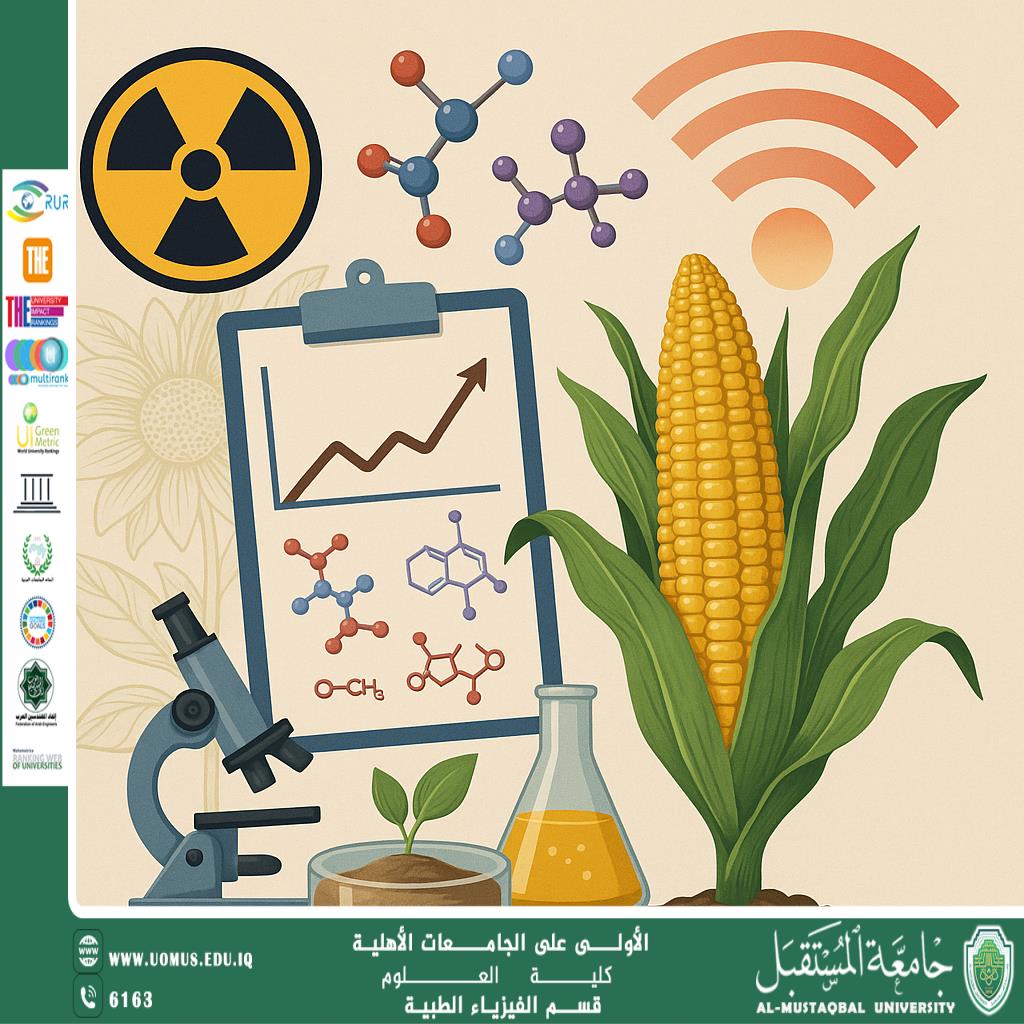
A scientific article by the administrator (Nour Issa) entitled “The effect of radiation exposure on the biochemical properties of agricultural crops”
Introduction:<br />Agricultural crops are a primary source of food and bioenergy, and their quality and productivity are directly influenced by environmental factors. Among these factors, radiation exposure—whether ionizing (e.g., gamma rays or X-rays) or non-ionizing (e.g., ultraviolet rays)—plays a significant role in altering the biochemical properties of plants. Understanding these changes is crucial in agriculture, nutrition, and the pharmaceutical and food industries.<br /><br />Types of Radiation and Their Effects on Plants:<br />Ionizing Radiation:<br />Such as gamma rays and X-rays, which can penetrate plant cells and interact with their biological components, leading to:<br /><br />Breakage of chemical bonds in DNA.<br /><br />Alterations in protein structures.<br /><br />Generation of reactive oxygen species (ROS), causing oxidative stress.<br /><br />Non-Ionizing Radiation:<br />Such as ultraviolet (UV-B) rays, which particularly affect photosynthesis systems and leaf enzymes, leading to:<br /><br />Reduction in chlorophyll content.<br /><br />Accumulation of defensive compounds like flavonoids.<br /><br />Impaired vegetative growth.<br /><br />Effects of Radiation on Biochemical Properties:<br />Sugars and Carbohydrates:<br /><br />Radiation may alter photosynthesis rates, affecting the accumulation of sugars like sucrose and glucose.<br /><br />Some studies show a temporary increase in sugars as a defense mechanism.<br /><br />Proteins and Enzymes:<br /><br />Radiation can denature proteins or alter their secondary structures, reducing functionality.<br /><br />It may affect the activity of enzymes such as catalase and superoxide dismutase (SOD) as part of the oxidative stress response.<br /><br />Vitamins and Secondary Metabolites:<br /><br />Compounds such as Vitamin C, phenolics, and anthocyanins are sensitive to radiation.<br /><br />These may decrease with prolonged exposure.<br /><br />Short-term exposure may increase them as stress response compounds.<br /><br />Oils and Lipids:<br /><br />In oil crops, radiation leads to oxidation of fatty acids, decreasing the nutritional quality of the oil.<br /><br />It may alter the ratio of unsaturated to saturated fatty acids.<br /><br />Positive Uses of Radiation in Agriculture:<br />Inducing beneficial genetic mutations to develop varieties resistant to drought or disease.<br /><br />Extending shelf life of harvested crops by inhibiting enzymatic activity and microbial decay.<br /><br />Reducing mycotoxins in grains like corn and wheat.<br /><br />Precautions and Guidelines:<br />Despite potential benefits, caution is essential:<br /><br />The appropriate dosage must be defined for each crop species.<br /><br />Biochemical changes must be monitored to ensure food safety.<br /><br />Avoid random or excessive use, which may lead to the accumulation of harmful compounds or loss of nutritional value.<br /><br />Conclusion:<br />Radiation's effect on the biochemical properties of agricultural crops is an interdisciplinary field involving physics, chemistry, and plant sciences. While radiation can be a tool for improving or preserving crops, understanding the balance between dose and biological effect is crucial to maintaining food security and agricultural product quality.<br /><br /><br /><br /><br />"AL_mustaqbal University is the first university in Iraq"<br/><br/><a href=https://uomus.edu.iq/Default.aspx target=_blank>al-mustaqbal University Website</a>