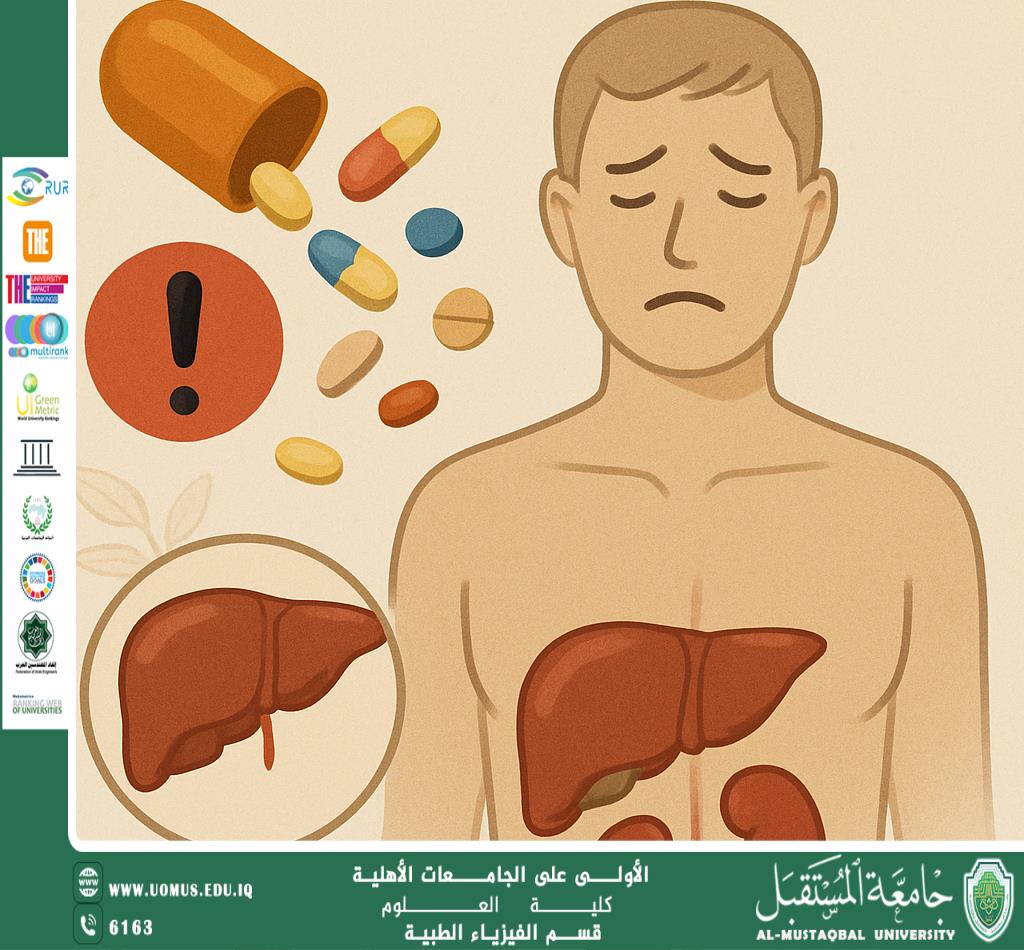
A scientific article by the teaching assistant (Mohamed Gamal) entitled "Drug deposition in the body"
Introduction<br /><br />Medications are a cornerstone of modern medical treatment, used to manage and cure various health conditions. However, in some cases, a phenomenon known as drug deposition in the body can occur. This refers to the accumulation of drug components in certain tissues or organs instead of being properly metabolized and excreted. If not addressed, it may lead to serious health complications.<br /><br /><br />What Is Drug Deposition?<br /><br />Drug deposition refers to the accumulation or retention of the active ingredient or its metabolic byproducts within the body. These substances often build up in the liver, kidneys, muscles, or fat tissues. This happens due to several factors such as impaired kidney or liver function, prolonged drug use, or the chemical nature of the drug itself.<br /><br /><br /><br /><br />Causes of Drug Deposition<br /><br />1. Impaired Liver or Kidney Function: These organs are responsible for metabolizing and excreting drugs. Any dysfunction can increase the risk of accumulation.<br /><br /><br />2. High Doses or Long-Term Use: Prolonged or excessive use of medications may overwhelm the body’s ability to eliminate them.<br /><br /><br />3. Chemical Properties of the Drug: Some drugs are fat-soluble and may store in adipose (fat) tissues.<br /><br /><br />4. Drug Interactions: Certain drugs may inhibit the metabolism or elimination of others.<br /><br /><br />5. Age and General Health: Elderly patients or those with chronic illnesses are more susceptible.<br /><br /><br /><br />Examples of Drugs That May Deposit<br /><br />Lithium: Can accumulate in the kidneys.<br /><br />Fat-soluble vitamins (A, D, E, K): May build up in fatty tissues if taken in excess.<br /><br />Statins: Might deposit in muscles, potentially causing muscle damage.<br /><br />Iron supplements: In some cases, excess iron can deposit in the liver or heart.<br /><br /><br />Symptoms of Drug Deposition<br /><br />General fatigue or dizziness<br /><br />Muscle or joint pain<br /><br />Yellowing of the skin or eyes (jaundice)<br /><br />Kidney or liver dysfunction<br /><br />Irregular heartbeat or blood pressure changes<br /><br /><br />Diagnosis<br /><br />Liver and kidney function tests<br /><br />Blood tests to monitor drug levels<br /><br />Imaging tests (e.g., MRI of the liver or heart if needed)<br /><br /><br />Prevention and Treatment<br /><br />Regular Monitoring: Periodic tests to check organ function while on medications.<br /><br />Strict Adherence to Dosage: Avoid self-medication or dose adjustments without medical advice.<br /><br />Switching to Safer Alternatives: If drug deposition is suspected.<br /><br />Dose Adjustment or Drug Discontinuation: Under medical supervision.<br /><br />Supportive Medications: Such as diuretics or antioxidants to aid in drug elimination.<br /><br /><br />Conclusion<br /><br />Drug deposition is a potentially dangerous condition that often develops silently. Awareness of how medications work, the importance of regular health monitoring, and strict adherence to medical advice can significantly reduce the risks and ensure patient safety.<br /><br /><br /><br /><br />"AL_mustaqbal University is the first university in Iraq"<br/><br/><a href=https://uomus.edu.iq/Default.aspx target=_blank>al-mustaqbal University Website</a>