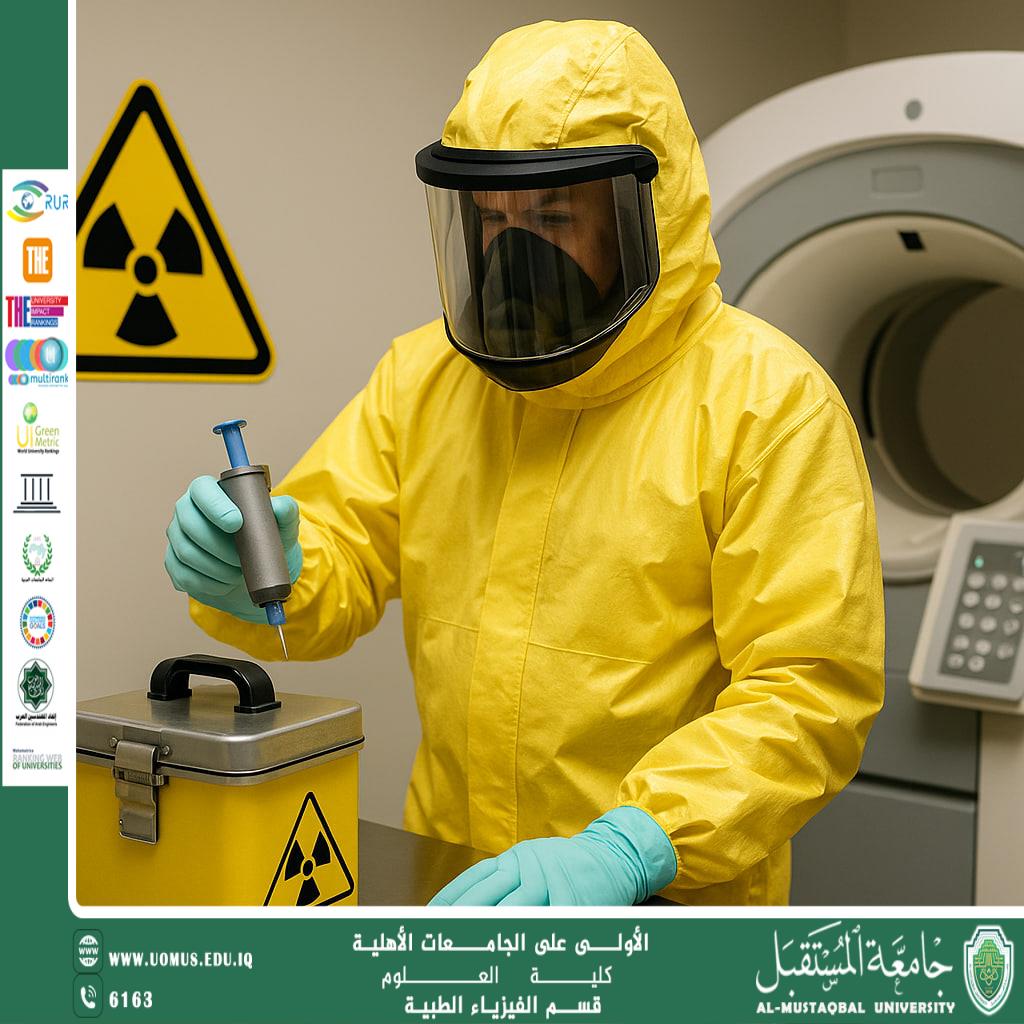
A scientific article by the teaching assistant (Mohamed Abdel Zahra) entitled “Radiation Safety for Workers in Nuclear Medicine Departments: Challenges and Solutions”
Introduction<br />Nuclear medicine is a vital medical specialty that relies on the use of radioactive materials for diagnosis and treatment. Despite its significant benefits, workers in nuclear medicine departments face risks related to exposure to ionizing radiation, which necessitates strict measures to ensure radiation safety.<br /><br />Challenges in Radiation Safety for Nuclear Medicine Workers<br />Continuous Radiation Exposure<br /><br />Workers are exposed to varying amounts of radiation during the preparation and administration of radioactive materials to patients.<br /><br />Long-term cumulative doses may lead to serious health complications such as blood disorders and increased cancer risk.<br /><br />Lack of Awareness and Training<br /><br />Some workers lack adequate training in radiation safety procedures.<br /><br />Non-compliance with safety protocols due to insufficient knowledge or negligence.<br /><br />Insufficient Protective Equipment<br /><br />Absence or shortage of personal protective equipment such as lead gloves, protective shields, and radiation monitoring devices.<br /><br />Weak ventilation systems and unsafe radioactive material storage.<br /><br />Handling Emergency Incidents<br /><br />Difficulty in quickly managing incidents involving radioactive material spills or unexpected exposure.<br /><br />Lack of emergency plans and training.<br /><br />Proposed Solutions to Enhance Radiation Safety<br />Continuous Training and Awareness<br /><br />Organize regular training courses on radiation safety fundamentals and handling radioactive materials.<br /><br />Promote a safety culture among workers.<br /><br />Use of Personal Protective Equipment (PPE)<br /><br />Provide gloves, protective clothing, and tools that reduce exposure.<br /><br />Use lead shields in preparation and administration areas.<br /><br />Radiation Dose Monitoring<br /><br />Utilize personal radiation dosimeters continuously for each worker.<br /><br />Record and monitor doses to avoid excessive exposure.<br /><br />Implementing Safety Protocols<br /><br />Develop and enforce safe working procedures at all stages of radiation handling.<br /><br />Develop emergency plans and conduct regular drills.<br /><br />Improving the Work Environment<br /><br />Ensure adequate ventilation in work areas.<br /><br />Secure radioactive material storage to prevent leaks and accidents.<br /><br />Conclusion<br />Radiation safety in nuclear medicine departments is a shared responsibility between management and workers. Through awareness, training, and providing appropriate equipment, risks can be minimized, effectively protecting workers’ health and ensuring the safe and effective delivery of medical services to patients.<br /><br /><br /><br /><br /><br />"AL_mustaqbal University is the first university in Iraq"<br/><br/><a href=https://uomus.edu.iq/Default.aspx target=_blank>al-mustaqbal University Website</a>