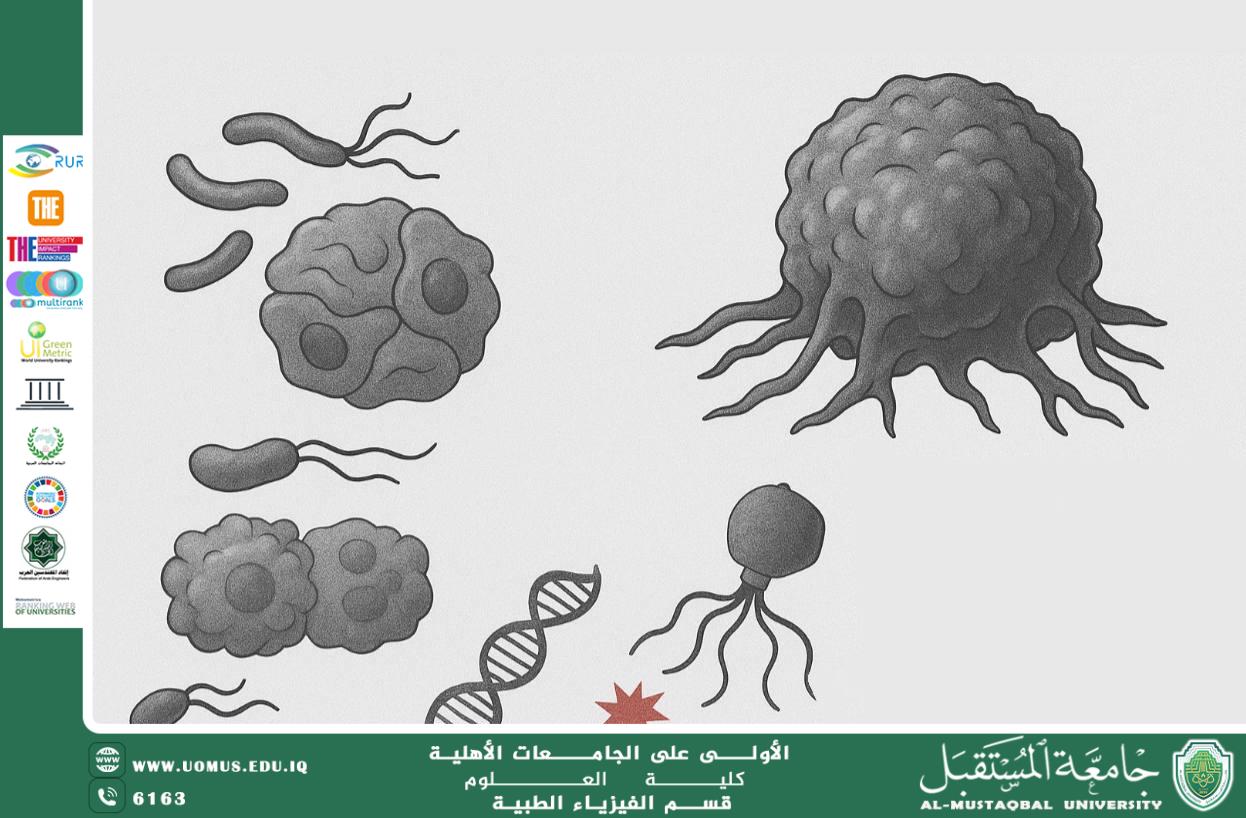
A scientific article by the teaching assistant (Maryam Reda Al-Sharaa) entitled “Microbes and Cancer: Do bacteria and viruses play a role in the development of tumors?”
Introduction<br /><br />Cancer has long been considered a disease caused by uncontrolled genetic mutations. However, recent research in microbiology has begun to uncover the role of microbes — including bacteria, viruses, and fungi — in the development and progression of certain types of cancer. This shift in understanding moves microbes from being seen merely as "infectious agents" to potential partners in cancer pathways.<br /><br />⸻<br /><br />🧬 How Can Microbes Contribute to Cancer Development?<br /><br />Microbes can influence cancer formation through several mechanisms:<br /><br />Chronic Inflammation Induction<br /><br />Some microbes cause long-lasting inflammation in the body, such as:<br />• Helicobacter pylori: A key contributor to stomach cancer.<br />• Chronic inflammation creates a favorable environment for mutations and uncontrolled cell division.<br /><br />Production of Carcinogenic Substances<br /><br />Certain bacteria produce toxins that affect DNA, such as:<br />• Colibactin, produced by some strains of Escherichia coli (E. coli), which may damage DNA in colon cells.<br /><br />Direct Genetic Impact<br /><br />Some viruses insert their genetic material into human cells, altering growth regulation mechanisms:<br />• Human Papillomavirus (HPV): Linked to cervical cancer.<br />• Epstein-Barr Virus (EBV): Associated with lymphoma and certain types of pharyngeal cancer.<br /><br />Immune System Suppression<br /><br />Microbes may weaken or mislead the immune response, allowing cancer cells to evade detection.<br /><br />⸻<br /><br />🧫 Examples of Known Links Between Microbes and Cancer<br /><br />Microbe Associated Type of Cancer<br />Helicobacter pylori Stomach cancer<br />Human Papillomavirus Cervical, anal, and throat cancers<br />Epstein-Barr Virus Lymphoma, nasopharyngeal carcinoma<br />Hepatitis B & C viruses Liver cancer<br />Fusobacterium nucleatum Colon cancer<br /><br />⸻<br /><br />🧠 Can Microbes Be Used to Treat Cancer?<br /><br />On the other hand, researchers are also exploring the use of microbes as therapeutic tools:<br />• Probiotics: Supporting beneficial bacteria may enhance the body’s response to chemotherapy and immunotherapy.<br />• Genetically engineered bacteria: Used in trials to deliver drugs directly to tumors.<br />• Microbiome and early diagnosis: Microbial patterns in the body may serve as early indicators of cancer.<br /><br />⸻<br /><br />📌 Conclusion<br /><br />Microbes are not merely potential enemies but complex partners in human health and disease. Understanding the precise relationship between microbes and cancer may revolutionize diagnosis, prevention, and treatment strategies in the coming years.<br /><br /><br /><br />"AL_mustaqbal University is the first university in Iraq"<br/><br/><a href=https://uomus.edu.iq/Default.aspx target=_blank>al-mustaqbal University Website</a>