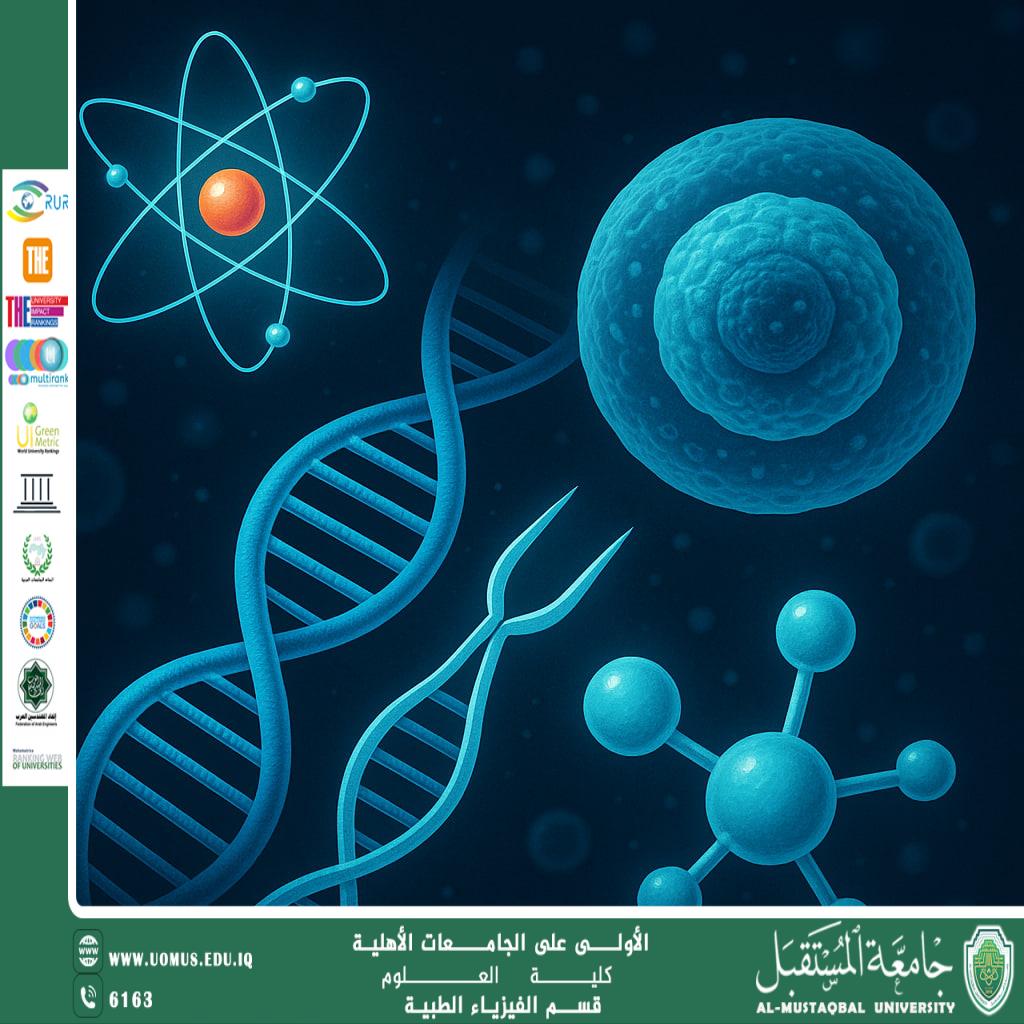
A scientific article by the lecturer (Assistant Lecturer Ali Salman) entitled “Atomic control of cells: Will gene therapy become more precise?”
Introduction<br />In recent decades, medicine has witnessed tremendous advances thanks to progress in genetics and nanotechnology. With the emergence of gene-editing techniques like CRISPR and applications of nanophysics, it has become possible to intervene in cellular processes with near-atomic precision. This progress opens the door to a new generation of highly precise gene therapies that target diseases at their root without affecting healthy tissues.<br /><br /> First: Basics of Gene Therapy<br />Gene therapy is a medical approach based on modifying or replacing genes responsible for diseases by introducing healthy genes or repairing mutations. It was once considered merely a theoretical concept but has now become one of the most promising fields in personalized medicine, especially for treating genetic disorders, cancers, and some immune diseases.<br /><br /> Second: Nanophysics and Atomic Control<br />Nanotechnology enables scientists to fabricate materials and devices at the scale of atoms and molecules, allowing precise control over cells and biological components. These applications include:<br /><br />Nanocarriers: Used to deliver genes or drugs to specific locations within the cell.<br /><br />Magnetic nanoparticles: Guided by external magnetic fields toward target cells.<br /><br />Nano-imaging: To measure treatment effects and monitor genetic changes in real time.<br /><br /> Third: Precision of Gene Therapy... From Mutation to Target<br />Thanks to atomic-level control, it is now possible to:<br /><br />Edit genes with precision at the single nucleotide level (the building blocks of DNA).<br /><br />Target specific cells without affecting neighboring cells, reducing side effects.<br /><br />Achieve more sustainable therapeutic outcomes, especially in complex genetic mutations.<br /><br />Technologies like CRISPR-Cas9 exemplify this precise genetic control, especially when combined with smart nanocarriers that deliver the system to the genetic target with exceptional accuracy.<br /><br /> Fourth: Current Challenges<br />Despite great optimism, several obstacles remain in this field, such as:<br /><br />Immune responses against nanomaterials or viral vectors.<br /><br />Risks of off-target gene editing effects.<br /><br />High costs of nanotechnology and clinical trials.<br /><br />Ethical considerations related to manipulating the human genome.<br /><br /> Fifth: Future Prospects<br />The integration of physics, genetic engineering, and nanotechnology promises a revolution in gene therapy in the coming years. Expected developments include:<br /><br />Designing smart carriers that “read” the cellular environment and precisely locate genetic targets.<br /><br />Personalized gene therapies tailored to each patient’s individual genome.<br /><br />Real-time control of treatment through programmable nanodevices.<br /><br /> Conclusion<br />The entry of nanophysics into the field of gene therapy represents a qualitative leap toward precise, targeted, and safe medicine. Atomic-level control of cells is no longer science fiction but a rapidly advancing reality toward clinical use. With further research and ethical and legislative support, precise gene therapy could become a key tool in treating diseases once considered incurable.<br /><br /><br /><br /><br /><br /><br /><br />"AL_mustaqbal University is the first university in Iraq"<br/><br/><a href=https://uomus.edu.iq/Default.aspx target=_blank>al-mustaqbal University Website</a>