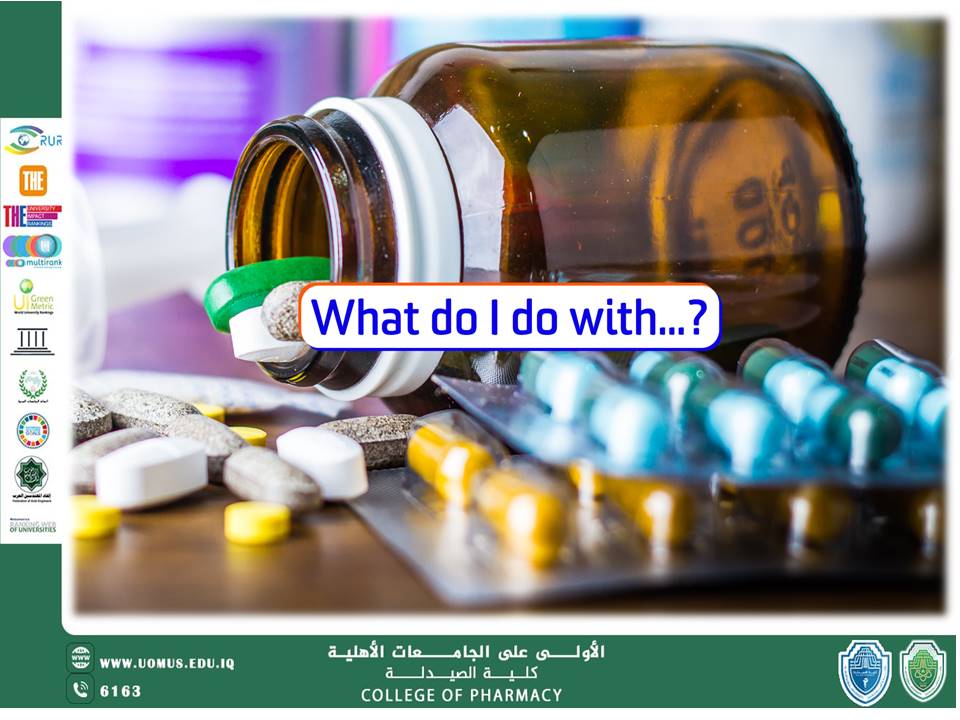
مقاله بقلم د.محمد عبد الحسين هندوز في كلية الصيدلة جامعة المستقبل بعنوان Role of Pharmacist in Patient Education About the Proper Way of Disposal of unused or Expired Medication at Homes
The pharmacist plays a crucial, yet often underestimated, role in educating patients about the proper disposal of unused or expired medications at home. With direct and frequent patient interaction, pharmacists are ideally positioned to provide vital information that safeguards public health and the environment.<br />Many individuals are unaware of the risks associated with improper medication disposal, such as flushing drugs down the toilet or throwing them directly into the trash. These practices can lead to pharmaceutical compounds entering waterways, potentially harming aquatic life and even contaminating drinking water. Furthermore, keeping expired or unused medications in the home increases the risk of accidental poisoning, particularly in children and pets, and can contribute to drug misuse or diversion.<br />Pharmacists can bridge this knowledge gap by counseling patients on safe disposal methods. This includes emphasizing the importance of drug take-back programs, often available at pharmacies, hospitals, or law enforcement agencies. For medications not eligible for take-back, pharmacists can instruct patients on how to safely dispose of them in household trash by mixing them with unappealing substances like coffee grounds or cat litter, placing them in sealed bags, and obscuring personal information on labels.<br />By proactively educating patients, pharmacists empower them to make responsible choices, minimizing environmental contamination and preventing accidental harm or intentional misuse of medications. This commitment to patient education solidifies the pharmacist's role as a vital custodian of community health and environmental well-being. <br /><br />Al-Mustaqbal University, the number one university in Iraq College of Pharmacy, the top among private colleges<br /><br />