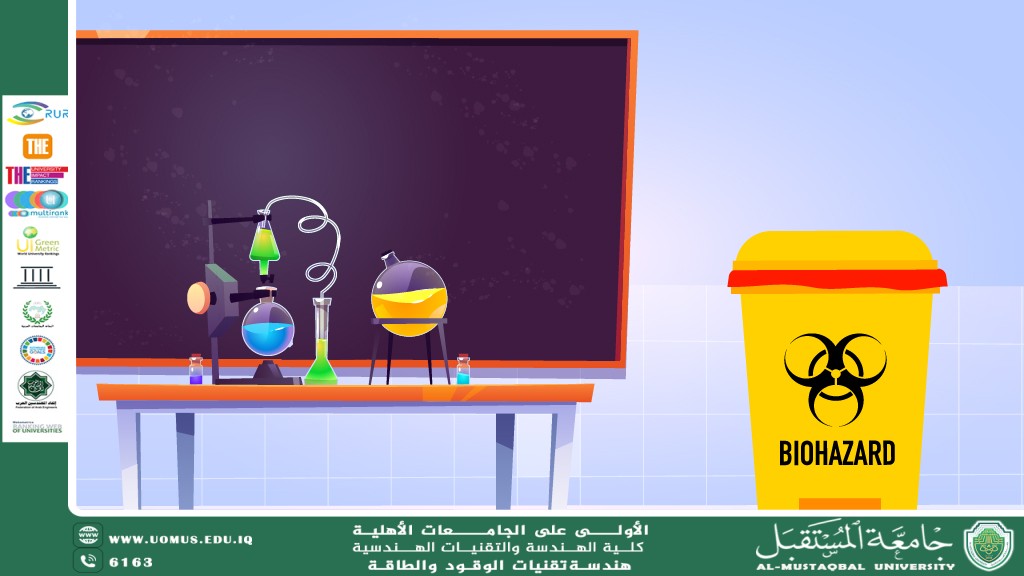
Chemical Waste Management in Labs and Plants: A Responsibility, Not an Option
Chemical Waste Management in Labs and Plants: A Responsibility, Not an Option<br />By: Eng. Abdullah Marza Hamza<br /><br />Relevant Sustainable Development Goals (SDGs):<br />SDG 3: Good Health and Well-being<br />SDG 6: Clean Water and Sanitation<br />SDG 12: Responsible Consumption and Production<br />Introduction<br />Chemical waste, whether generated in academic labs or industrial plants, poses serious risks to human health and the environment. Effective chemical waste management is a core element of sustainable practice in any institution dealing with hazardous substances.<br />Types of Chemical Waste<br />Organic solvents (flammable and toxic)<br />Heavy metals (toxic and non-biodegradable)<br />Acids and bases (corrosive)<br />Reactive compounds (e.g., peroxides, oxidizers)<br />Each type requires specific handling and disposal methods.<br />Key Management Practices<br />1. Segregation at source: Separate waste types to prevent reactions.<br />2. Labeling and documentation: Ensure clear identification.<br />3. Neutralization: For acids/bases before disposal.<br />4. Proper storage: Use sealed, resistant containers in ventilated areas.<br />5. Licensed disposal: Work with authorized waste management services.<br />Educational Institutions’ Role<br />Universities should educate students and staff on safe handling, offer practical training, and implement waste minimization strategies like green chemistry and micro-scale experiments.<br />Sustainability Impact<br />Proper waste management protects water sources (SDG 6), public health (SDG 3), and promotes sustainable material use (SDG 12). It also reduces long-term environmental damage.<br /><br />Conclusion<br />Managing chemical waste is not merely a regulatory requirement—it’s a shared ethical responsibility. With careful planning and awareness, institutions can prevent harm and contribute to a healthier, safer future.<br /><br />"Al-Mustaqbal University – The No. 1 Private University in Iraq"<br />