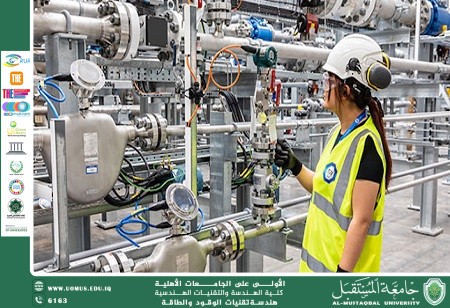
Process Control in Industry: How Systems React to Change
Process Control in Industry: How Systems React to Change<br /><br />By: Eng. Abdullah Marza Hamza<br /><br />Relevant Sustainable Development Goals (SDGs):<br />SDG 9: Industry, Innovation, and Infrastructure<br />SDG 12: Responsible Consumption and Production<br />Introduction<br />In modern industries, precise control of physical and chemical processes is essential for safety, efficiency, and product quality. Process control systems are designed to monitor, adjust, and optimize industrial operations in real time—ensuring stability even under changing conditions.<br />Basic Components of Process Control<br />A typical control system includes:<br />Sensors: Measure variables like temperature, pressure, flow, and concentration.<br />Controllers: Compare actual values to desired setpoints.<br />Actuators (valves/motors): Adjust system behavior to restore balance.<br />These components work together in feedback loops to regulate systems automatically.<br />Types of Control Systems<br />Manual control: Operator-based adjustments.<br />PID (Proportional-Integral-Derivative) control: Common automatic control method.<br />Distributed Control Systems (DCS): Centralized system for complex processes.<br />Programmable Logic Controllers (PLC): Digital systems for high-speed industrial control.<br />Advantages of Effective Control<br />Reduces raw material waste<br />Increases product consistency<br />Prevents accidents and shutdowns<br />Optimizes energy use and reduces emissions<br />These outcomes support sustainability and align with SDGs 9 and 12 by enhancing industrial performance while minimizing environmental impact.<br /><br />Conclusion<br />Process control is more than a technical tool—it’s the heart of modern, sustainable industry. By embracing automation and smart systems, industries can operate cleaner, safer, and more efficiently in a rapidly evolving world.<br /><br />"Al-Mustaqbal University – The No. 1 Private University in Iraq"<br />