Dietary Supplements by Dr. Widad Abdul-Jabbar Muzan – College of Pharmacy, Al-Mustaqbal University
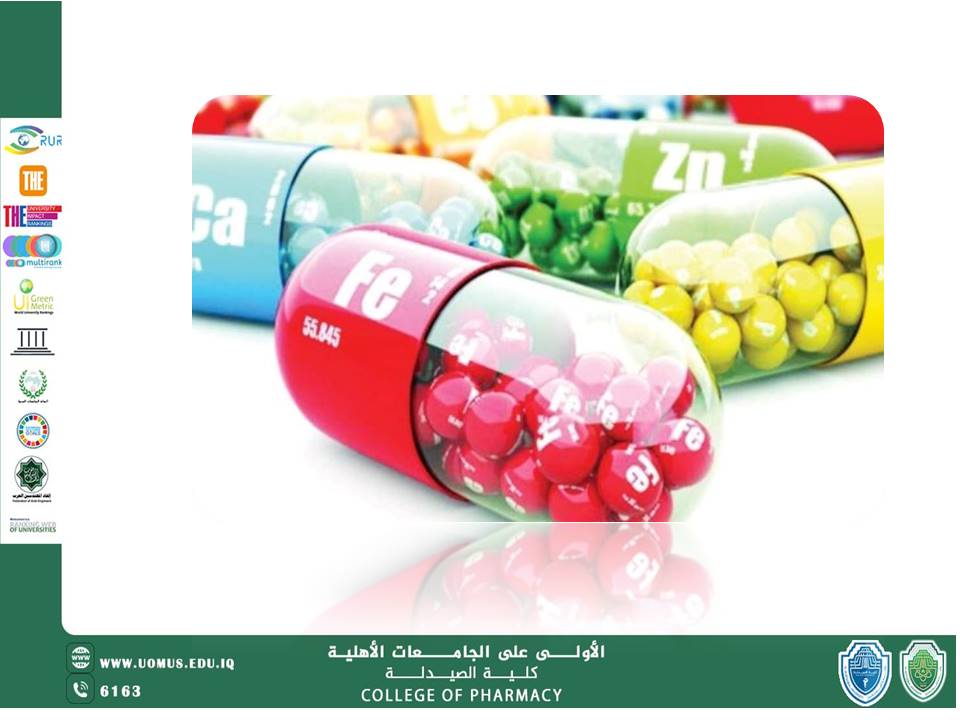
Dietary supplements are among the common means to enhance general health and compensate for nutritional deficiencies, especially given the fast-paced lifestyle that may prevent many individuals from maintaining a balanced daily diet.<br />What Are Dietary Supplements?<br />Dietary supplements are products that contain components such as:<br />• Vitamins (e.g., Vitamin D, C, and B12)<br />• Minerals (e.g., iron, calcium, magnesium)<br />• Amino acids<br />• Fatty acids (e.g., Omega-3)<br />• Proteins<br />• Herbs and plant extracts<br />Key Benefits of Dietary Supplements:<br />1. Compensating Nutritional Deficiencies<br />They help fill nutritional gaps caused by an imbalanced diet.<br />2. Boosting Immunity<br />Supplements such as Vitamin C, zinc, and Vitamin D enhance the body’s ability to fight diseases.<br />3. Supporting Bone Health<br />Calcium and Vitamin D are essential for bone growth and protection against osteoporosis, especially in the elderly.<br />4. Improving Athletic Performance<br />Athletes often use proteins and creatine to improve muscle mass and energy levels.<br />5. Enhancing Hair and Skin Health<br />Biotin, zinc, and Vitamin E are commonly used supplements for this purpose.<br />6. Supporting Heart and Brain Health<br />Omega-3 fatty acids help reduce inflammation and improve cardiovascular function.<br />Despite their benefits, supplements should not be taken without consulting a physician or a nutrition specialist, particularly for individuals with chronic illnesses or those taking specific medications.<br /><br />Al-Mustaqbal University: The Leading University in Iraq<br />College of Pharmacy: Ranked First Among Private Colleges<br />