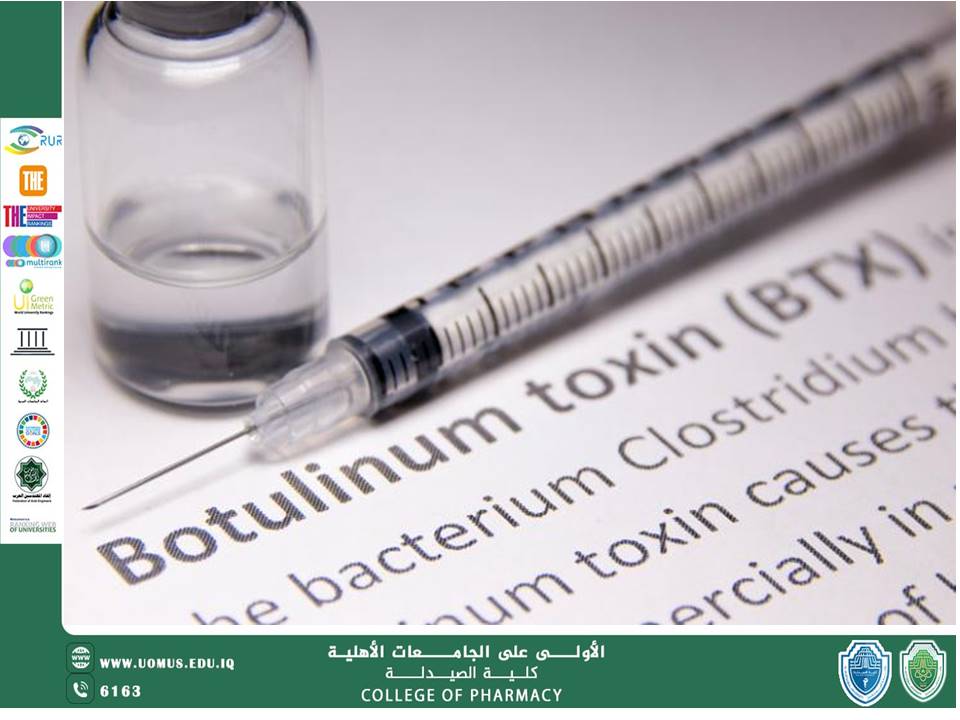
Clinical Applications of Botulinum Toxin: Beyond Aesthetic Use by Dr. Widad Abdul-Jabbar Muzan , College of Pharmacy, Al-Mustaqbal University
Botulinum toxin, a neurotoxic protein produced by the bacterium Clostridium botulinum, is among the most potent biological toxins known. Despite its origin as a deadly poison, it has found widespread use in medicine due to its ability to induce localized, reversible muscle paralysis by inhibiting acetylcholine release at the neuromuscular junction. While commonly associated with cosmetic treatments for facial wrinkles, Botulinum toxin—particularly type A—has multiple clinically approved therapeutic applications across various medical specialties.<br />FDA-Approved and Off-Label Clinical Uses<br />1. Neurological and Movement Disorders<br />a. Cervical Dystonia: Botulinum toxin is approved for the treatment of cervical dystonia, a movement disorder involving involuntary contractions of neck muscles causing abnormal head positions and pain.<br />b. Blepharospasm: Used to relieve involuntary eye blinking and eyelid closure by weakening the orbicularis oculi muscle.<br />c. Spasticity: Botulinum toxin is commonly used to treat spasticity in upper and lower limbs due to stroke, cerebral palsy, traumatic brain injury, or multiple sclerosis. It helps improve mobility and reduce pain.<br />d. Hemifacial Spasm: Characterized by involuntary twitching of the facial muscles on one side, this condition responds well to Botulinum toxin injections.<br />2. Urological Disorders<br />a. Overactive Bladder (OAB) and Urge Incontinence: Botulinum toxin A is FDA-approved for the management of OAB symptoms refractory to anticholinergic therapy. It is injected directly into the detrusor muscle to reduce involuntary contractions.<br />b. Neurogenic Detrusor Overactivity: Often seen in spinal cord injury or multiple sclerosis patients, this condition can also be managed effectively with Botulinum toxin injections.<br />3. Gastrointestinal Applications<br />a. Achalasia: In this esophageal motility disorder, Botulinum toxin is injected into the lower esophageal sphincter to relax the muscle and improve swallowing.<br />b. Chronic Anal Fissures: Botulinum toxin helps relax the internal anal sphincter, facilitating healing by reducing anal canal pressure.<br />4. Chronic Pain Syndromes<br />a. Migraine: Botulinum toxin A is FDA-approved for chronic migraine prevention (defined as ≥15 headache days per month). It reduces frequency, severity, and duration of attacks by modulating neurotransmitter release.<br />b. Myofascial Pain Syndrome and Temporomandibular Disorders (TMD):<br />Off-label use of Botulinum toxin in these conditions aims to relieve muscle spasm and localized pain.<br />5. Dermatological and Autonomic Disorders<br /> Hyperhidrosis: Botulinum toxin A is used to treat severe primary axillary hyperhidrosis and can be used off-label for palmar, plantar, and craniofacial sweating. It works by inhibiting acetylcholine-mediated stimulation of eccrine sweat glands.<br />6. Ophthalmologic Uses<br />Strabismus: Botulinum toxin was first used therapeutically for strabismus. It weakens overactive extraocular muscles to improve ocular alignment.<br />Emerging and Investigational Uses<br /> Ongoing research suggests potential roles for Botulinum toxin in treating:<br /> Depression (via modulation of facial feedback mechanisms),<br /> Raynaud’s phenomenon,<br /> Psoriasis,<br /> Sialorrhea in neurological diseases (e.g., Parkinson’s disease and ALS),<br /> Chronic cough and vocal cord dysfunction.<br />Safety and Adverse Effects<br />Proper dosing, While generally safe, Botulinum toxin treatment may cause side effects, including:<br /> Injection site pain or bruising,<br /> Muscle weakness or paralysis beyond the targeted area,<br /> Ptosis or dysphagia (particularly in facial or neck injections),<br /> Antibody-mediated resistance after repeated use.<br /> injection technique, and patient selection are critical to minimize risks.<br /><br />Al-Mustaqbal University, the number one university in Iraq College of Pharmacy, the top among private colleges<br />