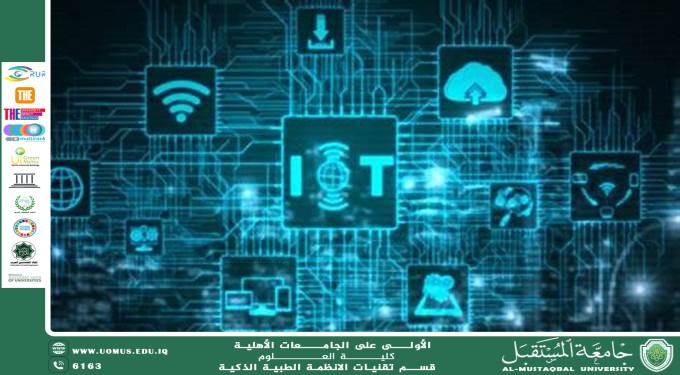
Internet of Things (IoT): A Quantum Leap in Building Sustainable Educational Environments.
The Internet of Things (IoT) technology is one of the modern innovations reshaping various sectors, notably education. This technology enables the interconnection of diverse devices via the internet, enhancing the effectiveness of the educational process and contributing to the creation of more sustainable learning environments. Given the environmental and economic challenges facing educational institutions, adopting advanced technologies like IoT has become essential to improve efficiency and promote sustainability in schools and universities.<br /><br />The primary benefit of IoT applications in education lies in more efficient resource management. By connecting devices such as air conditioners, lighting systems, and smart devices, educational institutions can monitor real-time energy consumption and adjust it automatically. For instance, smart systems can turn off lights or regulate temperature based on actual student presence in classrooms, thereby reducing energy use and operational costs.<br /><br />In addition to resource efficiency, IoT plays a crucial role in enhancing student safety. By installing smart sensors in corridors and classrooms, air quality, lighting levels, and temperature can be monitored to ensure a healthy and safe environment. These sensors can also provide immediate alerts in emergencies like fires or intrusions, increasing security within the educational facility.<br /><br />Regarding the learning process itself, IoT offers opportunities for a more interactive educational experience. By linking educational tools such as smart boards and mobile devices to various data sources, students and teachers gain access to up-to-date information in real-time, fostering greater engagement with the content. For example, augmented reality (AR) sensors can be used to integrate learning activities with interactive experiences.<br /><br />Singapore’s smart schools serve as a successful example of IoT implementation in education, utilizing IoT technologies to manage their systems efficiently. By monitoring energy consumption in real-time, learning environments are adjusted according to needs, reducing waste and promoting sustainable educational settings.<br /><br />Moreover, IoT enables institutions to collect and analyze data to improve performance. Through sensors, schools can track attendance patterns, student engagement, and behaviors within classrooms, providing valuable insights that support decision-making and continuous curriculum improvement.<br /><br />Despite the numerous advantages, educational institutions face challenges such as high initial costs, the need for advanced technical infrastructure, and ensuring the security and privacy of student data. However, these obstacles can be overcome with technological advancements and the decreasing cost of smart devices.<br /><br />In conclusion, IoT technology represents a significant leap in building sustainable educational environments by improving resource management, enhancing safety, and providing an advanced, interactive learning experience. Investment in this technology by educational institutions contributes to more sustainable and effective education, positively impacting education quality in the long term.<br />Al-Mustaqbal University The first University in Iraq.