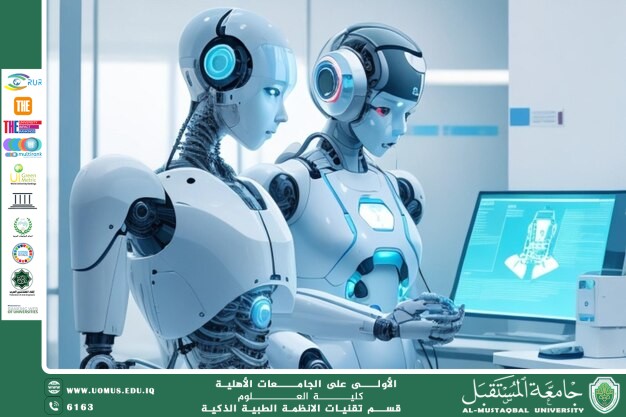
Sustainable Technology in Technical Education and Vocational Training.
Technical education and vocational training are fundamental pillars for achieving sustainable economic and social development, as they help prepare youth and equip them with the necessary skills to work in various sectors. With rapid technological advancements, it has become essential to integrate sustainable technology into this type of education to enhance its effectiveness, quality, and ensure its sustainability in facing contemporary challenges.<br /><br />Sustainable technology refers to the use of technologies that contribute to environmental preservation, reduce excessive consumption of energy and resources, and enhance productivity with high efficiency. In the field of technical education and vocational training, these technologies can be employed to improve learning processes and provide an advanced educational environment that keeps pace with the changing needs of the labor market.<br /><br />One prominent example of sustainable technology use in technical education is digital learning. Through online learning platforms, students can access educational content anytime and anywhere, reducing the need to travel to study locations and lowering carbon emissions associated with commuting. Additionally, these platforms allow students to interact with diverse educational materials such as instructional videos, digital simulations, and interactive exercises, helping them acquire practical skills in a virtual environment without relying heavily on physical resources.<br /><br />Augmented Reality (AR) and Virtual Reality (VR) are also powerful tools in technical education. Students can use these technologies to simulate real work environments, enabling interactive learning and experiencing new industrial techniques without wasting resources or physical educational materials. For example, students in vocational training schools can use VR technology to learn how to operate machinery or industrial equipment in a virtual environment, effectively and safely improving their practical skills.<br /><br />3D printing is another sustainable technology that can be utilized in technical education. By using 3D printers, students can produce accurate models and educational tools at a low cost. This technology enables students to design and test their own projects in reality, enhancing their skills in design and manufacturing. Moreover, 3D printing can be used to produce customized educational tools or spare parts for equipment that might be expensive to import.<br /><br />Furthermore, smart devices such as tablets and smartphones facilitate access to educational information and provide specialized training applications. Trainers and teachers can also use these tools to track student progress and provide immediate feedback, enhancing the effectiveness of education and making the learning process more interactive.<br /><br />Despite these benefits, sustainable technology in technical education and vocational training faces some challenges. The most significant include the high initial costs of implementing these technologies, the need to train teachers and students on how to efficiently use technological tools, and the digital divide that may prevent some groups from accessing these technologies due to inadequate infrastructure or limited internet access.<br /><br />In conclusion, sustainable technology plays a significant role in improving the quality of technical education and vocational training, making it more aligned with future needs. By integrating these technologies, it is possible to provide an innovative and effective educational environment that contributes to enhancing students’ skills and expanding their horizons in the labor market, ultimately supporting sustainable development in the long term.<br />Al-Mustaqbal University The first University in Iraq.