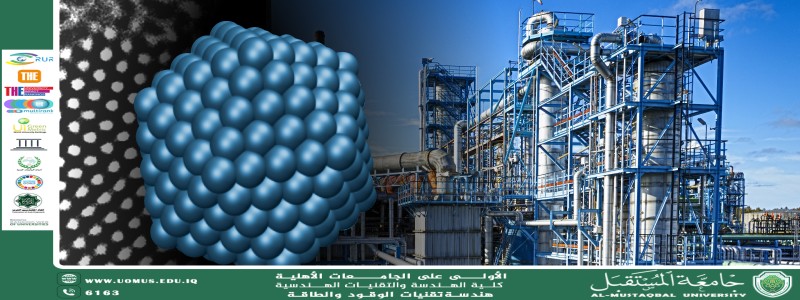
Spectroscopic Analysis in Evaluating Industrial Catalysts
Spectroscopic Analysis in Evaluating Industrial Catalysts<br />By: Eng. Abdullah Marza Hamza<br /><br />Sustainable Development Goals:<br /> Goal 9: Industry, Innovation, and Infrastructure<br /> Goal 12: Responsible Consumption and Production<br /><br />Catalysts play a vital role in chemical industries by accelerating reactions and improving efficiency. Evaluating catalyst performance and stability is essential to optimize industrial processes and reduce waste. Spectroscopic analysis techniques provide powerful tools for this purpose.<br /><br />Methods such as Fourier-transform infrared spectroscopy (FTIR), ultraviolet-visible (UV-Vis) spectroscopy, and Raman spectroscopy allow scientists to study the molecular structure, chemical composition, and surface interactions of catalysts in detail. These insights help in understanding how catalysts activate reactants and how they degrade over time.<br /><br />By detecting changes in catalyst properties during operation, spectroscopic analysis supports the development of more robust and selective catalysts. This can lead to longer catalyst lifetimes, reduced material consumption, and lower emissions—aligning with sustainability objectives.<br /><br />The use of spectroscopic techniques enhances innovation in catalyst design and process control. It enables industries to produce chemicals more efficiently and with less environmental impact, contributing to responsible manufacturing practices and advancing industrial sustainability.<br /><br />Al-Mustaqbal University – The No. 1 Private University in Iraq