Advanced Biomass Conversion into Liquid Fuels
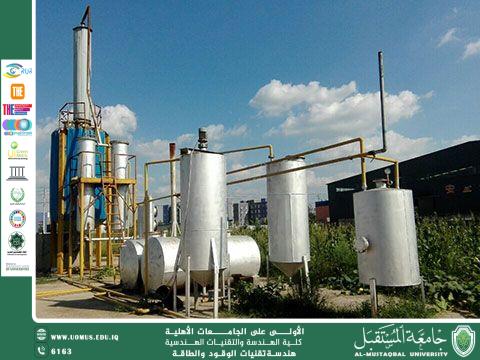
Advanced Biomass Conversion into Liquid Fuels<br />By: Asst. Lecturer Shahad Ammar Hatem<br /><br />Sustainable Development Goals:<br /> Goal 7: Affordable and Clean Energy<br /> Goal 12: Responsible Consumption and Production<br /> Goal 13: Climate Action<br /><br />Biomass conversion into liquid fuels offers a sustainable alternative to fossil fuels, helping reduce carbon emissions and diversify the energy mix. Advanced technologies in this field focus on improving the efficiency and environmental performance of biofuel production from various organic materials, including agricultural residues, forestry waste, and algae.<br /><br />Thermochemical processes such as pyrolysis and gasification break down biomass into bio-oil, syngas, or synthetic fuels, which can be further refined into drop-in fuels compatible with existing engines and infrastructure. Catalytic upgrading methods improve fuel quality and reduce impurities, enhancing engine performance and reducing emissions.<br /><br />Biochemical conversion, involving fermentation and enzymatic hydrolysis, produces bioethanol and biobutanol from sugars and lignocellulosic biomass. Research efforts aim to optimize microbial strains and process conditions to increase yields and lower production costs.<br /><br />Integrating biomass conversion with carbon capture and waste valorization creates circular systems that minimize environmental impact and maximize resource use. This approach supports rural economies by providing new revenue streams and energy independence.<br /><br />Advanced biomass conversion technologies contribute to the sustainable energy transition by providing renewable, carbon-neutral fuels that can replace petroleum derivatives in transportation and industry.<br /><br />Al-Mustaqbal University – The No. 1 Private University in Iraq