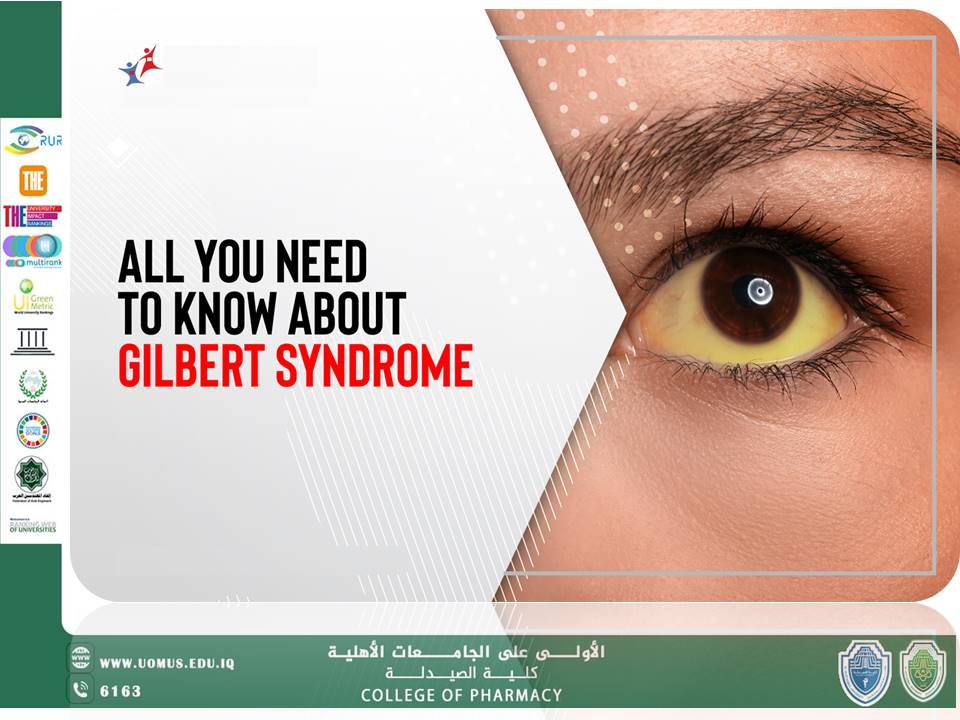
Gilbert Syndrome by Prof. Dr. Nada Khazaal , College of Pharmacy, Al-Mustaqbal University
Gilbert Syndrome is a common and benign liver condition characterized by a mild increase in the level of bilirubin (a yellow pigment) in the blood. It is a hereditary disorder that typically does not require treatment and is often discovered incidentally during routine blood tests.<br />Gilbert Syndrome is a simple and non-harmful genetic condition that causes a slight elevation in bilirubin levels. It usually presents without symptoms or any significant impact on health. Raising awareness about the syndrome is important to prevent unnecessary anxiety upon diagnosis and to help individuals avoid certain factors that may exacerbate the condition.<br />It is essential to inform healthcare providers of a Gilbert Syndrome diagnosis before taking certain medications, as the liver’s ability to metabolize some drugs may be slightly altered. However, Gilbert Syndrome is not associated with chronic liver diseases such as hepatitis or cirrhosis.<br />Causes of Gilbert Syndrome<br />Gilbert Syndrome is caused by a mutation in the gene responsible for producing an enzyme that helps the liver process bilirubin. As a result, the activity of this enzyme is reduced, leading to a mild accumulation of bilirubin in the blood.<br />Symptoms of Gilbert Syndrome<br />In most cases, individuals with Gilbert Syndrome experience no noticeable symptoms. However, in some instances—particularly during periods of stress, fasting, or illness—the following symptoms may occur:<br />Mild jaundice (yellowing of the skin or eyes), General fatigue, Occasional mild nausea<br />Temporary loss of appetite, Factors That May Trigger or Worsen Symptoms, Certain factors can contribute to the appearance or worsening of symptoms, including:<br />Prolonged fasting or strict dieting, Physical or emotional stress, Sleep deprivation, Viral infections, Intense physical exercise, Dehydration<br />Diagnosis<br />Gilbert Syndrome is typically diagnosed through:<br />A blood test indicating a mild elevation in unconjugated (indirect) bilirubin, Normal liver function test results<br />Liver biopsy or complex diagnostic procedures are generally not necessary.<br />Treatment and Management<br />No specific treatment is required for Gilbert Syndrome, as it does not lead to serious health complications. Nevertheless, individuals are advised to:<br />Avoid prolonged fasting or extreme diets, Stay well-hydrated, Reduce stress and physical strain, Ensure adequate sleep, Maintain a healthy and balanced diet, Gilbert Syndrome does not affect life expectancy or quality of life. Individuals with this condition can lead normal, healthy lives without the need for ongoing medical intervention.<br /><br /><br />Al-Mustaqbal University, the number one university in Iraq College of Pharmacy, the top among private colleges