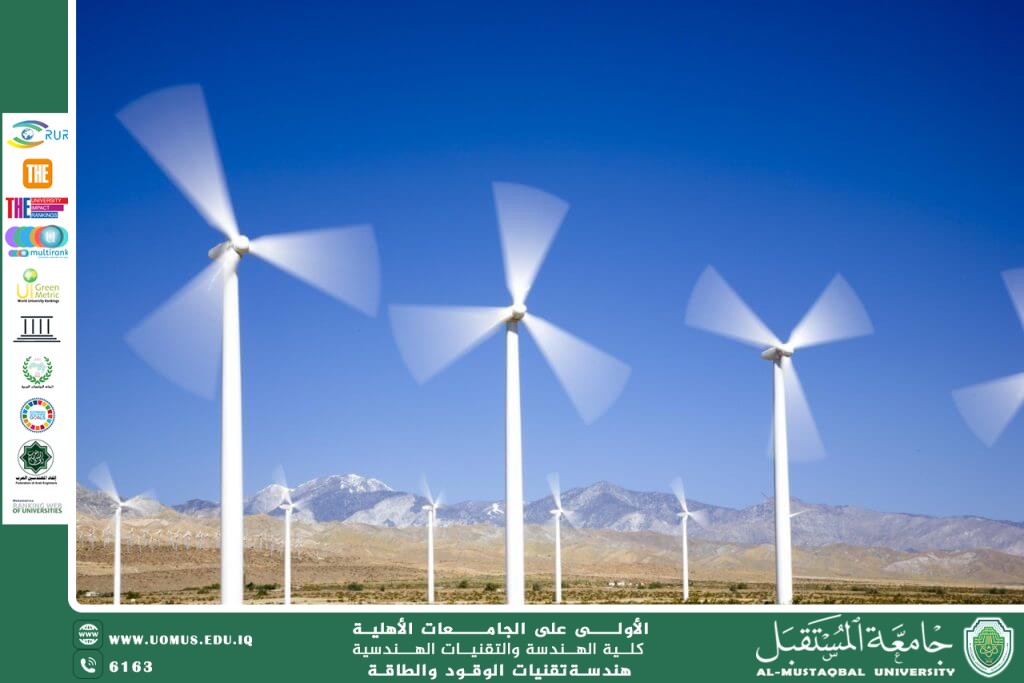
Wind Energy: The Future of Clean and Renewable Power
Wind Energy: The Future of Clean and Renewable Power<br />Eng. Nourhan Thamer Assi<br /><br />Sustainable Development Goals (SDGs)<br />This topic is closely related to:<br />Goal 7: Affordable and Clean Energy – Promoting access to sustainable energy sources.<br />Goal 13: Climate Action – Reducing greenhouse gas emissions by shifting to renewables.<br />Goal 9: Industry, Innovation, and Infrastructure – Developing innovative technologies for energy production.<br /><br />Introduction<br />As the global community seeks sustainable alternatives to fossil fuels, wind energy stands out as one of the most promising solutions for clean and renewable power generation. Harnessing the natural movement of air, wind turbines convert kinetic energy into electricity without harmful emissions, offering a viable path to reducing carbon footprints worldwide.<br />The Mechanics of Wind Energy<br />Wind turbines capture energy from wind through large blades that spin a rotor connected to a generator. The efficiency of wind energy depends on factors like:<br />Wind speed and consistency<br />Turbine design and height<br />Geographic location (e.g., coastal areas, plains, offshore sites)<br />Advancements in materials and aerodynamics have significantly improved turbine performance and durability, enabling energy capture even in moderate wind conditions.<br />Environmental and Economic Benefits<br />Wind energy offers numerous advantages:<br />Zero greenhouse gas emissions during operation.<br />Sustainable and inexhaustible energy source.<br />Cost-competitive electricity production compared to fossil fuels.<br />Job creation in manufacturing, installation, and maintenance sectors.<br />Reduction in air and water pollution linked to conventional power plants.<br />Challenges and Innovations<br />Despite its benefits, wind energy faces challenges:<br />Intermittency and variability of wind demand effective grid integration and energy storage solutions.<br />Noise and visual impact concerns affect public acceptance.<br />Wildlife impacts, such as bird and bat collisions, require mitigation strategies.<br />Innovations like offshore wind farms, larger turbines, and smart grid technologies aim to overcome these hurdles, making wind power more reliable and widely accessible.<br />Conclusion<br />Wind energy represents a cornerstone in the transition toward a sustainable energy future. Through continuous technological improvements and supportive policies, it promises to provide clean, affordable, and renewable electricity—powering communities while protecting the planet.<br /><br />Al-Mustaqbal University – The No. 1 Private University in Iraq<br /><br /><br />