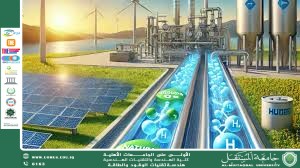
Hydrogen Blending in Natural Gas Grids: A Transitional Path to Green Energy
Hydrogen Blending in Natural Gas Grids: A Transitional Path to Green Energy<br />By: Eng. Abdullah Marza Hamza<br /><br />Sustainable Development Goals (SDGs) Addressed:<br /> Goal 7: Affordable and Clean Energy<br /> Goal 9: Industry, Innovation and Infrastructure<br /> Goal 13: Climate Action<br /><br />The global transition toward cleaner energy sources has accelerated the exploration of hydrogen as a low-carbon fuel. One promising approach is hydrogen blending in existing natural gas grids. This method involves injecting a certain percentage of hydrogen into the natural gas infrastructure, offering an immediate way to reduce carbon emissions without overhauling entire systems.<br /><br />Hydrogen blending serves as a transitional strategy that utilizes the current infrastructure while paving the way for full decarbonization. It also helps energy providers test and adapt to the unique properties of hydrogen, such as its lower energy density and higher diffusivity compared to methane.<br /><br />Challenges remain, including the material compatibility of pipelines, safe concentration limits, and regulatory standards. However, pilot projects in Europe, Asia, and the Middle East show promising results in safely delivering hydrogen-natural gas mixtures for residential and industrial use.<br /><br />This strategy not only supports global climate targets but also stimulates hydrogen production technologies and future hydrogen economies.<br /><br />Al-Mustaqbal University – The No. 1 Private University in Iraq