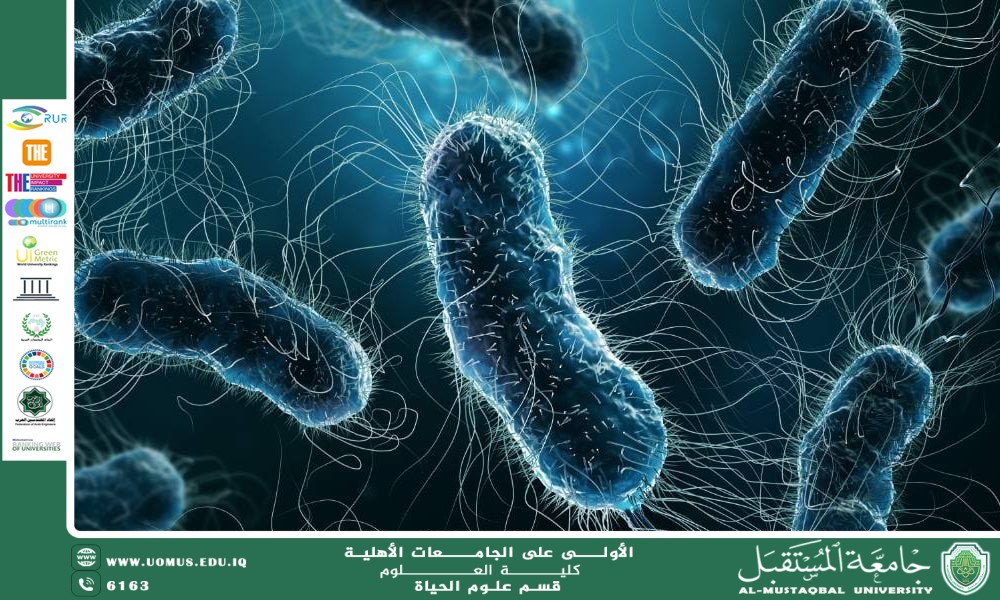
A scientific article by Ms. Nour Al-Huda Azmi Hassan entitled “Algicidal Bacteria”
Algae are microscopic or large photosynthetic organisms similar to plants, and are found abundantly in fresh and salt water. Some algae are beneficial to the environment, but sometimes they multiply excessively (called an "algal bloom"), leading to environmental problems such as:<br /><br />Lack of oxygen in the water.<br /><br />Death of fish and marine organisms.<br /><br />Production of toxins that affect human and animal health.<br /><br />2. Why do we need algal-killing bacteria?<br />Excessive algal blooms are a major environmental problem, especially in lakes, rivers, and water bodies exposed to nutrient pollution such as nitrogen and phosphorus.<br /><br />Therefore, scientists are searching for natural ways to control these algae, one of which is the use of bacteria capable of killing or inhibiting the growth of harmful algae.<br /><br />3. How do these bacteria work?<br />Secreting deadly compounds:<br />These bacteria secrete chemicals such as:<br /><br />Enzymes (Proteases, Lipases): These break down algal cell walls.<br /><br />Toxic compounds (algicides): affect algal metabolism.<br /><br />Direct attack:<br />Some bacteria attach to algal cells and directly attack them.<br /><br />Competition for food:<br />These bacteria compete with algae for nutrients and space, weakening the algae.<br /><br />4. Types of algal-killing bacteria<br />Bacillus spp.<br /><br />Produce anti-algal substances.<br /><br />Example: Bacillus subtilis.<br /><br />Pseudomonas spp.<br /><br />Known for secreting compounds that inhibit algal growth.<br /><br />Streptomyces spp.<br /><br />Secrete antibiotics that affect algae.<br /><br />Alcaligenes, Aeromonas, and Flavobacterium<br /><br />Other common species capable of killing algae.<br /><br />5. Practical applications:<br />Water treatment:<br />These bacteria can be used to clean lakes and rivers of harmful blooms.<br /><br />Hydroponics:<br />Maintains a healthy ecological balance to prevent harmful algal blooms.<br /><br />Laboratory and Research:<br />Studying interactions between bacteria and algae to understand biological control.<br /><br />6. Benefits and Harms of Using Algaecide Bacteria<br />Benefits:<br /><br />A natural method that is less toxic than chemical pesticides.<br /><br />Reduces the spread of harmful blooms.<br /><br />Potential Harms:<br /><br />May affect some beneficial organisms in the ecosystem.<br /><br />Requires careful monitoring to avoid environmental imbalance.<br /><br />Al-Mustaqbal University is the first university in Iraq.<br />