Smart Robots in Surgical Operations (Najat Hamid Jassim)
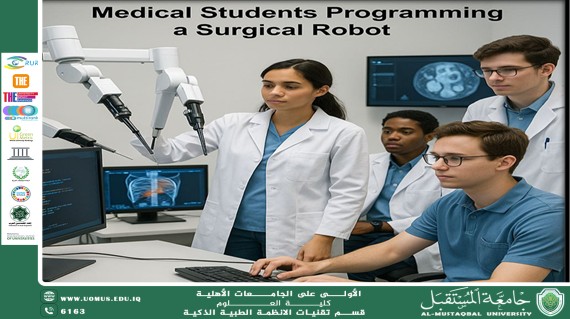
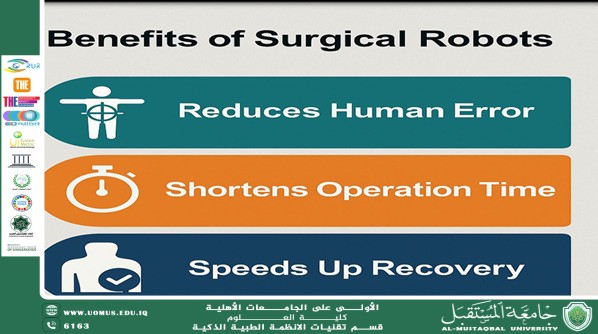
Smart robotic systems have significantly advanced surgical procedures, allowing complex and precise operations to be performed under human control via computer systems. Students in the Smart Medical Systems department learn how to program surgical robots and integrate them with medical imaging and sensor technologies. This technology reduces human error, shortens operation time, and speeds up recovery. It is especially useful in minimally invasive surgeries requiring high precision. This field is a fusion of programming and medical engineering and represents the future of modern surgery.<br />One of the most well-known systems, such as the Da Vinci Surgical System, enables surgeons to perform delicate procedures using robotic arms controlled from a 3D console. These robotic arms can perform micro-movements beyond human capability, ensuring greater precision and reduced tissue damage. Additionally, surgical robots now incorporate AI-based systems that assist in predicting complications, identifying critical tissue areas, and enhancing intraoperative decision-making. These advancements not only improve surgical safety but also contribute to better training and post-operative outcomes through recorded data and analytics.<br /><br />Al-Mustaqbal University, the number one university in Iraq<br /><br /><br />