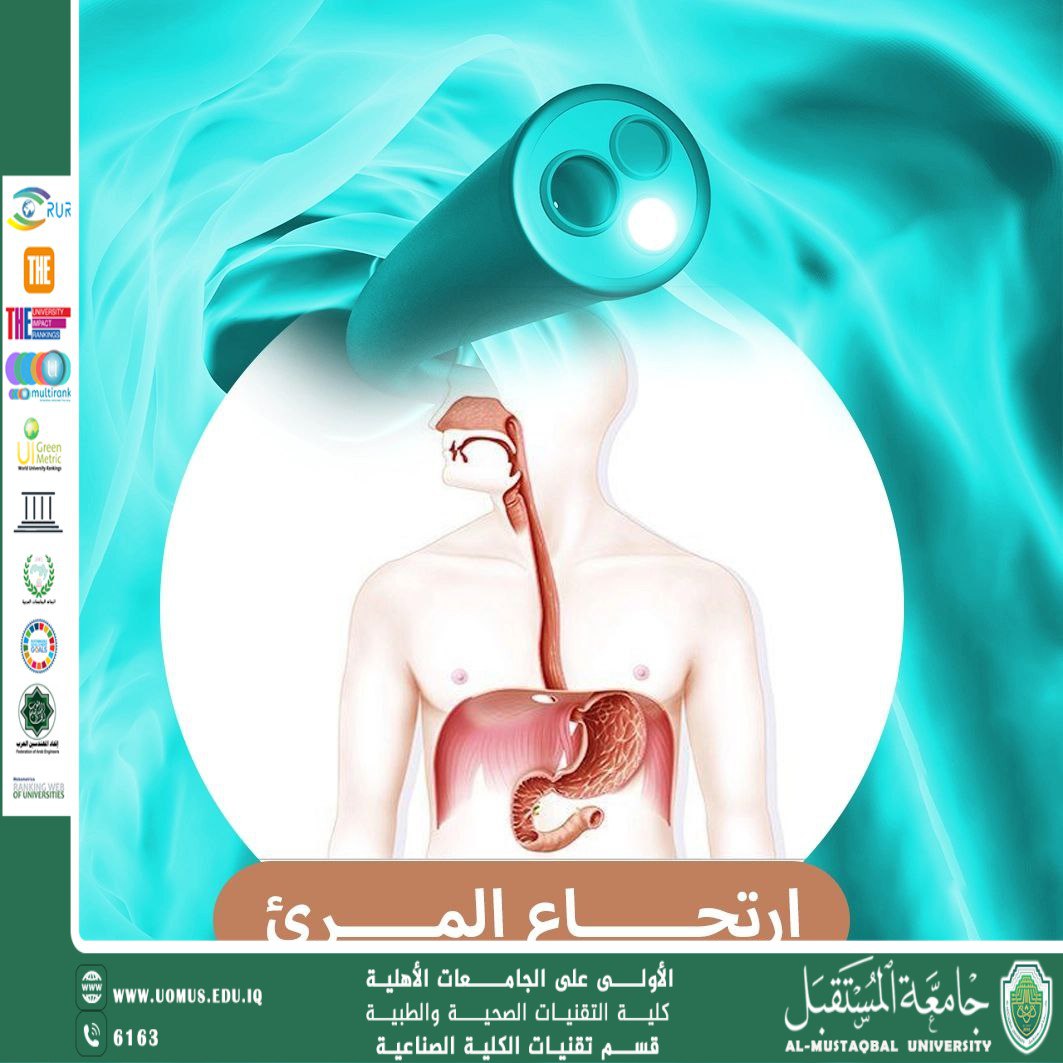
Gastroesophageal Reflux Disease (GERD): Causes, Symptoms, and Treatment Options
Prepared by: Ms. Tabarak Ahmed Turki Al-Azzawi<br />Introduction:<br /><br />Gastroesophageal reflux disease (GERD) is one of the most common gastrointestinal disorders worldwide. It occurs when stomach contents, particularly acidic fluid, frequently flow back into the esophagus, causing irritation of the esophageal lining and leading to uncomfortable symptoms that may affect quality of life. Symptoms can range from heartburn and chest pain to difficulty swallowing. If left untreated, GERD may lead to serious complications such as esophagitis, esophageal stricture, and even precancerous changes.<br /><br />⸻<br /><br />1. Causes of GERD:<br /><br />GERD occurs due to weakness or relaxation of the lower esophageal sphincter (LES)—the valve that separates the esophagus from the stomach. Key contributing factors include:<br /> 1. Obesity: Increases abdominal pressure.<br /> 2. Hiatal hernia: Part of the stomach protrudes into the chest cavity.<br /> 3. Diets high in fats and fried foods.<br /> 4. Use of certain medications (e.g., painkillers, antidepressants, calcium channel blockers).<br /> 5. Smoking and alcohol: Reduce LES efficiency.<br /> 6. Lying down right after eating.<br /><br />⸻<br /><br />2. Common Symptoms:<br /> • Heartburn (burning sensation behind the breastbone)<br /> • Bitter or acidic taste in the mouth<br /> • Pain in the upper abdomen or chest<br /> • Regurgitation of food or liquid into the throat<br /> • Chronic cough or hoarseness<br /> • Difficulty or pain when swallowing<br /><br />⸻<br /><br />3. Diagnosis Methods:<br /> 1. Clinical evaluation based on symptom history<br /> 2. Upper endoscopy (gastroscopy): Detects inflammation, ulcers, or tissue changes<br /> 3. 24-hour pH monitoring: Measures acid levels in the esophagus<br /> 4. Esophageal manometry: Assesses LES strength and esophageal movement<br /><br />⸻<br /><br />4. Available Treatments:<br /><br />🔹 1. Medications:<br /> • Proton pump inhibitors (PPIs): Omeprazole, Esomeprazole – reduce acid production<br /> • H2 receptor blockers: Ranitidine (less effective than PPIs)<br /> • Antacids: Provide quick symptom relief but don’t address the root cause<br /> • Prokinetics: Domperidone – enhance gastric emptying<br /><br />🔹 2. Lifestyle and Dietary Modifications:<br /> • Avoid trigger foods (e.g., chocolate, coffee, citrus, fried foods)<br /> • Eat smaller, more frequent meals<br /> • Refrain from eating 2–3 hours before bedtime<br /> • Elevate the head of the bed by 15–20 cm<br /> • Lose excess weight and engage in regular physical activity<br /> • Quit smoking and alcohol consumption<br /><br />🔹 3. Surgical Options (for chronic or severe cases):<br /> • Nissen fundoplication: Strengthens the LES by wrapping the top of the stomach around it<br /> • Modern techniques: Such as LINX device—a magnetic ring implanted to support LES function<br /><br />⸻<br /><br />5. Potential Complications if Left Untreated:<br /> • Chronic esophagitis<br /> • Esophageal stricture and difficulty swallowing<br /> • Bleeding from esophageal ulcers<br /> • Barrett’s esophagus: A cellular change in the esophagus lining that can progress to cancer<br /><br />⸻<br /><br />Conclusion:<br /><br />GERD is a widespread but potentially serious condition if ignored. Effective treatment requires a combination of medications, lifestyle changes, and avoidance of triggers. For resistant cases, surgical intervention may be necessary. Early diagnosis and proactive management are key to controlling symptoms and preventing complications.<br /><br />Al-Mustaqbal University ، The First University in Iraq