
Nanorobots for Organ Sterilization Before Transplantation: The Green Genetic Revolution (Programmer Huda Kudhair )
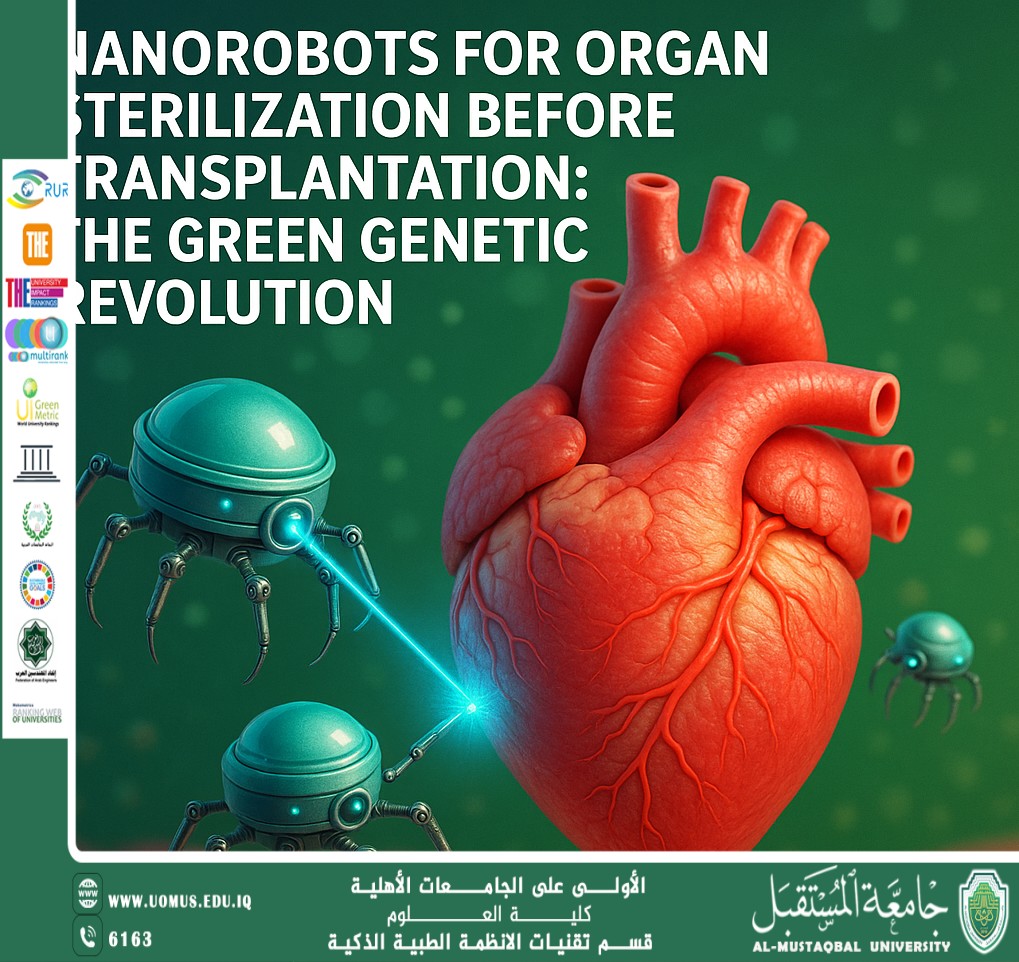
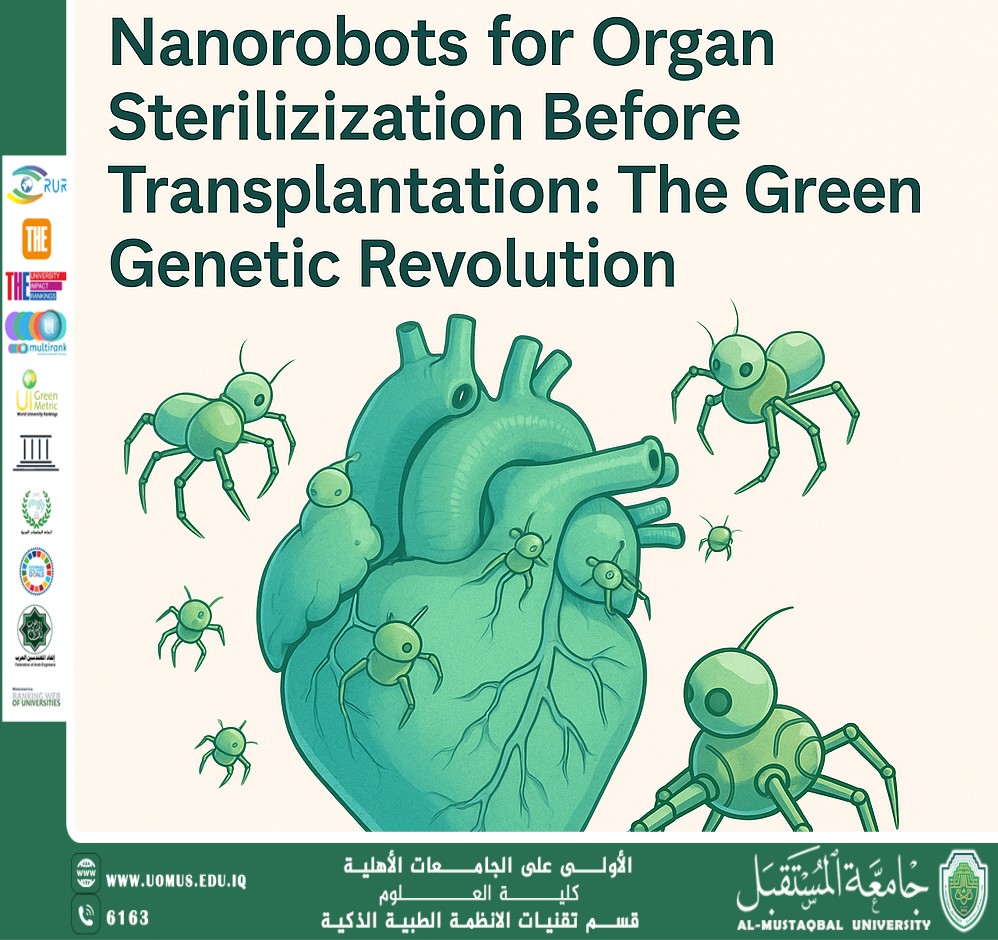
With the rapid progress in genetic engineering and regenerative medicine, the need has emerged for new technologies that ensure the safety and security of transplanted organs—especially as reliance on bioprinting increases. One of the most promising innovations is bio-nanobots, which represent a major breakthrough in sterilizing organs and medical devices inside the human body itself.<br /><br />These nanobots operate at the atomic level and can be programmed to detect and remove microbial contaminants or damaged cells that may lead to immune rejection or post-transplant infection. They act as the first line of defense, moving with extreme precision through implanted tissues and correcting any malfunctions in real time.<br /><br />The role of this technology extends beyond sterilization; the same systems can also be used to clean the bloodstream of circulating cancer cells or toxic substances. Furthermore, this technology is environmentally friendly, as it operates using clean energy sources and significantly reduces the need for harmful chemical drugs and sterilizing agents.<br /><br />The integration of nanobots with organ bioprinting is expected to revolutionize the future of medicine, enabling the transplantation of organs that are clean, safe, and genetically compatible—while also preserving environmental sustainability and minimizing medical waste.<br /><br />Al-Mustaqbal University — The Number One University in Iraq.<br /><br /><br /><br /><br /><br /><br /><br /><br /><br />