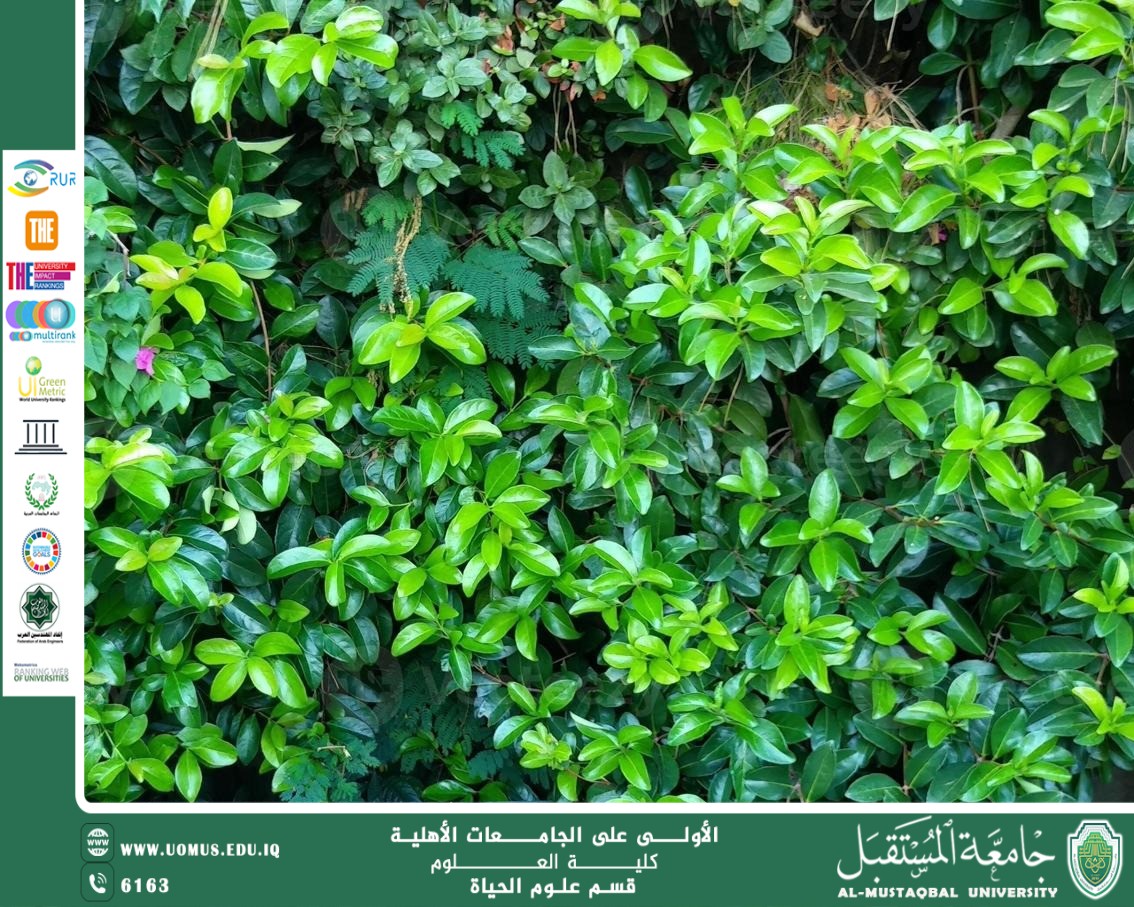
A scientific article by teaching assistant Banin Maan Karim entitled "Halophytes"
Salinity is one of the most serious environmental factors threatening agricultural production and ecosystems around the world. However, nature has demonstrated amazing adaptability through a group of plants known as "halophytes," which are capable of living and growing in soil or water with high salt concentrations, where most other plants fail.<br /><br />Halophytes are plant species capable of growing and reproducing in saline environments such as salt marshes, coastal deserts, or lands degraded by irrigation with saline water. Some of these plants grow only in saline environments (obligate halophytes), while others tolerate salinity (facultative halophytes).<br /><br />Salinity Adaptation Mechanisms<br />Halophytes have developed a range of physiological and morphological mechanisms that help them cope with salt stress, including:<br /><br />Salt Excretion: Through special glands that excrete excess salts outside the plant (such as the Salicornia plant).<br /><br />Salt Storage: In cell vacuoles to reduce their impact on sensitive tissues.<br /><br />Formation of fleshy (succulent) leaves: to store water and reduce the surface area exposed to evaporation.<br /><br />A strong root system: enables them to absorb water even in the presence of high salinity.<br /><br />Increased production of osmotic compounds: such as proline and sugars, which help the cell retain water.<br /><br />Examples of halophytes:<br />Salicornia spp. (Salicornia): used as a food source and biofuel.<br /><br />Suaeda spp. (Suaeda): a wild halophyte resistant to high salinity.<br /><br />Atriplex spp. (Raghal): used in saline land improvement.<br /><br />Mangroves: grow in coastal areas and tolerate seawater salinity.<br /><br />Importance of halophytes:<br />Saline land reclamation: helps improve soil structure and reduce salinity.<br /><br />Alternative food source: some species can be used in agriculture and food security.<br /><br />Biofuel: some halophytes are a potential source of renewable energy.<br /><br />Coastal protection: such as mangroves, which prevent erosion and reduce the effects of tides.<br /><br />Unique biodiversity: It supports special ecosystems where no other plants live.<br /><br />Al-Mustaqbal University is the first university in Iraq.