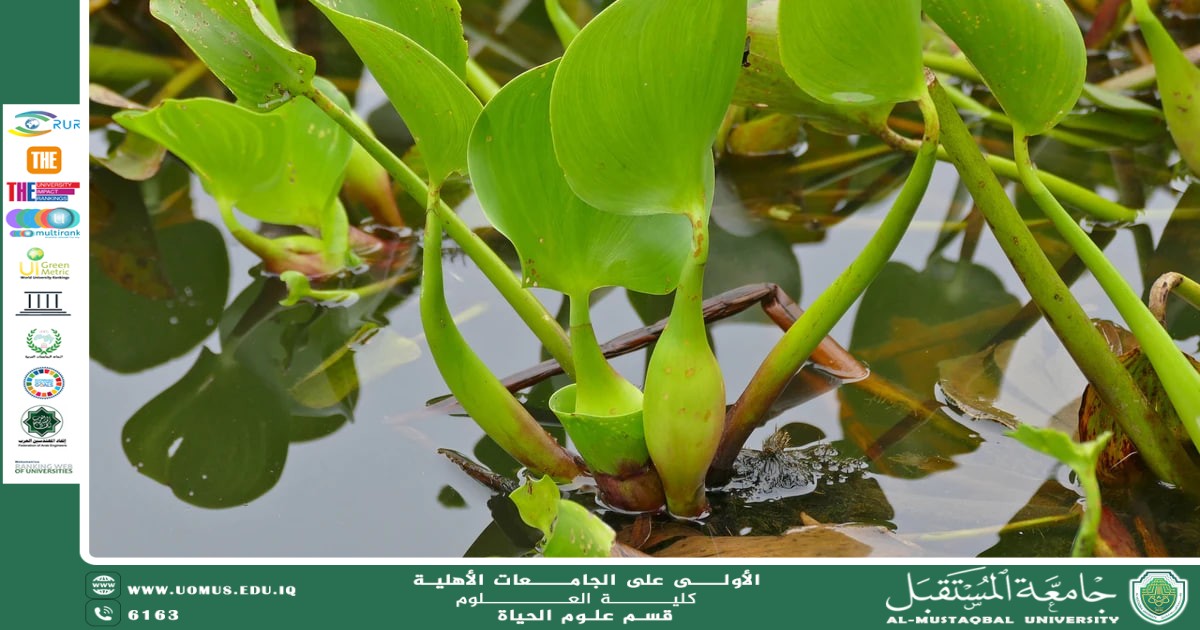
A scientific article by teaching assistant Banin Maan Karim entitled "Root Structure and Hydrological Adaptation"
Roots are essential organs in plants, primarily responsible for water and nutrient absorption, fixation, and interaction with soil organisms. However, in hydroponic systems, where plants grow without soil, roots must adapt to a completely different environment.<br /><br />1. Basic Root Structure<br /><br />Roots consist of several main parts, each with a specific role:<br /><br />Root mantle: A protective layer at the tip that senses gravity and protects developing tissues.<br /><br />Apical meristem: The area of active cell division, responsible for root growth.<br /><br />Elongation zone: Cells expand, pushing the root deeper into the substrate or medium.<br /><br />Maturation zone: Where root hairs form, increasing the surface area for absorption.<br /><br />Tissues within the root include:<br /><br />Epidermis: The outermost layer, often containing root hairs.<br /><br />Cortex: Stores and transports nutrients.<br /><br />Endoderm: Regulates the intake of vascular tissues.<br /><br />Xylem and phloem: Transport water and nutrients, and facilitate photosynthesis.<br /><br />2. Root Functions in Soil Compared to Hydroponics<br />Function in Soil in Hydroponics<br />Absorption of water directly from the soil pores from the nutrient solution<br />Absorption of nutrients from mineral particles dissolved in the solution<br />Absorption of oxygen through air pockets in the soil using oxygenated water or air pumps<br />Anchorage: A strong network between the roots and the soil, often supported by inert media (such as rockwool and clay pellets).<br /><br />3. Root Adaptations in Hydroponics<br />In soilless environments, roots undergo several morphological and physiological changes to thrive:<br /><br />Increased Root Hair Production<br />To maximize uptake in liquid environments, plants often increase the density and length of root hairs.<br /><br />Slimmer and More Fibrous Roots<br /><br />Hydroponic roots are typically whiter, sleeker, and more branched, allowing for more efficient nutrient uptake over a larger surface area.<br /><br />Enhanced Oxygen Sensitivity<br /><br />Because water can be rapidly deprived of oxygen, hydroponics roots become sensitive to dissolved oxygen (DO) levels. Systems often include aerators or oxygenation systems to prevent root rot (lack of oxygen).<br /><br />Faster Growth Rates<br /><br />Due to the constant availability of nutrients and moisture, hydroponic roots grow more rapidly, supporting faster plant growth.<br /><br />4. Root Systems in Different Hydroponic Systems<br /><br />Different hydroponic systems affect root growth:<br /><br />Deep Water Circulation (DWC): Roots float in oxygenated water, forming long, dense root mats.<br /><br />Nutrient Film Technique (NFT): Roots spread horizontally in a thin film of nutrient solution.<br /><br />Aeroponics: Roots are suspended in the air and misted, promoting high oxygenation and fine root growth.<br /><br />Drip Systems: Roots grow in inert environments; moisture and nutrients are transported through the legumes.<br /><br />5. Root Challenges in Hydroponics<br /><br />Root Rot (Pythium): Caused by lack of oxygen or pollution.<br /><br />Nutrient Imbalance: Requires careful control; roots cannot absorb minerals as they can in soil.<br /><br />Mechanical support: The roots in hydroponics are not firmly established, so plants may need external support.<br /><br />Al-Mustaqbal University is the first university in Iraq.