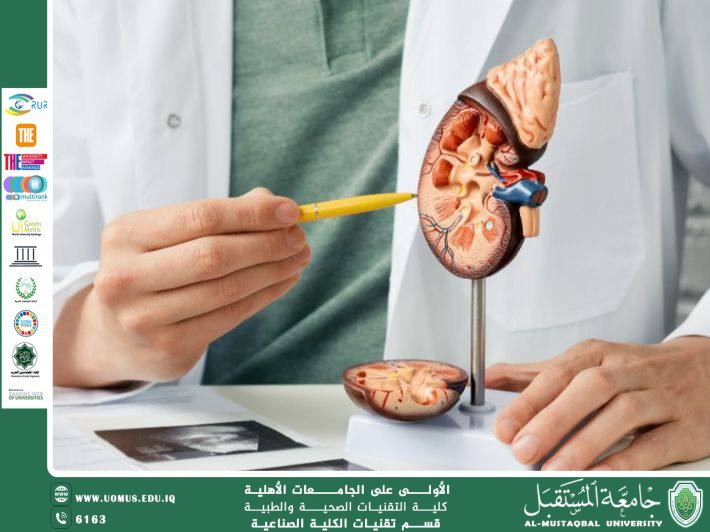
Difference Between Kidney Atrophy and Kidney Failure
Prepared by: Ms. Tabarak Ahmed Turki Al-Azzawi<br /><br />Introduction:<br />The kidneys play a vital role in maintaining the body’s balance by filtering waste products, regulating body fluids, and controlling blood pressure. However, certain diseases can impair this essential function. Among them are kidney atrophy and kidney failure—two distinct conditions that affect kidney function but differ in causes, diagnosis, and treatment.<br />What is Kidney Atrophy?<br />Kidney atrophy is a condition in which the kidney shrinks due to the loss of tissue or cells, leading to a gradual decline in kidney function.<br />Causes:<br /> • Chronic obstruction of the ureter or renal pelvis (due to kidney stones or strictures)<br /> • Chronic infections such as recurrent kidney infections<br /> • Reduced blood flow due to arterial diseases<br /> • Poorly controlled chronic hypertension or diabetes<br /> • Congenital abnormalities present from birth<br />Signs:<br /> • Often asymptomatic in early stages<br /> • May cause mild pain on one side of the back or abdomen<br /> • Over time: urinary problems, high blood pressure, or declining kidney function<br />Diagnosis:<br /> • Medical imaging: Ultrasound, CT scan, or MRI to detect reduced kidney size<br /> • Kidney function tests to assess performance<br />What is Kidney Failure?<br />Kidney failure occurs when the kidneys lose their ability to function effectively. It may be:<br /> • Acute: Develops suddenly over days or weeks<br /> • Chronic: Progresses gradually over months or years<br />Causes:<br /> • Chronic conditions such as diabetes or high blood pressure<br /> • Glomerulonephritis or polycystic kidney disease<br /> • Complete urinary tract obstruction<br /> • Nephrotoxic drugs or chemical poisoning<br /> • Severe low blood pressure or heavy bleeding<br />Symptoms:<br /> • Swelling in the legs and face<br /> • Decreased or absent urination<br /> • Nausea, loss of appetite, severe fatigue<br /> • High blood pressure and difficulty breathing<br /> • Electrolyte imbalances (e.g., potassium, phosphorus)<br />Diagnosis:<br /> • Kidney function tests (urea, creatinine, GFR)<br /> • Urinalysis<br /> • Imaging studies such as ultrasound or CT scan<br />Conclusion:<br />Kidney atrophy and kidney failure are distinct conditions differing in cause, progression, diagnosis, and treatment. Although both impair kidney function, understanding their differences is essential for proper management and treatment planning. Early diagnosis and regular monitoring of kidney function can prevent worsening of the condition and significantly improve patient outcomes and quality of life.<br /><br />Al-Mustaqbal University ، The First University in Iraq