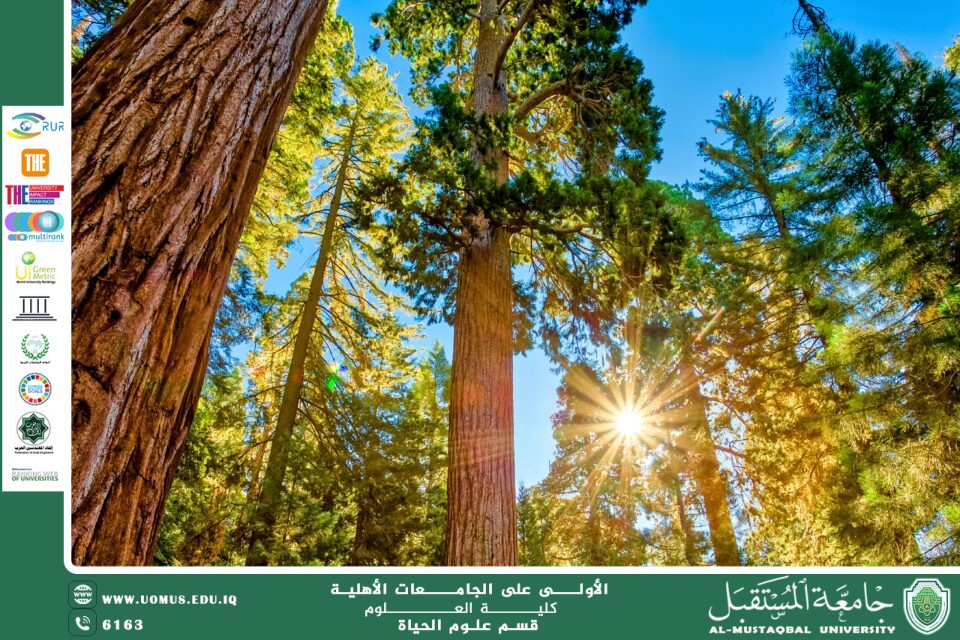
A scientific article by Ms. Noor El-Huda Azmi Hassan entitled "Plant climatic features"
"Plant climatic features" refers to the way plants interact with climate in terms of shape, structure, growth, and geographical distribution. Climate includes elements such as heat, light, rainfall, humidity, and wind, each of which directly or indirectly affects plants.<br /><br />First: The Effect of Temperature on Plants<br />Plants vary in their ability to tolerate heat or cold.<br /><br />Tropical plants cannot tolerate frost and require constant heat to grow.<br /><br />Plants in cold regions, such as pines, can withstand freezing and develop special root systems and needle-like leaves to reduce water loss.<br /><br />Climatic Features: Plant types vary depending on temperature. For example, in the desert, we find plants that can withstand extreme heat, such as cacti.<br /><br />Second: The Effect of Rainfall Amount<br />Areas with abundant rainfall grow dense forests, such as rainforests.<br /><br />In areas with little rainfall, drought-tolerant desert plants, such as succulents, grow.<br /><br />Climatic Features: The density of vegetation is related to the amount of rainfall. The more rainfall, the denser the plants.<br /><br />Third: The Effect of Light<br />Light is an essential element for photosynthesis and determines when plants begin to grow or flower.<br /><br />Some plants only flower when a certain number of hours of light are available daily (long- or short-day plants).<br /><br />Climatic Profile: The timing of flowering or growth varies depending on the intensity and length of light.<br /><br />Fourth: The Effect of Atmospheric Humidity<br />Humidity helps plants retain water and prevents rapid evaporation.<br /><br />Plants in humid areas have broad, green leaves.<br /><br />Plants in dry areas develop thick leaves or develop spines.<br /><br />Climatic Profile: Leaf shape changes depending on the degree of humidity to protect the plant from drought.<br /><br />Fifth: The Effect of Wind<br />Strong winds can affect the shape of plants, causing them to grow slanted or stunted due to their constant exposure to wind.<br /><br />In coastal or mountainous areas, we notice trees growing low or slanting with the wind.<br /><br />Climatic Profile: Changes in the overall growth pattern of plants due to wind.<br /><br />Al-Mustaqbal University is the first university in Iraq.<br /><br />